Please enter keywords to search

Global |EN

Choose your country & Language

Asia Pacific

Australia & New Zealand
India
Indonesia
Malaysia
Philippines
Singapore

Middle East & Africa

Kenya
Saudi Arabia
South Africa
United Arab Emirates
Tunisia

Europe

France
Kazakhstan
Netherlands
Spain
Italy
Turkey
United Kingdom
Poland

Latin America

Brazil
Colombia
Ecuador
Peru

North America

Canada
Mexico
United States

Choose your country & Language

Australia & New Zealand
India
Indonesia
Malaysia
Philippines
Singapore
Kenya
Saudi Arabia
South Africa
United Arab Emirates
Tunisia
France
Kazakhstan
Netherlands
Spain
Italy
Turkey
United Kingdom
Poland
Brazil
Colombia
Ecuador
Peru
Canada
Mexico
United States
Please enter keywords to search

Your search term contains restricted words. Please use different keywords.
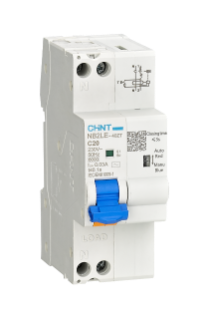
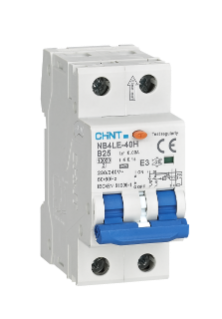
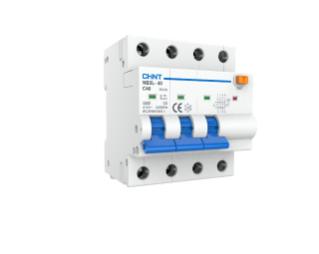
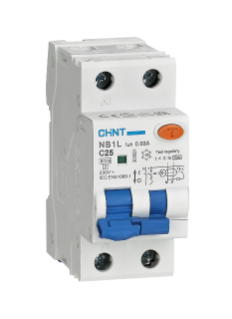
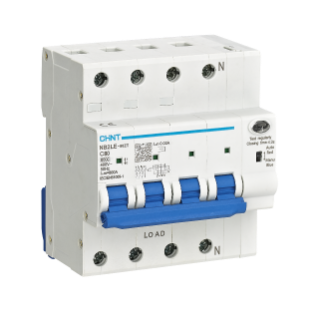
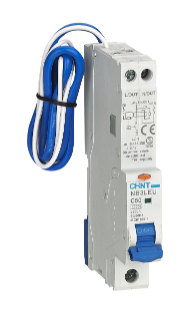
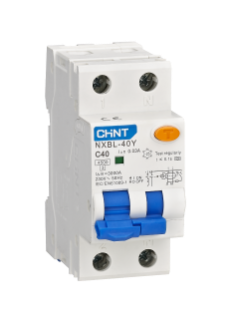
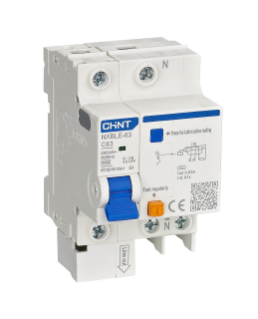
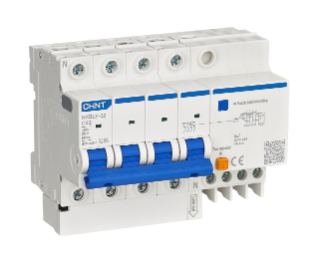
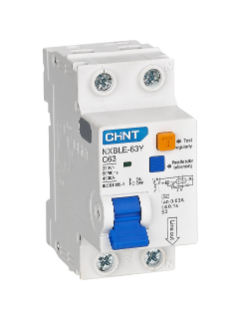
NB3LEU Residual Current Operated Circuit Breaker with Over-current Protection(Electronic)

NB3LEU Residual Current Operated Circuit Breaker with Over-current Protection(Electronic)

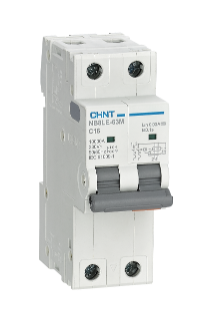
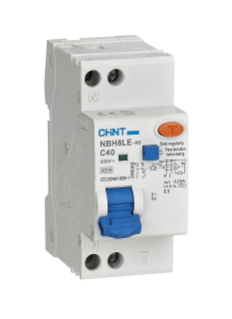
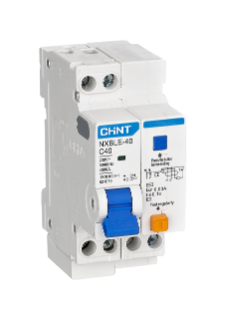
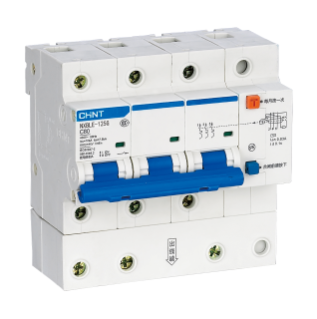
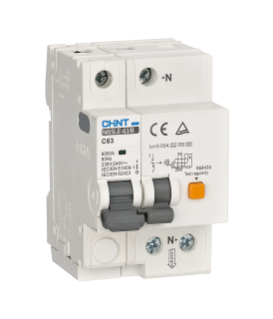
The CHINT NB3LEU RCBO is a high-performance protective device that combines residual current and over-current protection in one compact unit. Designed for AC 50/60 Hz, 240 V circuits, it provides reliable protection against overloads, short-circuits, and electric leakage, ensuring safety for personnel and equipment. Featuring electronic tripping, Type AC/A leakage sensitivity, and B/C tripping curves, it is ideal for residential, commercial, and light industrial installations requiring enhanced electrical safety and stability.

Product Information

Recommend Blogs
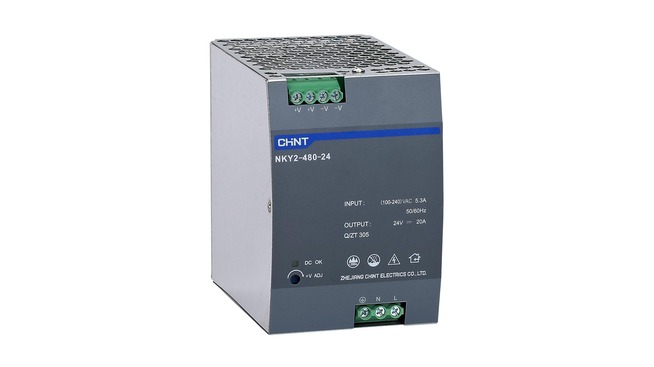
OCTOBER 27, 2026 A Practical Guide to Choosing a DIN Rail Power Supply for Industrial Control Panels

Choose a DIN rail power supply for an industrial control panel by checking output load, inrush, environmental derating, protection and PLC compatibility.

OCTOBER 27, 2026 Why Do Capacitor Banks Need Dedicated Switching Contactors?

A capacitor bank does not switch like a motor load. Learn how dedicated capacitor switching contactors manage inrush, switching duty and protection in power factor correction panels.

OCTOBER 27, 2026 Phase Loss and Reversal: How Phase Monitoring Relays Protect Three-Phase Motors

Learn how a phase monitoring relay detects phase loss and phase reversal, how it should be wired into a motor control circuit, and where its protection ends.

OCTOBER 27, 2026 Natural Ester vs. Mineral Oil Transformers: Which Fits Your Project Requirements?

Compare natural ester and mineral oil transformers across fire performance, environmental exposure, temperature behavior, maintenance and project fit.

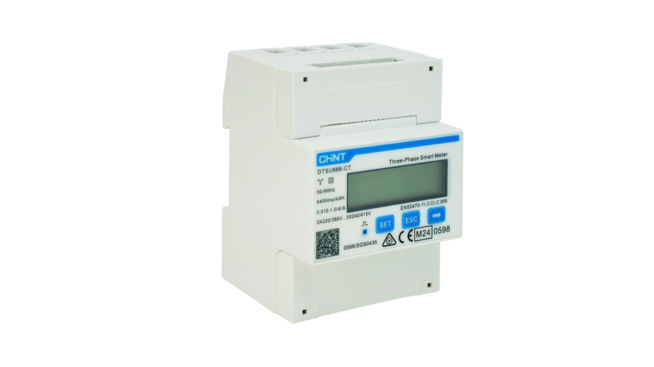
OCTOBER 26, 2026 Industrial Energy Monitoring: How Smart Meters Cut Waste and Improve Power Reliability

Learn how industrial energy monitoring turns meter data into lower energy waste and stronger power reliability, with CHINT DTSU666-CT and PD7777 options.

OCTOBER 26, 2026 Control Relay Selection and Wiring Guide for Industrial Control Panels

Learn how to select and wire a control relay for an industrial panel, including coil voltage, contact form, load rating, suppression, and CHINT NXJ and NJX12 options.

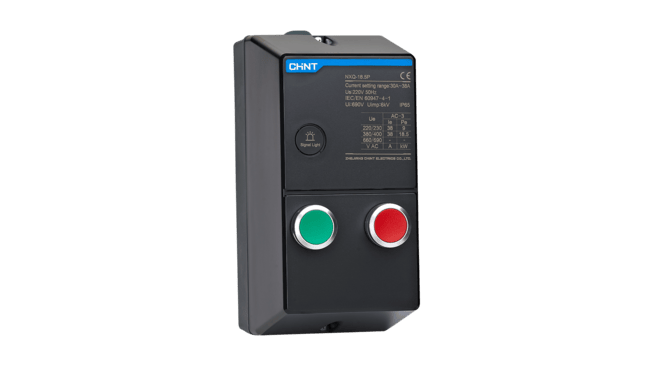
OCTOBER 26, 2026 How to Select an Electromagnetic Starter for OEM Motor Control Panels

Select an electromagnetic starter for OEM panels by checking motor duty, AC-3 ratings, protection coordination, control options, enclosure, and mounting.

OCTOBER 26, 2026 Static VAR Generators: A Practical Guide to Reactive Power Compensation

Understand reactive power compensation, how static VAR generators differ from SVC systems, and where CHINT NXW APF and SVG modules fit in industrial power systems.

SEPTEMBER 23, 2026 How Voltage Stabilizers Protect Three-Phase Industrial Power and Generator Systems

Voltage fluctuation quietly damages industrial equipment. Learn how a three-phase voltage stabilizer works and why independent phase regulation matters for generator-backed power.

SEPTEMBER 10, 2026 Automatic Transfer Switch Explained: How Dual Power Switching Keeps Critical Systems Running

Learn how automatic transfer switches detect faults and switch between two power sources to keep hospitals, data centers, and factories running 24/7.

Need Support From Us?

Blog
Blog

Find expert perspectives on the trends and technologies driving your business.

View Now
Download Center
Download Center

Download new and previously released documents including product document, solutions, cases, coporate report.

View Now
Contact Us
Contact Us

Reach out to us to receive more information, technical support, assistance with complaints and more.

Get Support
Collapsed
Expand

FAQs


What makes the NB3LEU RCBO different from traditional breakers?

It combines leakage, overload, and short-circuit protection in one compact device using electronic tripping, offering faster response and improved reliability over purely thermal types.


What are Type A and Type AC sensitivities?

Type A: Detects both AC and pulsating DC leakage currents.

Type AC: Detects only sinusoidal AC leakage currents.

This ensures compatibility with various load types and system conditions.


Can this breaker handle high fault currents?

Yes. The NB3LEU offers a 10 kA short-circuit capacity, making it suitable for robust protection in both residential and commercial environments.


What installation options are available?

It can be mounted on a 35 mm DIN rail and connected via cable, U-type, or pin-type busbars, supporting flexible panel configurations.


Does temperature affect performance?

Performance is rated at 30 °C, but derating applies above that (e.g., 0.9 at 50 °C, 0.85 at 60 °C) to ensure safe operation in warmer environments.