

Introduction
A plant can have adequate incoming voltage and still run into avoidable electrical costs and operating problems. Large motor loads, welding equipment, variable-speed drives, and rapidly changing processes can draw reactive current or distort current waveforms. The result may include low power factor, higher current in conductors, transformer capacity tied up by non-working power, or voltage variation at sensitive loads.
A static VAR generator (SVG) is one tool for correcting dynamic reactive power demand. It is not a substitute for load studies, harmonic analysis, or proper system protection. To select one well, engineers need to distinguish real, reactive, and apparent power; identify the dominant power-quality issue; estimate the required compensation; and verify how the device will interact with existing capacitors, drives, and protection.
Reactive Power, Power Factor, and the Facility’s Electrical Capacity
Active power, measured in kilowatts, performs useful work such as turning a motor shaft or heating a process. Reactive power, measured in kilovars, supports the magnetic and electric fields required by inductive and capacitive equipment. Apparent power, measured in kilovolt-amperes, represents the combined demand placed on the supply. For sinusoidal conditions, power factor is the ratio of active power to apparent power; distortion and unbalance can make the full power-quality picture more complex.
When inductive loads operate at a lagging power factor, the supply must carry more current to deliver the same active power. That current contributes to losses and consumes capacity in cables, transformers, and switchgear. Some utilities also apply billing provisions tied to demand or power factor, but the tariff and threshold vary by jurisdiction. Review the actual bill and utility rules before estimating savings or specifying a target.
Reactive power compensation supplies or absorbs kvar near the load so less reactive current has to travel through the upstream network. The correction target should be set by an engineer from measured load profiles and utility requirements. Overcompensation can create leading power factor or unacceptable voltage rise, especially when loads fall or a capacitor bank remains connected.
How an SVG Responds to Changing Loads
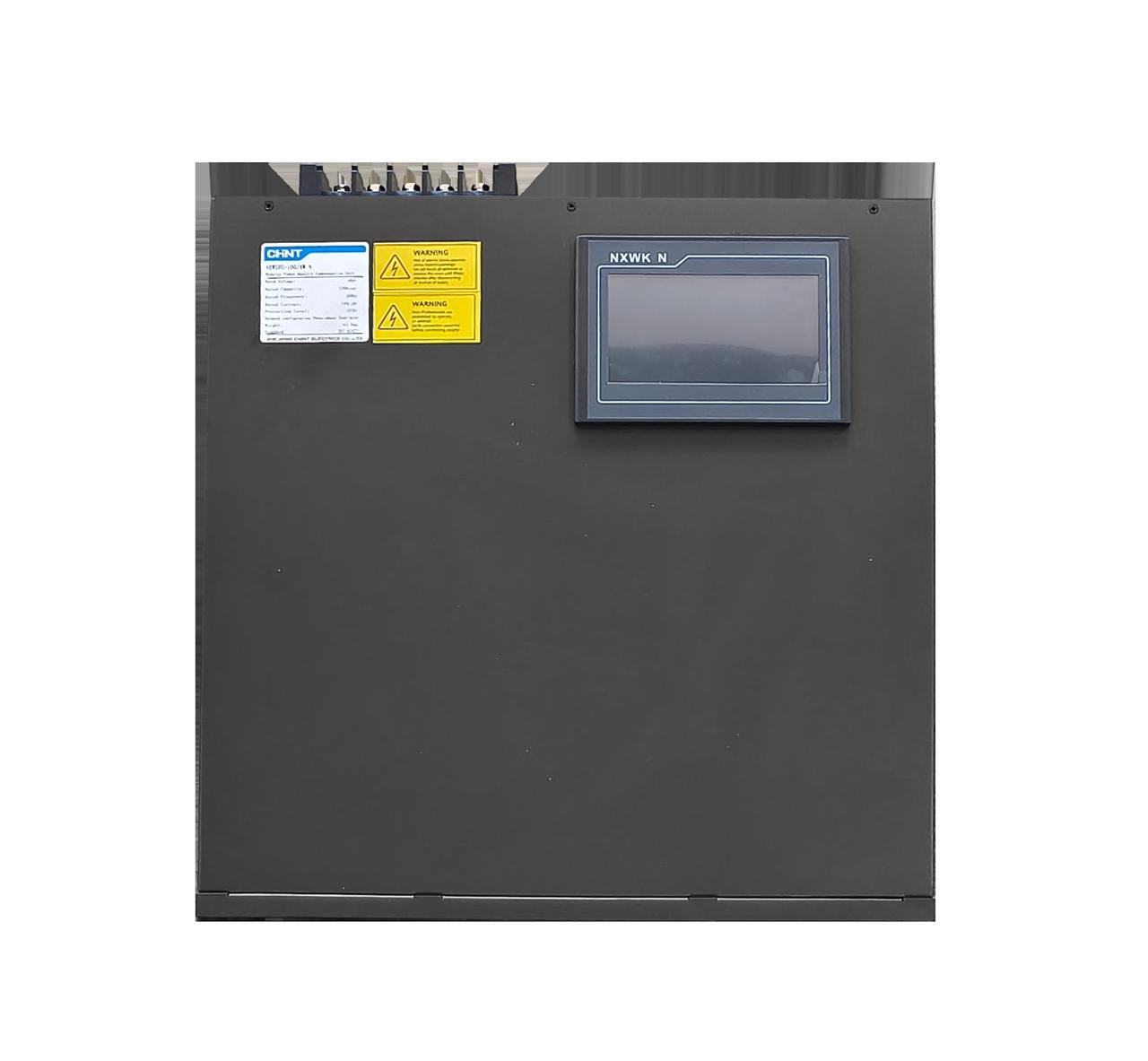
An SVG uses power-electronic conversion to inject or absorb reactive current in response to the measured condition at its connection point. Current transformers provide the control system with information about the load; the converter then adjusts its output to move the system toward the configured power-factor or reactive-power target. Unlike a fixed capacitor step, compensation can be adjusted continuously within the unit’s rated capability.
This dynamic response can suit loads that change quickly or frequently, such as cranes, welders, rolling mills, large compressors, and groups of variable-speed drives. Actual correction speed depends on the product, control settings, network, and the point where it is measured. CHINT’s 2025 NXW APF and SVG catalog lists a total response time below 5 ms for the SVG module; confirm the applicable model and test conditions in current product documentation.
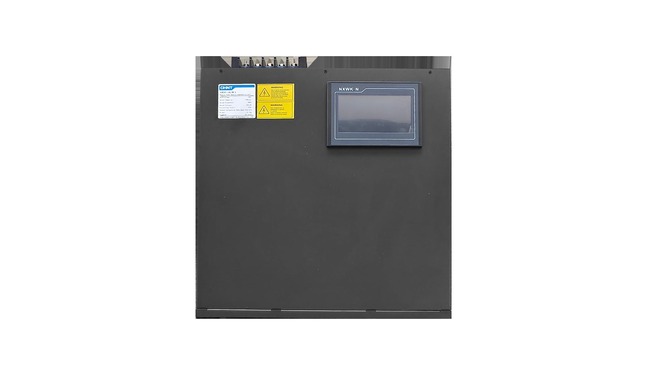
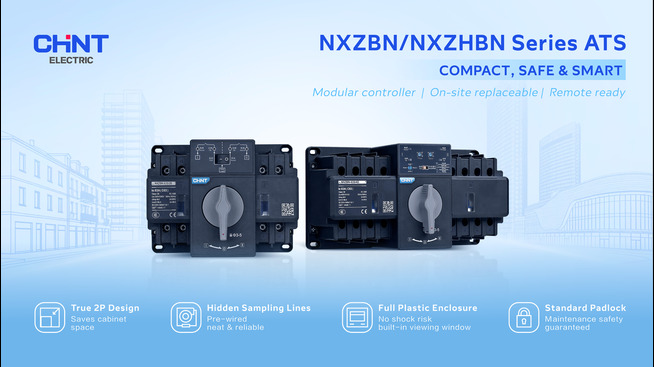
An SVG’s function is different from harmonic filtering. A static VAR generator primarily supplies or absorbs reactive current. An active power filter (APF) targets harmonic currents and, depending on configuration, may also support reactive-power and three-phase unbalance compensation. CHINT describes NXW as a modular power-quality platform with separate APF and SVG units that can independently address reactive compensation, harmonics, and phase unbalance or be combined where the project requires multiple functions.
SVG, SVC, and Capacitor Banks: Choosing the Right Architecture
In common engineering usage, a static VAR compensator (SVC) is a shunt-connected system built from thyristor-controlled or thyristor-switched reactive branches, often reactors and capacitor banks. A static VAR generator (SVG) typically uses a voltage-source converter to control reactive current electronically. The terms can vary between manufacturers, so compare circuit topology, control method, rated output, harmonic behavior, response, and operating envelope rather than relying on the label alone.
Fixed or switched capacitor banks can be economical for relatively steady loads and staged correction. They are less suited to rapid variation and can interact with system harmonics; detuned or filtered designs may be required after analysis. An SVG can adjust continuously and may respond to changing kvar demand without waiting for capacitor stages to switch, but it has its own cost, loss, thermal, and fault-current considerations. A site with both harmonic distortion and reactive demand may need an APF and SVG combination rather than an SVG alone.
The selection study should include interval measurements at the intended connection point, load cycles, voltage range, harmonic spectrum, existing capacitor steps, transformer impedance, fault levels, and protection settings. Record the desired power-factor range and whether the objective is lower utility demand, voltage support, phase balancing, or several outcomes. If the goal is simply to reduce the bill, first confirm that the tariff actually rewards the proposed correction.
Sizing and Integrating a Static VAR Generator
Size compensation from measured kvar demand over the operating cycle, not only from a motor nameplate or a monthly average. The design should account for load changes, the power-factor target, measurement location, expected future loads, and any reactive contribution from existing equipment. Check the SVG’s rated current or kvar, continuous thermal capacity, overload behavior, ambient conditions, enclosure, cooling, and available short-circuit protection.
CT placement and polarity are critical. A controller configured to measure the wrong side of the compensator may act on misleading data or correct the wrong load. The installation design should also account for busbar capacity, cable routing, grounding, upstream protective devices, isolation, and communication needs. Commissioning should include inspection of phase sequence and CT orientation, confirmation of measured values, staged load tests, and review of alarms and event logs.
CHINT’s NXW APF and SVG product page provides access to product information, catalog, and manual. The series is presented as a power-quality module platform, not a one-size-fits-all remedy. Coordinate the chosen unit with a system study and confirm its rated output, response, control mode, installation clearances, and protections for the actual model.

Where Compensation Can Help—and What It Cannot Fix
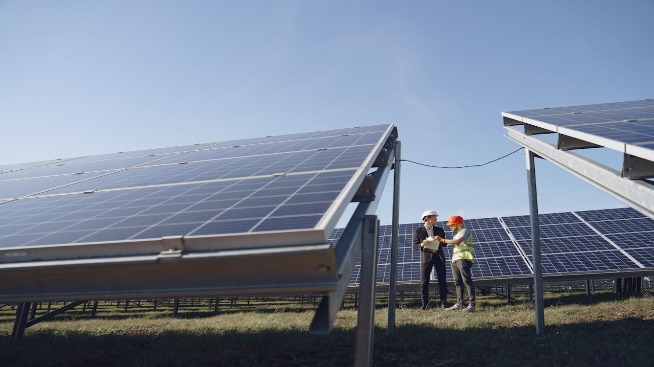
Reactive compensation is worth investigating where a facility has documented low power factor, recurring reactive demand charges, heavily loaded transformers, or voltage behavior linked to rapidly changing reactive loads. It can also support a broader power-quality program in renewables, data centers, and industrial plants with mixed loads. CHINT’s low-voltage reactive power compensation solution describes how compensation equipment can be considered within a wider distribution design.
An SVG cannot correct every cause of poor power quality. It does not replace harmonic mitigation when distortion exceeds limits, resolve voltage sags caused by upstream faults, repair loose connections, or correct undersized conductors. Those conditions require diagnosis and the appropriate combination of protection, filtering, voltage support, maintenance, and utility coordination. For measurement and repeatability, IEC’s power quality measurement methods outline standardized methods for assessing AC supply parameters.
Conclusion
A static VAR generator can improve dynamic reactive-power control when the need is demonstrated by measurement and the unit is matched to the load profile. Begin with the utility tariff and interval data, separate reactive demand from distortion and voltage events, and compare SVG, SVC, and capacitor-bank options against the site’s operating conditions. Then verify the design through coordinated protection and commissioning tests.
Frequently Asked Questions
What does VAR mean in an electrical system?
A volt-ampere reactive (var) is a unit of reactive power. Reactive power supports electric and magnetic fields in AC equipment; it does not represent net energy converted into useful work, but it contributes to current and system capacity requirements.
Will an SVG eliminate a facility’s electricity bill penalties?
Only if reactive demand is causing a charge under the applicable tariff and the compensator is sized and controlled to meet the utility’s requirements. Review the billing rules and measured load profile before forecasting savings.
Can an SVG and an active power filter be installed together?
Yes, when the power-quality study shows both reactive demand and harmonic distortion need correction. The design must coordinate CT locations, control priorities, ratings, and protection so the functions do not conflict.
Is a capacitor bank always a less expensive alternative?
Not necessarily. A capacitor bank may have a lower initial cost for steady loads, but rapid load changes, switching frequency, harmonics, and maintenance requirements affect lifecycle suitability. Compare total installed and operating costs for the actual duty.
What data should be collected before sizing an SVG?
Collect interval kW and kvar, power factor, voltage, current, phase balance, harmonic measurements where relevant, load operating states, existing compensation settings, and tariff details. Measure at the point where correction is intended.