

Introduction
A control panel can contain a PLC, sensors, relays, communication equipment, HMI and indicators, all relying on a stable DC source. If the power supply is selected only by adding the devices’ nominal wattage, the design may fail during startup, run hot inside the enclosure or become difficult to maintain. Sizing the supply means looking at actual load behavior and panel conditions, not just its output label.
A DIN rail power supply converts incoming AC to regulated DC and provides a compact way to distribute control power. Its performance influences the availability of the whole control circuit, but it does not replace branch protection, grounding, wiring discipline or the machine’s safety architecture. The right selection starts with a clear load list and ends with a check against the real operating environment.
Start With the Output Voltage and Load Profile
List every load that will be powered from the supply: PLC and I/O modules, sensors, relays, valves, HMI, communication devices, signal lamps and any other DC loads. Record the required voltage, steady-state current and startup behavior from each manufacturer’s data. Separate loads that must remain powered during switching or fault conditions from noncritical auxiliaries.
For each voltage rail, add the continuous current and account for simultaneous operation. Then consider inrush. Solenoid valves, capacitive electronic inputs and communication equipment can briefly draw more current during startup than in steady operation. A supply that meets the arithmetic sum of nominal currents may enter current limiting when these loads energize together. Where the supplier publishes peak-current capability, verify that it covers the duration and magnitude of the application’s inrush.
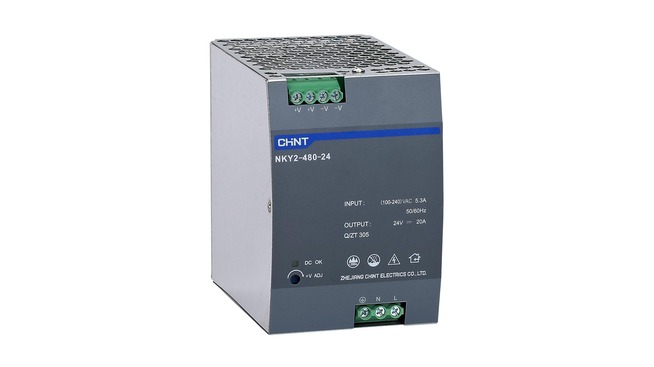
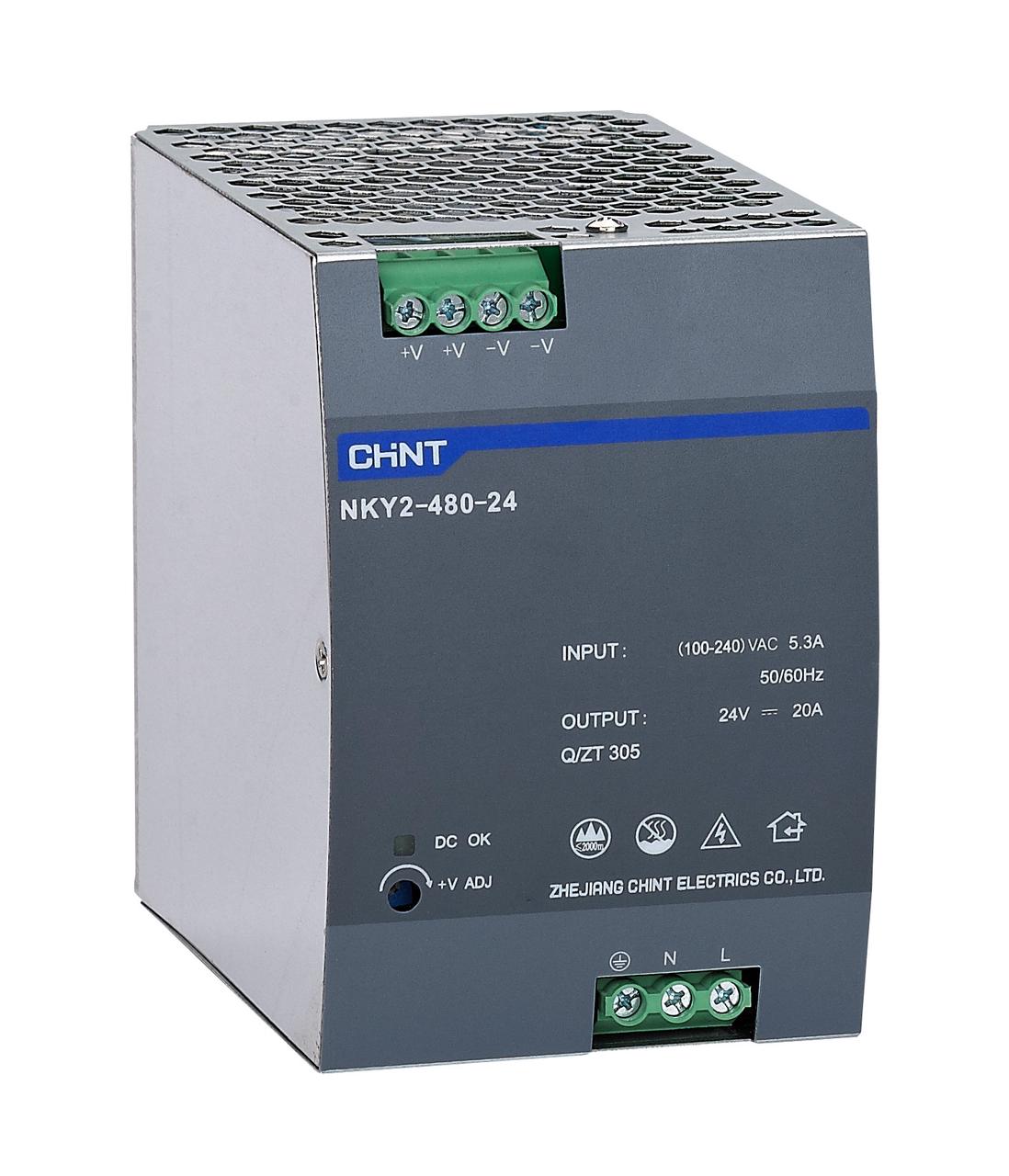
Many industrial control panels use 24 V DC, but the required output must be confirmed from the connected equipment rather than assumed. Some designs require 12 V or 48 V, or separate rails to isolate noisy or critical loads. CHINT’s NKY2 switch-mode power supply offers 12 V, 24 V and 48 V models with listed ratings from 75 W to 480 W. Use the exact model documentation when comparing the calculated load with the available output.
Size for Temperature, Mounting and Enclosure Conditions
The rated output is specified under defined conditions. Ambient temperature, enclosure ventilation, installation orientation, altitude and nearby heat-producing equipment can reduce the usable capacity. Review the manufacturer’s derating curve and provide headroom where the panel will operate at elevated temperatures or near the supply’s operating limits. Do not treat unused capacity as a substitute for thermal design.
DIN rail mounting makes installation compact, but spacing around the supply still matters. Keep ventilation openings unobstructed and follow the prescribed clearance from adjacent devices. Separate high-heat or high-noise equipment where practical. In a crowded cabinet, the cumulative temperature from drives, contactors, transformers and power supplies can be more important than room temperature alone.
The enclosure itself should match dust, moisture, vibration and corrosion conditions at the site. A unit designed for an indoor control cabinet should not be exposed directly to washdown or outdoor weather unless its documentation permits that installation. The machine-level electrical design should also be reviewed against the applicable IEC 60204-1 requirements for electrical equipment of machinery, alongside local codes and project specifications.
Check Regulation, Ripple and Protection Features
A PLC may tolerate a defined input-voltage range, while some sensors or analog devices are more sensitive to ripple and transient dips. Compare output voltage regulation and ripple/noise specifications with the requirements of the most sensitive load. For analog measurement circuits, separation or filtering may be needed if switching loads share the same DC bus.
Protection behavior also affects system response. Check how the power supply handles short circuit, overload, overvoltage and overheating. Auto-recovery can be useful, but determine how the connected controller behaves when the supply cycles repeatedly or the fault persists. Branch protection should be selected so a fault in one device does not unnecessarily take down every control circuit. This may require separate fused or protected branches for critical equipment.
For controls involving PLCs or programmable automation equipment, compatibility is not only about nominal voltage. Consider the installation’s EMC environment, grounding, cable routing and the immunity requirements of the control devices. The IEC 61131-2 equipment requirements for programmable controllers address equipment and verification considerations for PLCs and their associated peripherals; the panel designer should check the specific edition and requirements adopted by the project.
Decide Whether Redundancy or Load Separation Is Needed
A single supply is adequate for many machine panels. A more critical process may require two supplies with a redundancy module, separate power sources or an arrangement that keeps alarms and communication active during a fault. Redundancy must be designed deliberately: confirm that the units support parallel or redundant operation, coordinate current sharing, and ensure that a single downstream short circuit cannot defeat the intended availability.
Separating noisy loads can also improve stability. Solenoids, contactor coils and other switching loads may create disturbances on a shared DC rail. Use suppression devices as required, route wiring cleanly and segregate sensitive analog or communication circuits. A second supply can isolate critical instrumentation where the process risk justifies the additional cost and space.
For compact OEM panels, dimensions and terminal access can affect the design as much as power rating. CHINT’s NKY2 range includes slim DIN-rail models with natural air cooling. Confirm the exact model’s dimensions, output, ambient limits and wiring method against the panel layout and bill of materials.
Build the Selection Around the Full Panel
A useful selection record includes the supply input range, frequency, output voltage, continuous current, startup demand, ambient conditions, derating allowance, protection behavior and required approvals. It should also identify which loads share a rail and how the design responds to a branch fault. This gives procurement and commissioning teams a traceable basis for comparing models.
Before energizing a completed panel, verify polarity, grounding, branch protection and terminal torque. Measure the DC voltage at the supply and at the most distant load under normal operating conditions and during startup. Record any dips or nuisance resets. This practical check can reveal wiring drop, excessive load or thermal issues that a component datasheet alone cannot show.
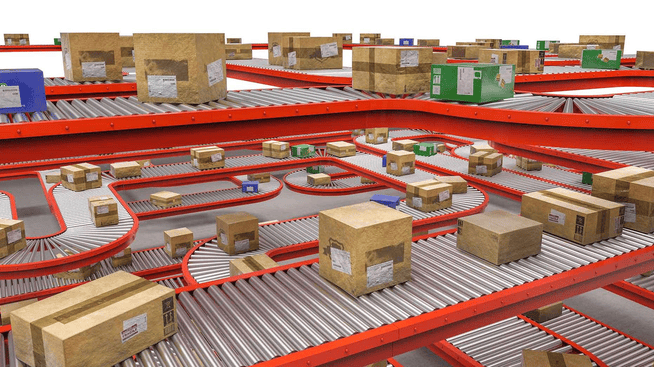
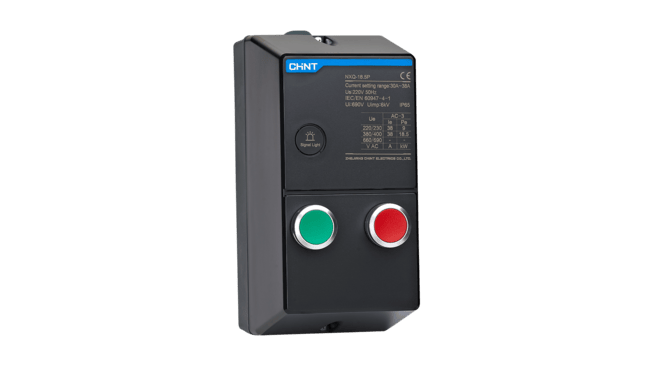
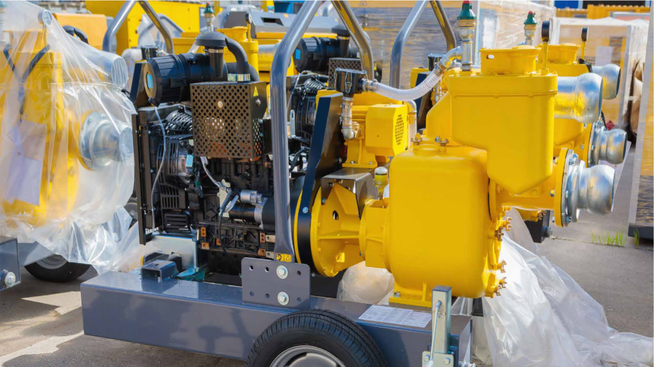
CHINT’s conveyor control box solution is one example of an automation application where reliable control power supports coordinated equipment operation. The same panel-level thinking applies to packaging machinery, pumps, material handling and process skids: choose the supply for the complete load profile and installation environment.
Five Questions to Resolve Before Ordering
- Which DC voltage rails are required, and what is each load’s continuous current?
- What is the combined startup demand, and for how long does it occur?
- What output derating applies at the expected enclosure temperature?
- How will short-circuit and overload events affect downstream branches?
- Do process criticality or sensitive signals justify redundant or separated supplies?
Conclusion
The best DIN rail power supply is the one that supports the real panel load, environment and fault strategy with a clear margin. Verify voltage, steady-state current, inrush, derating, protection and installation requirements before settling on a wattage. CHINT’s NKY2 range provides compact 12 V, 24 V and 48 V options for control applications; the exact model should be chosen against current data and the panel’s thermal conditions.
Frequently Asked Questions
Can two DIN rail power supplies be connected in parallel to increase capacity?
Only when the manufacturer permits parallel operation and the wiring, current sharing and protection are designed for it. Otherwise, unequal sharing can overload one unit or cause unstable operation.
Should a control panel use one supply or separate supplies for PLCs and solenoids?
It depends on process criticality and electrical noise. Separate rails can isolate switching disturbances and protect critical control functions, while a single supply may be appropriate when load behavior and protection are well managed.
Why does a power supply reset even though the calculated load is below its rating?
Possible causes include startup inrush, high enclosure temperature, voltage drop in wiring, a short-lived overload or incorrect input voltage. Compare the event with the unit’s overload response and measure voltage at the load during startup.