

Introduction
A three-phase motor can appear ready to run while one supply conductor is open, the phase sequence is wrong or voltage has become unbalanced. The motor may fail to start, rotate in the wrong direction or continue operating under a condition that raises current and temperature. In pumping, ventilation and production equipment, that can lead to process interruption as well as motor damage.
A phase monitoring relay watches defined electrical conditions and changes its output contact when a fault is detected. The output is usually wired into the motor’s control circuit so the contactor cannot energize—or drops out—when the monitored supply is abnormal. Correct application depends on what the relay senses, what the motor control circuit does with the signal and which additional protective devices are present.
What Phase Loss and Phase Reversal Mean
Phase loss, sometimes called an open-phase condition, occurs when one of the three phases is interrupted. Causes can include a blown fuse, loose terminal, broken conductor or upstream switching failure. If a running motor loses a phase, it may continue to turn under some load conditions while drawing abnormal current in the remaining phases. A conventional overload relay can respond to sustained overcurrent, but a phase monitoring relay can provide an earlier control response when its sensing arrangement detects the supply fault.
Phase reversal occurs when the phase sequence is reversed, usually after two conductors are interchanged during installation or maintenance. A three-phase motor then rotates in the opposite direction. That can be hazardous for pumps, fans, compressors and conveyors whose mechanical operation depends on direction.
Voltage imbalance is a separate but related condition. The three line-to-line voltages may all be present while their magnitudes differ. Motors can be sensitive to imbalance, so some monitoring relays include this function. Do not assume every phase relay protects against every abnormality: check the function list and thresholds of the selected model.
How a Phase Monitoring Relay Works in a Motor Circuit
The relay measures the three-phase supply at its sensing terminals and evaluates it against its configured functions. When phase sequence and voltage conditions are acceptable, its output contact permits the control circuit to operate. If the relay detects an unacceptable condition, the contact changes state and the motor contactor coil is de-energized or prevented from energizing.
The relay does not normally carry the motor’s power current. It acts through the low-current control circuit; the contactor switches the motor circuit. This distinction is important when laying out control wiring and selecting the output contact rating. The relay’s output must be compatible with the coil or intermediate control device. The IEC 60947-5-1 scope for electromechanical control circuit devices provides the relevant equipment-standard context; a safety-related function may require a different architecture from a basic phase monitor.
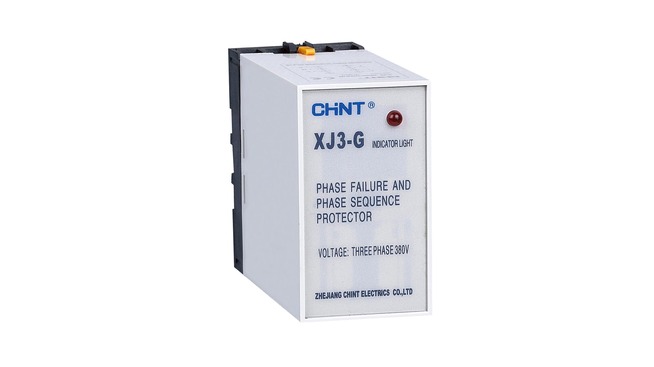
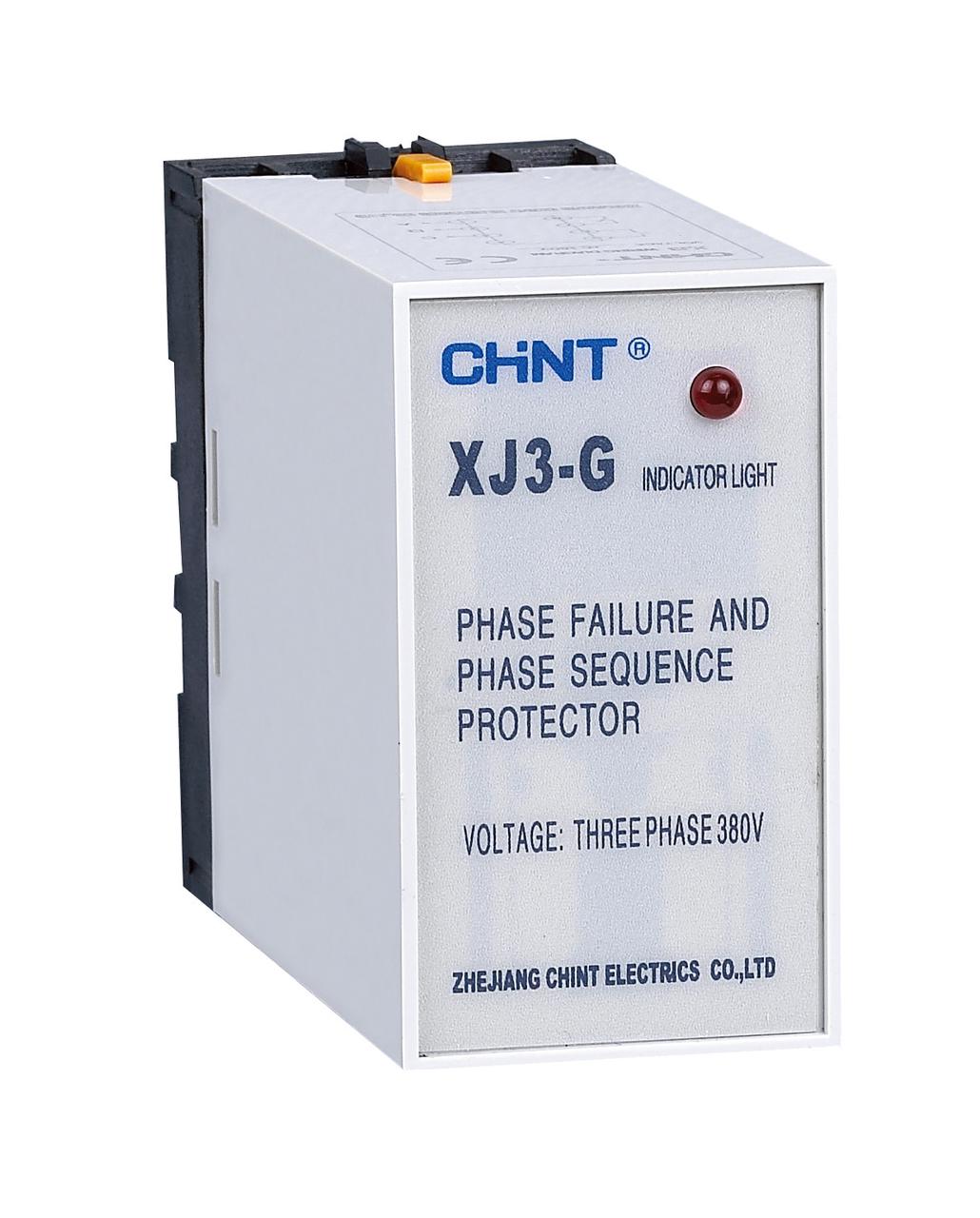
CHINT’s XJ3 phase failure and phase sequence protection relay includes model-dependent monitoring functions such as open phase, phase sequence, voltage imbalance, overvoltage or undervoltage. Its listed control-voltage range and reaction characteristics differ by model. Confirm the exact variant and operating conditions from the current technical documentation before specifying it.

Select the Protection Functions That Match the Risk
Start with the equipment’s actual failure modes. A pump may require protection against wrong rotation and phase loss; a process motor may also need under- and overvoltage monitoring; a drive-fed motor may require a different protection plan coordinated with the drive manufacturer. Check whether the relay monitors only phase sequence and phase loss or also includes adjustable imbalance and voltage thresholds.
Response time matters, but the fastest setting is not automatically the best one. Short disturbances, switching events and voltage dips can cause nuisance trips if the relay is too sensitive for the supply conditions. Conversely, a delay that is too long can leave the motor operating abnormally. Set thresholds and time delays using equipment requirements and site measurements, and record the final settings for maintenance.
Also check the sensing point. A relay monitoring the incoming supply can detect a phase loss upstream of that point, but may not detect a conductor open between the sensing terminals and the motor. The protection boundary depends on the wiring topology. The CHINT low-voltage motor control solution shows how phase-related protection sits alongside motor protection and drive components in a larger system.
Coordinate It With Overload and Short-Circuit Protection
A phase monitoring relay is not a replacement for a motor overload relay, motor protection circuit breaker or short-circuit protective device. The overload device protects against sustained current conditions according to its design; branch protection addresses short circuits; the phase relay supervises specified supply conditions. The protection functions overlap in some fault scenarios but have different operating principles and limits.
Coordination should include the motor starter, contactor, overload device, phase relay and upstream protection. Verify that the phase relay’s output contacts can control the intended circuit and that a fault causes the system to move to its defined safe state. For machinery, the broader electrical design should follow the project’s adopted requirements, including IEC 60204-1 for the electrical equipment of machines. A phase relay alone does not establish a complete machine safety function.
Commissioning and Troubleshooting
Before start-up, confirm the phase sequence at the relay terminals and compare it with the motor’s required direction. Check that the relay’s rated supply and frequency match the system, and verify the control output changes state correctly during a simulated fault or approved test procedure. Do not create a live fault by removing conductors unless the test is planned and controlled by qualified personnel.
If a phase monitor trips unexpectedly, record the relay indicators, line-to-line voltages and event timing before resetting it. Inspect fuses, terminals and contactor connections; check for voltage imbalance and intermittent upstream switching; and compare measured conditions with the set thresholds. Repeatedly resetting the relay without correcting the cause can leave the motor exposed to the same fault.
For pumps and other critical motors, the control system may also report a phase fault to a PLC or remote monitoring platform. Alarm text should distinguish a phase-sequence issue from a phase-loss or voltage fault where the hardware supports that level of diagnosis. Better fault identification can shorten maintenance time and help operators avoid restarting machinery before the supply is corrected.
Five Checks Before Adding a Phase Monitoring Relay
- Identify which faults the relay must detect: phase loss, sequence, imbalance, overvoltage or undervoltage.
- Confirm where the relay senses voltage and what faults that point can reveal.
- Verify output contact ratings against the contactor coil or interposing relay.
- Coordinate settings with motor, drive and process requirements.
- Keep overload, short-circuit and machine-safety protection in the overall design.
Conclusion
A phase monitoring relay adds a useful layer of supervision to a three-phase motor control circuit, especially where wrong rotation or abnormal supply conditions can damage equipment or interrupt a process. Its value depends on proper sensing location, function selection and coordination with the contactor and other protective devices. CHINT’s XJ3 series provides model options for phase and voltage monitoring; the selected variant and settings should be checked against the motor circuit and site conditions.
Frequently Asked Questions
Can a phase monitoring relay detect a broken conductor between the relay and the motor?
Not necessarily. A relay only responds to conditions visible at its sensing terminals. If the open conductor is downstream of those terminals, additional motor-side monitoring or protective devices may be required.
Does a phase monitoring relay stop a motor directly?
Usually it changes a control contact that de-energizes or inhibits the motor contactor. The contactor—not the monitoring relay—switches the motor’s power circuit.
Why does a motor continue running after a phase fault?
Motor inertia and load conditions can allow a motor to keep rotating despite an abnormal supply. Continued operation does not mean the condition is safe; current and temperature should be checked and the fault corrected promptly.