

Introduction
Downtime and equipment damage from unstable grid or generator voltage rarely announce themselves as a single dramatic event. More often, they show up as motors running hotter than they should, insulation failing years early, and electronics that reset for no obvious reason. A properly specified stabilizer addresses the root cause rather than the symptoms, but only if it matches the way the facility's power actually misbehaves.
For plant electrical engineers and facility managers, the practical questions are why voltage fluctuation damages equipment, how a three phase voltage stabilizer corrects it, why three-phase installations sometimes need independent per-phase regulation, and why standby generators create conditions that call for dedicated stabilization. These decisions directly affect equipment longevity and operating cost.
Why Voltage Fluctuation Damages Industrial Equipment
Three-phase motors are disproportionately sensitive to voltage unbalance between phases. A small percentage of voltage unbalance can produce a much larger percentage of current unbalance in the windings. The U.S. Department of Energy notes that current unbalance in a three-phase motor can run six to ten times higher than the voltage unbalance that caused it, and that unbalance above 1% requires derating per NEMA MG 1.
Excess current unbalance drives up winding temperature, and temperature is the primary driver of insulation aging. A rise of about 10°C in operating temperature roughly halves expected insulation life. Standard general-purpose induction motors are designed to tolerate voltage variation of about plus or minus 10% of rated voltage at rated frequency; operating outside that band degrades starting torque, full-load current, and efficiency. The U.S. Department of Energy also explains that undervoltage reduces starting torque and can stall motors under load, while overvoltage increases magnetizing current and heating even when the motor is otherwise healthy.
A stabilizer is not a luxury add-on for sites with these symptoms. It is a protective layer that prevents small, daily supply deviations from becoming cumulative thermal stress.
How a Voltage Stabilizer Actually Works
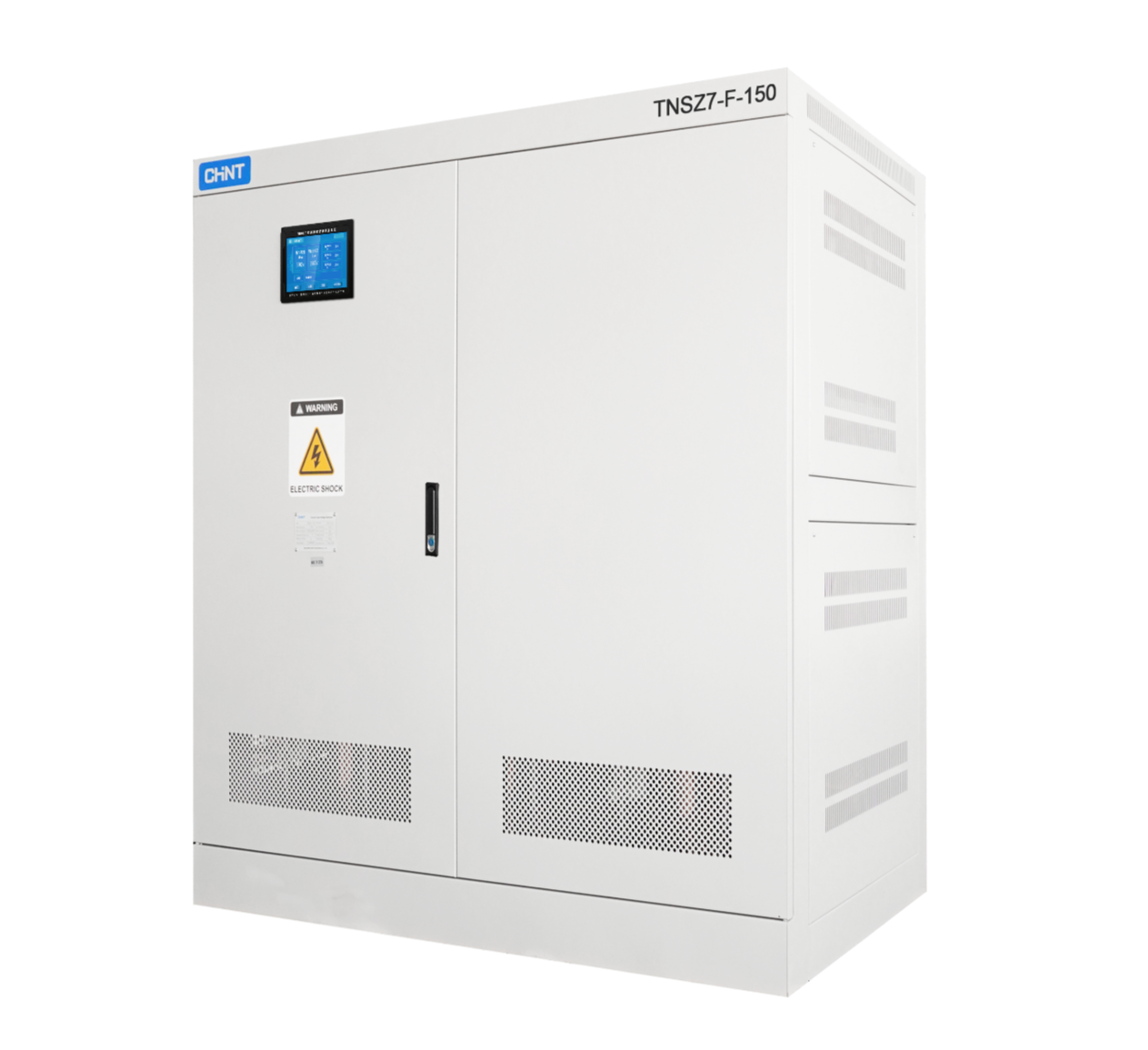
At its core, a voltage stabilizer is a feedback-controlled autotransformer. A sampling circuit continuously measures output voltage on each phase and compares it against a setpoint. Correction is applied by adjusting the transformer tap position, either through a servo-motor-driven mechanism for continuous adjustment or through relay tap-switching under digital control for faster response.
Because the stabilizer only adjusts the tap position rather than converting the full load current electronically, well-designed units achieve high efficiency and low waveform distortion. Over-voltage and under-voltage cutoff protection disconnects the load automatically if the input moves outside the correction range. This is the practical answer to how voltage stabilizers work: continuous measurement, tap adjustment, and bounded output. The TND1/TNS1 Automatic AC Voltage Regulator offers a CHINT example of this detection and compensation architecture.
Three-Phase Regulation: Unified vs. Independent Per-Phase Control
Unified regulation adjusts all three phases together from a single control loop. This approach is simpler, lower in cost, and adequate where the phases are already reasonably balanced.
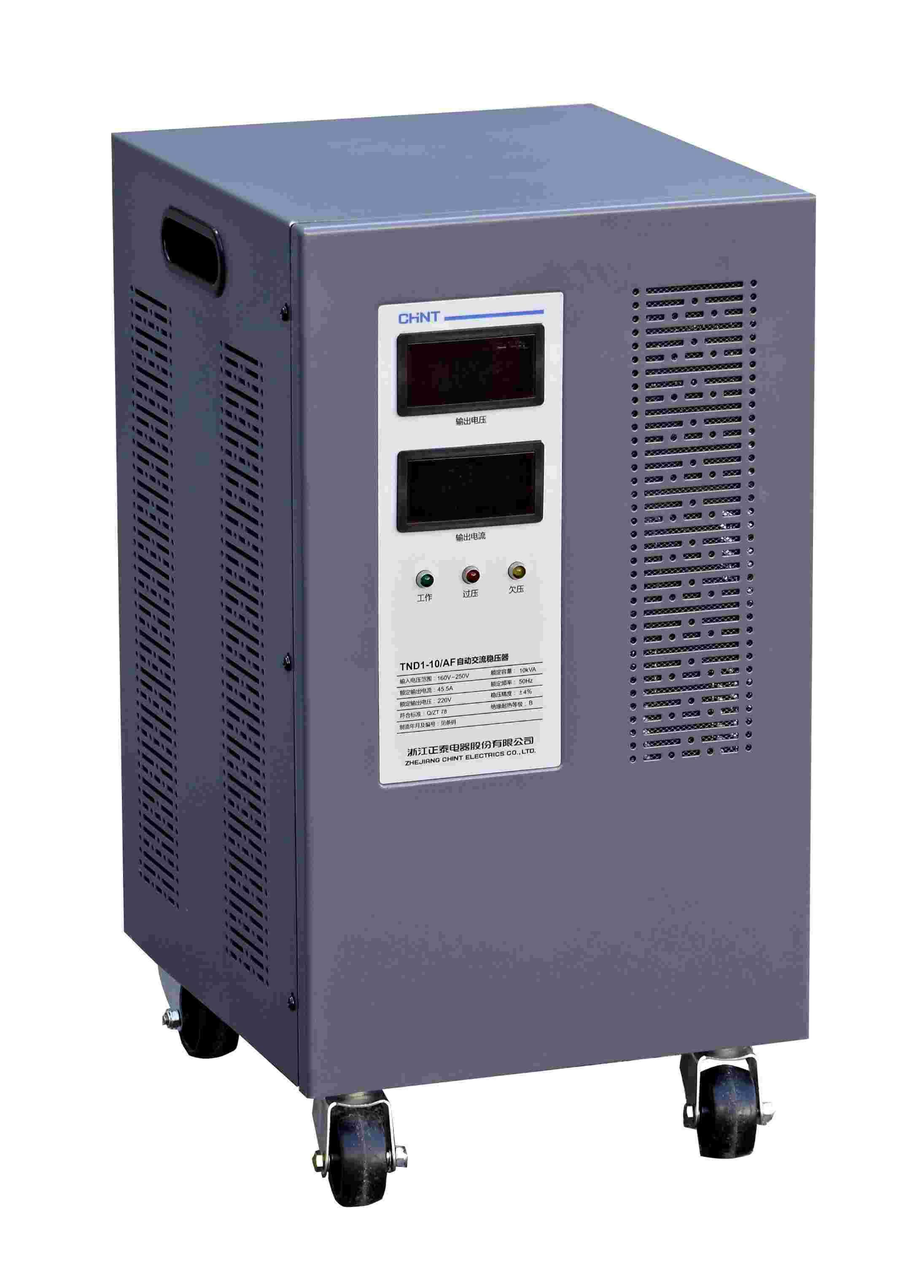
Independent per-phase regulation gives each phase its own sampling circuit, columnar autotransformer, and correction mechanism, adjusting each phase separately to its own setpoint. This architecture is necessary where phase-to-phase imbalance is significant, common on weaker feeders, on generator sets under uneven single-phase loading, or at sites with large single-phase loads distributed unevenly across the phases. This distinction separates a basic three phase voltage regulator from an industrial-grade three phase voltage stabilizer. The TNSZ7 Column Type Voltage Stabilizer applies this independent regulation approach across a 60–2500 kVA range, with output accuracy typically between 1% and 5% depending on the selected model and load conditions.
Generator Applications: Why Standby Power Needs Dedicated Stabilization
A generator solves the problem of losing power entirely; it does not solve voltage quality. Generators have higher internal impedance than a stiff utility connection, so voltage dips and swells during load steps, such as a large motor starting, are typically more pronounced than on grid power.
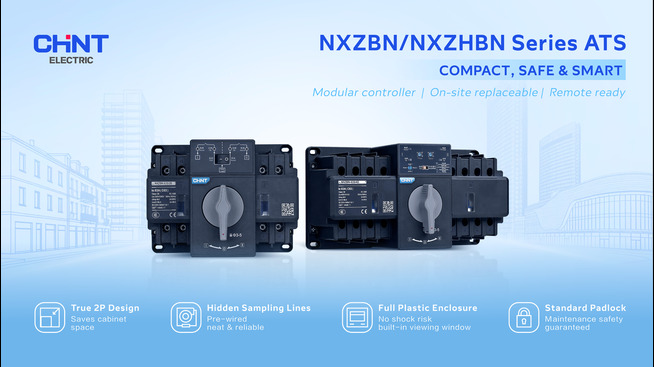
Sites that depend on standby or prime power need equipment downstream of the generator to tolerate these transients without nuisance shutdowns or accelerated wear. A stabilizer is normally installed downstream of the automatic transfer switch and generator, ahead of sensitive distribution boards. Its job is to correct steady-state voltage droop and fluctuation, not to clear faults, which remains the responsibility of upstream protection.
This is why a column type voltage stabilizer designed for independent three-phase regulation is particularly relevant for generator-backed factories, hospitals, and hotels. The load profile is rarely perfectly balanced, and the generator's voltage response is rarely as stiff as the grid. Combining the two creates the exact conditions that call for per-phase correction. For project teams designing generator-backed systems, the Diesel Generator Solution page provides additional context on CHINT's integrated approach.
Specifying a Three-Phase Voltage Stabilizer: Capacity, Accuracy, and Protection
Specifying a three phase voltage stabilizer should start with the same fields that appear on a real datasheet. Capacity in kVA must exceed total connected load plus a margin for starting and inrush current; the TNSZ7, for example, covers 60–2500 kVA to match small to large sites. Federal Register / U.S. Department of Energy 10 CFR Part 431 sets the broader framework for motor energy conservation standards that these loads must also meet, reminding specifiers that stabilizer sizing should account for actual motor duty, not just nameplate ratings.
Input voltage window determines how much sag and swell the unit can correct before cutoff protection trips. Stabilization accuracy, expressed as a percentage of nominal output, determines how tightly the output is held. Insulation class and thermal rating indicate whether the unit is built for continuous industrial duty, while protection functions such as over-voltage, under-voltage, overload, short-circuit, and phase-loss should be reviewed against the site fault study.
5 Signs Your Facility Needs a Three-Phase Voltage Stabilizer
These signs help facility managers and maintenance teams decide whether a voltage study is warranted.
- Motors or transformers run hotter than expected under normal load, often traceable to voltage unbalance above the 1% threshold.
- Sensitive electronic or control equipment resets or drops out during generator start-up or grid sag events.
- A clamp meter shows one phase consistently reading several volts higher or lower than the other two.
- Motors fail or require rewinding earlier than their expected service life without an obvious mechanical cause.
- The site runs on a long generator cable run, a weak rural feeder, or shares supply with large single-phase loads that unevenly load the three phases. The USDA Rural Development Bulletin 1724D-114 provides background on voltage-level planning for rural electric distribution systems.
Any one of these signs justifies measuring phase voltages over a representative production cycle before assuming the supply is clean enough for critical loads.
Conclusion
Voltage stability is a foundation for equipment longevity, not a secondary concern. The right stabilizer architecture depends on how a facility's power actually misbehaves, particularly where generators are involved. Unified regulation can be adequate for balanced supplies; independent per-phase regulation is the safer choice for uneven loads, weak feeders, and generator-backed systems.
CHINT's TNSZ7 Column Type Voltage Stabilizer applies independent three-phase regulation across a 60–2500 kVA range, built for factories, hospitals, hotels, and generator systems. For application-specific sizing guidance, explore the TND1/TNS1 Automatic AC Voltage Regulator, TNSZ7 Column Type Voltage Stabilizer, and Diesel Generator Solution pages, or contact CHINT to discuss your load profile, supply conditions, and accuracy requirements.
Frequently Asked Questions
What does a voltage stabilizer do?
A voltage stabilizer automatically corrects fluctuations in incoming AC voltage, keeping the output within a narrow, defined range regardless of input variation. It protects connected equipment, particularly motors, transformers, and sensitive electronics, from accelerated wear, overheating, and nuisance failures caused by undervoltage, overvoltage, or phase imbalance.
What is the difference between a voltage stabilizer and a voltage regulator?
In practice, the terms are used interchangeably in most industrial contexts. Both describe equipment that automatically corrects voltage variation to a stable output. Some manufacturers use "regulator" for narrower, servo-driven ranges and "stabilizer" for wider input windows, but there is no universal technical distinction.
How much voltage fluctuation can damage three-phase motors?
Standard general-purpose induction motors tolerate about plus or minus 10% of rated voltage under NEMA MG-1. Phase-to-phase voltage unbalance is often more damaging: NEMA recommends keeping unbalance at the motor terminals below 1%, since the resulting current unbalance can be six to ten times larger and drives disproportionate heating.
Do I need a voltage stabilizer if I already have a generator?
Often, yes. A generator solves the loss-of-power problem but not voltage quality. Generators typically have higher internal impedance than utility power, so voltage dips and swells during load changes tend to be more pronounced. A stabilizer installed downstream of the generator and transfer switch addresses this steady-state fluctuation.
What size voltage stabilizer do I need for my facility?
Sizing starts with total connected kVA load plus an allowance for motor starting or inrush current, then adds margin for growth. The CHINT TNSZ7 spans 60 to 2500 kVA, so the correct unit depends on matching rated capacity, input voltage window, and accuracy class to the site's load and supply conditions.