

For more than a century, the transformer (TF) has been working as an essential element in electrical power distribution systems, both for industries and businesses, as well as for homes.
If it were not for transformer, it would be necessary to shorten the distance between power plants and the different types of consumers, so we can say that this device really makes electricity distribution more efficient.
Today, you will learn a little more about what a transformer is, the working principle and the types available in the market, as well as their importance and usefulness. Let get started.
What Does a Transformer Do?
A transformer is a machine that works using the principle of electromagnetic induction.
Basically, this device allows you to increase or decrease the voltage and intensity of an electric current (alternating), but keeping the power constant.
These machines contribute a lot to the safety and efficiency of electricity distribution systems over long distances, since the best way to transport an electrical current from the power plant is in high voltage.
The problem is that this high-voltage current cannot reach homes in this way, since it would damage the entire electrical installation and the appliances connected to it, so it must be reduced to tolerable limits in order to be used in homes and businesses in a safe way.
Thus, transformers not only carry out distribution work, but also protect electrical installations.
How Does a Transformer Work?
The three essential components in transformers are: the magnetic core, the primary winding and the secondary winding.
In terms of physics, the operation of TF is based on Faraday’s Law of Electromagnetic Induction:
“The rate of change of the flux linkage with respect to time is directly proportional to the induced electromagnetic field in a coil or conductor.”
So, the operation of a TF resides in the mutual electromagnetic induction between two circuits linked by a common magnetic link. This mutual induction that takes place between these circuits, is what helps in transferring energy from one point to another.
The main winding is the one that is connected to an electrical source, from where the initial magnetic flux is generated.
Both coils are isolated from each other. The initial electric flux is induced in the main winding, from where the magnetic core passes and is connected to the secondary one in terms of low reluctance; this helps to maximize the connection or link.
What the core actually does is functioning as a bridge, retransmitting the electrical flow to the secondary winding to create a magnetic circuit that completes the current flow.
Also note that in certain types of TF, the secondary winding can achieve an impulse when both windings are wound on the same core, which allows the generated magnetic field to produce movement.
Technically, all types of transformers have a magnetic core assembled by the accumulation of steel sheets, with a minimum air gap necessary to guarantee the continuity of the magnetic path.
Primary winding is what creates an alternating flux in the core, and it is the way in which a TF delivers alternating current energy from one circuit to another, converting electrical energy from one value to another, changing the voltage, but conserving the frequency.
Different Types of Transformers
There are various types of transformers, which in turn serve different classifications, either by functionality or applications, among others.
We are not going to list all the types of existing transformers since there are many and it is not the objective of this article, but we will talk a little about some of the most relevant.
Power Transformer
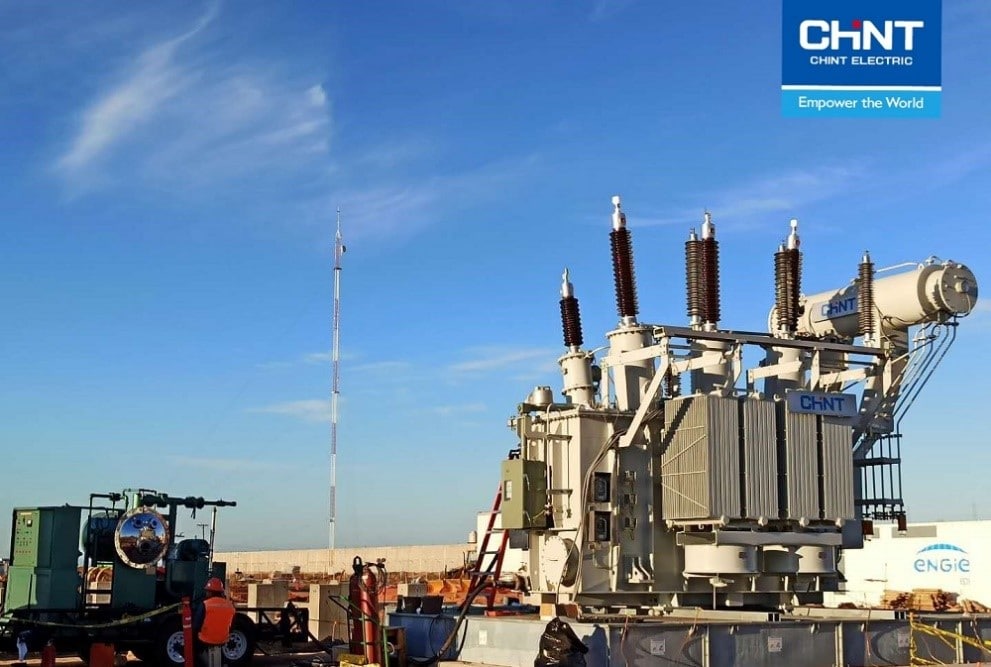
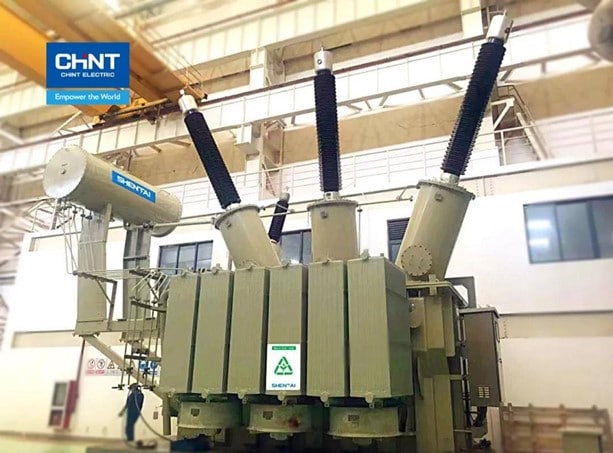
Power transformer is one of the main and most widely used classifications of TF and they are widely used to increase and decrease the voltage in the power plant and in the substations.
They are generally operated at full load and conducting high voltages because they are designed for this, being also large and heavy due to the high level of internal insulation they have.
In general, they are not usually directly connected to houses and/or businesses.
Within this classification we can find several types of transformers:
- Laminated core
- Toroidal
- Autotransformer
- Induction regulator
Distribution Transformer
Distribution transformers are also called service transformers and are a type of TF power that provides the final voltage in the electrical distribution system.
In short, they transform and deliver the current to the final consumer, whether they are homes, businesses, etc.
They can also be classified as follows:
- Voltage class
- Mounting location – pole or underground vault
- Liquid or dry-type insulation
- Single-phase or three-phase
Traction Transformer
Traction TF are specifically used to transform the electricity generated from the traction effect during the movement of trains. This energy is then delivered to the electric motors.
This type of TF can operate at lower frequencies, even as low as 16.67 Hz, while common TF typically operate at 50 or 60 Hz.
Instrument Transformer
Within this classification we can find:
Potential or voltage transformer
This type of TF can reduce the voltage from a high voltage circuit to a low voltage one with the intention of measuring voltage drops. This type of TF is connected across or in parallel to the lines that are desired for various measurement tasks, such as recording phase errors, for example.
Within this category of TF are the electromagnetic type, the condenser type and the optical type.
Current transformer is another type of measurement and protection TF that is used in a similar way to the voltage transformer, only that they are usually connected in series for this, providing higher levels of precision. They can provide a flow in the secondary winding similar to the flow of the primary winding.
Other types of transformers include:
- Pulse transformers
- RF transformers
- IF transformers
- Audio transformers
Safety Tips to Consider When Working with Transformers
Because current transformers are devices that can handle high voltage, it is vitally important that there are a series of safety measures to be followed when direct handling is necessary, all with the aim of avoiding accidents.
To begin with, these should meet the requirements of ISO 9001. But in any case, when you notice that your transformer performs strangely, it is best to remove it from the system to perform the respective inspection and maintenance work.
- Perform a pre-installation inspection and check for a burning smell or any damaged or misplaced parts.
- Keep the current input disconnected when working with transformers.
- Always wear the appropriate protective equipment and carefully observe the voltage output indication of the equipment.
- Make sure you know the maximum voltage of your transformers. Remember also that multiple transformers help balance the load.
- Always keep small metal objects like nuts and bolts away from your transformers.
- Make sure your transformer is grounded to avoid static electricity.
- Always keep your transformers and components protected from contact with water or other liquids.
Summarizing
As you may have realized, the importance of having quality transformers in an electrical distribution system is something that cannot be overlooked, since transformers are a vital component to guarantee good electrical service and network security.
In addition to this, although it is true that there is no single solution for everything when talking about transformers since different types of consumers have different types of needs. It is also true that in most cases, both for residential use and commercial, the power and the distribution transformers are usually the most widely used.
If you are looking for quality in a power transformer, the CHINT power transformer may be the solution you need with the guarantee of quality and support.