

Introduction

EPC contractors face tight schedules and complex electrical requirements, making coordination essential when delivering turnkey substations. A successful project depends on selecting compatible equipment across MV and HV levels so that engineering, procurement, installation, and commissioning progress smoothly without redesigns or delays. Here’s how each stage comes together to form a dependable, fully engineered substation.
Translate Specifications Into Practical Substation Design
Substation design begins long before equipment is selected. Engineers must translate the owner’s specifications, regulatory requirements, and operating environment into a layout and protection scheme that reliably supports the connected load.
Converting System Requirements Into Engineering Decisions
Most projects open with a series of questions:
- What are the present and future load demands?
- What are the maximum and minimum fault levels?
- How should transformer ratings align with feeder diversity and utility interconnection constraints?
- What redundancy level is expected for critical processes such as industrial plants, transport systems, or data centers?
EPC engineers evaluate these factors and run calculations that form the backbone of the design. Load-flow studies determine transformer capacity and feeder arrangements. Fault-level analysis ensures the selected MV switchgear and HV switchgear can withstand and interrupt the expected short‑circuit currents. Voltage drop checks confirm that motor starting and long cable runs will not cause nuisance tripping or process instability.
Environmental Variables
Real-world conditions heavily influence equipment choice:
- Altitude: Air density decreases with elevation, requiring derating or alternative insulation strategies.
- Seismicity: Regions with higher seismic activity need reinforced frames and anchoring systems.
- Ambient temperature: High or low temperature extremes can affect insulation, breaker operation, and auxiliary control functions.
- Pollution class: Dust, corrosive atmospheres, and humidity influence whether air-insulated switchgear or GIS is more appropriate.
A double-bus arrangement may provide operational flexibility for industrial users. Breaker‑and‑a‑half configurations improve reliability for transmission nodes. Ring bus schemes suit utilities that prefer fault isolation without losing entire feeder sections.
Aligning Equipment Families with Project Needs
Turnkey work rarely benefits from fully customized designs. Instead, EPC contractors prefer equipment families that allow:
- standardized footprints,
- modular compartments,
- predictable interlocks, and
- consistent installation methods.
This reduces redesign effort and prevents mismatches between primary equipment, protection relays, CT/PT ratios, and auxiliary circuits. When the equipment portfolio scales smoothly from MV to HV levels, the engineering team can reuse templates and speed up the approval process.
Merge MV and HV Switchgear Into Turnkey Substation Setup
A turnkey substation only functions as intended when its MV and HV sections operate as one integrated system.
MV Switchgear as the Core of Substation Distribution
Medium-voltage systems typically fall in the 3.3–33kV range. MV switchgear serves as the heart of distribution by providing switching, protection, and sectionalizing functions. Almost every feeder—whether to a factory, pump station, conveyor, or local transformer—depends on dependable MV equipment.
When EPC engineers evaluate MV switchgears, they look at:
- short‑circuit ratings and mechanical endurance,
- insulation type (air, vacuum, or SF6),
- internal arc classification for personnel protection,
- mechanical and electrical interlock schemes,
- ease of cable termination and maintenance access.
MV switchgear must also support routine operations such as racking breakers in and out, isolating sections for testing, and integrating with remote monitoring systems used by utilities or plant operators.
HV Switchgear for Transmission‑Level Reliability
High‑voltage nodes (typically 40.5kV and above) require HV switchgear that can withstand higher dielectric stress and interrupt larger fault currents. This equipment links substations to transmission networks and must provide stable, safe operation under both normal and abnormal conditions.
Key attributes include:
- strong dielectric strength,
- robust mechanical endurance under frequent switching,
- reliable arc‑flash mitigation designs,
- clear interlocking to prevent incorrect operation,
- compatibility with advanced protection relays.
Because faults in HV systems have broader grid impacts, the reliability expectations are greater. EPC engineers select HV components that have predictable operating characteristics and proven test performance.
Transitioning to Air Insulated Switchgear (AIS) for Predictable EPC Delivery
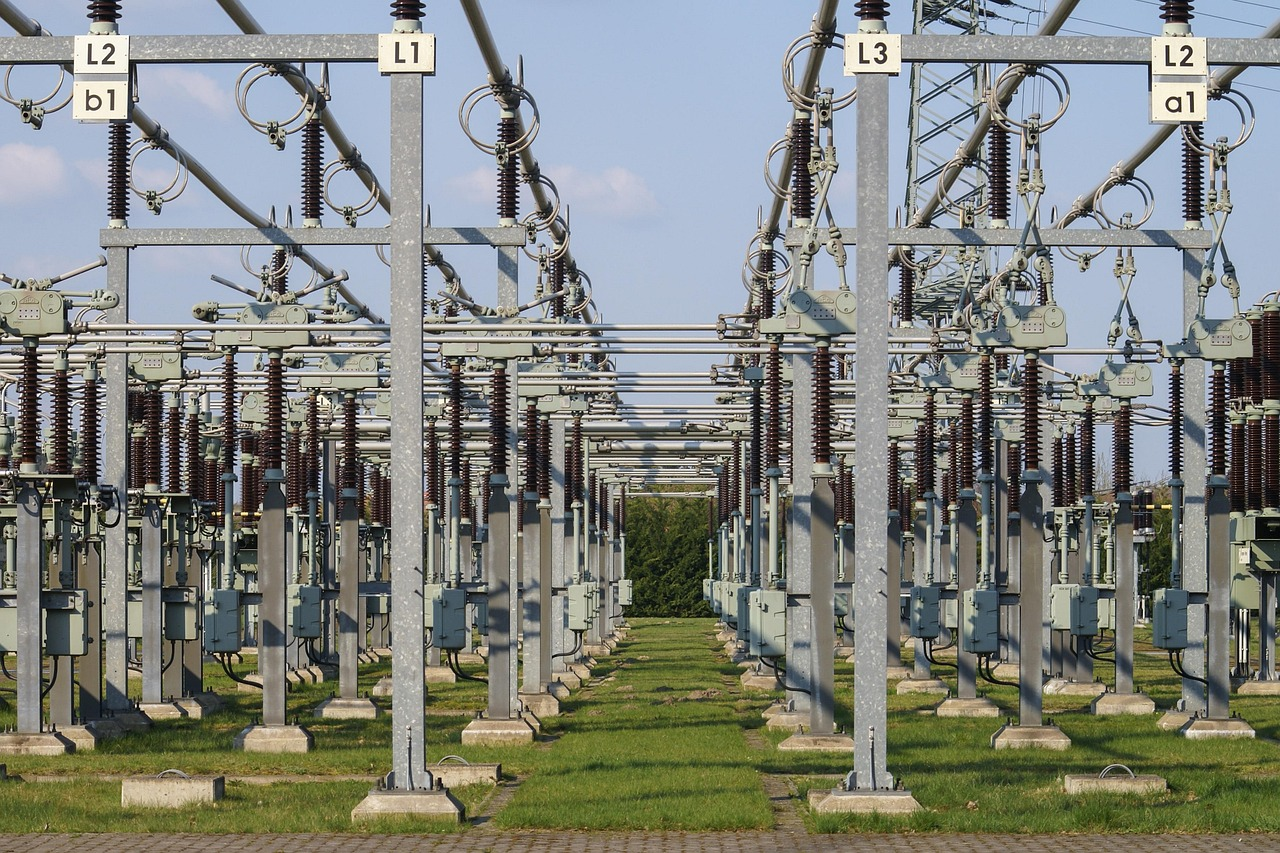
Many turnkey substations use air-insulated switchgear because AIS allows flexible layouts, straightforward maintenance, and quicker installation compared to GIS. Its advantages include:
- simplified visual inspection of components,
- easier access for maintenance personnel,
- lower cost for projects with adequate space,
- shorter assembly and testing cycles.
AIS is often preferred when the site offers enough land area, environmental conditions are moderate, and the owner prioritizes accessibility and long‑term maintainability. GIS, on the other hand, becomes necessary when space is limited or environmental sealing is essential.
The Protection Layer: Apply HV MCCBs in Substation Design
High‑voltage molded case circuit breakers (HV MCCB) have become a practical addition to feeder and auxiliary circuits in modern substations. Compared to traditional fuse‑based solutions or bulky LV‑HV adaptations, HV MCCB devices provide compact protection with adjustable trip characteristics that support a wide range of applications.
HV MCCBs are commonly deployed for:
- transformer secondary protection,
- capacitor bank switching and protection,
- motor‑feeder circuits where inrush and thermal loading vary.
Performance considerations include:
- breaking capacity suited to the system fault level,
- thermal stability across a wide temperature range (e.g., −40°C to +70°C),
- adjustable thermomagnetic or magnetic‑only protection curves,
- adequate insulation and impulse withstand levels.
Because HV MCCB equipment has integrated protection and a compact structure, it reduces installation complexity. This aligns with EPC project priorities—shorter installation windows, fewer external accessories, and faster commissioning checks.
Apply AIS, MV/HV Switchgear, and HV MCCBs in Real EPC Workflows
A crucial part of turnkey delivery is selecting equipment that works together without requiring custom engineering for every project. CHINT provides several equipment families that fit this approach.
MV AIS That Speeds Up Maintenance and Feeder Isolation
In day‑to‑day EPC work, the KYN61‑40.5(Z) air-insulated switchgear helps teams isolate feeders quickly and safely because its breaker can be withdrawn without disturbing adjacent bays.
This shortens outage windows and simplifies routine testing. Its arc‑resistant structure limits fault impact, and the modular layout keeps cable work predictable. In practice, it reduces downtime and avoids many of the small delays that often slow maintenance.
GIS Modules That Simplify Work in Harsh or Space‑Constrained Environments
The NG7 GIS is selected when teams need equipment that performs reliably in dusty, humid, or polluted sites. Its sealed construction removes the need for frequent cleaning or environmental mitigation, while its compact size supports installation in basements, tunnels, or crowded substations. Because modules are delivered preconfigured, crews spend less time making on‑site adjustments, which helps keep installation timelines steady.
A Practical HV MCCB for Standardizing Auxiliary Protection
For auxiliary feeders and secondary transformer circuits, the NM8N‑HV helps engineers align protection settings without redesigning panels. Its adjustable TM/M trip units support coordination studies, and its wide temperature tolerance reduces derating concerns. The compact frame frees cabinet space, and its durability lowers the frequency of replacements. These factors make it easier to maintain consistent designs and commissioning practices across multiple projects.
How Standardized Equipment Families Streamline EPC Execution
When EPC teams adopt standardized solutions across AIS, GIS, MV switchgear, HV switchgear, and HV MCCB packages, they reduce the likelihood of mismatches during commissioning. This helps:
- minimize redesign work,
- shorten documentation cycles,
- standardize wiring diagrams and interlock logic,
- accelerate factory acceptance testing, and
- reduce training complexity for installation crews.
A consistent equipment ecosystem directly supports early‑stage engineering and simplifies the final commissioning sequence.
Simplifying Construction, Integration, and Commissioning
Construction and commissioning are often the phases where schedule risks increase. Equipment with modular structures, pre‑engineered busbar interfaces, and standardized interlocking schemes helps EPC teams avoid these issues.
Key integration and commissioning priorities include:
- Factory acceptance testing (FAT): Ensuring equipment complies with IEC 62271 standards before shipment.
- Primary and secondary injection tests: Validating CT/VT circuits, protection relays, and breaker trip curves.
- Interface checks: Verifying communication between relays, switchgear control wiring, auxiliary power circuits, and SCADA systems.
- Digital monitoring: Using thermal sensors, trip counters, and position indicators to verify proper installation and obtain baseline data for future maintenance.
CHINT’s switchgear and HV MCCB devices undergo extensive factory testing and pre‑certification. This reduces on‑site troubleshooting and gives EPC teams confidence that equipment will perform as expected during energization.
Conclusion
Turnkey substations demand consistent alignment from specification through commissioning, with load analysis, equipment selection, protection coordination, installation, and testing all working together to keep schedules on track. Standardizing around compatible components helps EPC teams achieve predictable integration and smoother commissioning.
Solutions like the KYN61‑40.5(Z), NG7, and NM8N‑HV support this by enabling repeatable, practical workflows rather than redesigning each project. CHINT’s portfolio strengthens these outcomes by providing reliable, pre‑tested equipment suited to the varied conditions found in modern turnkey substations.