

Introduction

With the growth of renewables distributed across the globe, grid operators are having to deal with more and more difficulty with regard to variability and stability. A power transformer is pivotal to this transition as it modifies voltage levels to enable the safe and efficient transmission of electricity from renewables. In this guide, the difficulties of renewable integration are discussed, as well as how CHINT’s transformer innovations accommodate and help modern flexible power systems.
Struggles of Integrating Renewable Energy into Existing Grid Networks
Due to the world’s targets of reducing harmful carbon emissions, it is predicted that the world’s reserves of renewable energy systems (RES) will reach 50% by 2030 and 70% by 2040. McKinsey predicts that installed renewable infrastructures will grow nine times within the years of 2020 and 2050. Considering this, the world will have to spend double that amount, about €550 billion a year, from now to 2030 to have positive returns from transmission and other supporting infrastructures.
Wind and solar present unique operational challenges. Their output fluctuates with weather patterns, their generation profile can change within minutes, and they are often sited far from existing transmission corridors. Research from NREL shows that utilities can reduce costs by up to 14% when accurate forecasts for wind and solar are incorporated into system operations. Without such tools, even moderate renewable penetration can force operators to schedule generation intra‑hour and coordinate across larger regions to avoid curtailment.
From a technical perspective, several recurring challenges appear across renewable‑dependent grids:
- Reverse power flow: Occurs when distributed renewable generation produces more power than local demand, sending electricity back toward substations designed for one‑directional flow.
- Limited hosting capacity: Becomes an issue when distribution feeders can no longer accommodate additional solar or wind without compromising voltage or reliability.
- Voltage fluctuations: Arise when variable renewables sharply increase or decrease their output, forcing equipment to compensate quickly.
- Frequency stability risks: Grow with the reduction of synchronous generators, which traditionally provided inertia to the grid.
- Reduced system inertia: Limits the grid’s natural ability to absorb sudden mismatches between supply and demand.
These challenges show how the grid’s fundamental infrastructure elements, including transformer assets, need to be updated to support flexible and responsive, dynamic loading.
There is an ongoing need to effectively manage weak voltage where operators add more renewables to the grid in the transmission and distribution systems. This is where the power transformer is key.
What Is a Power Transformer and Its Role in Renewable Integration?
To understand how renewables fit into the modern grid, it is useful to revisit the fundamentals: what is power transformer technology and why does it matter?
A power transformer will help you adjust the voltage levels between each section of the electrical network; generation, transmission, and distribution. In long-distance transmission, high voltages are required, but in the distribution and end-use consumption, low voltages are needed. Transformers ensure that electricity is able to flow through the system in an efficient and safe manner.
In renewable energy environments, transformers perform several mission‑critical functions:
- Stepping up power at solar farms, wind plants, and hybrid generation sites so electricity can be transmitted efficiently.
- Stabilizing voltage during fluctuating renewable output, preventing equipment stress.
- Providing electrical isolation between grid segments to enhance safety.
- Supporting distributed energy resources (DERs), battery storage, and hybrid configurations that may require bi‑directional power flow.
Because renewable systems generate power in ways that differ from traditional fossil‑fuel plants, transformers today must handle more dynamic and uneven loading. Modern designs therefore focus on stronger thermal performance, higher overload tolerance, efficient cooling for continuous operation, and advanced monitoring that tracks real‑time loads, temperatures, and insulation conditions.
With these capabilities, transformers become active components in maintaining grid stability rather than simply passive voltage regulators.
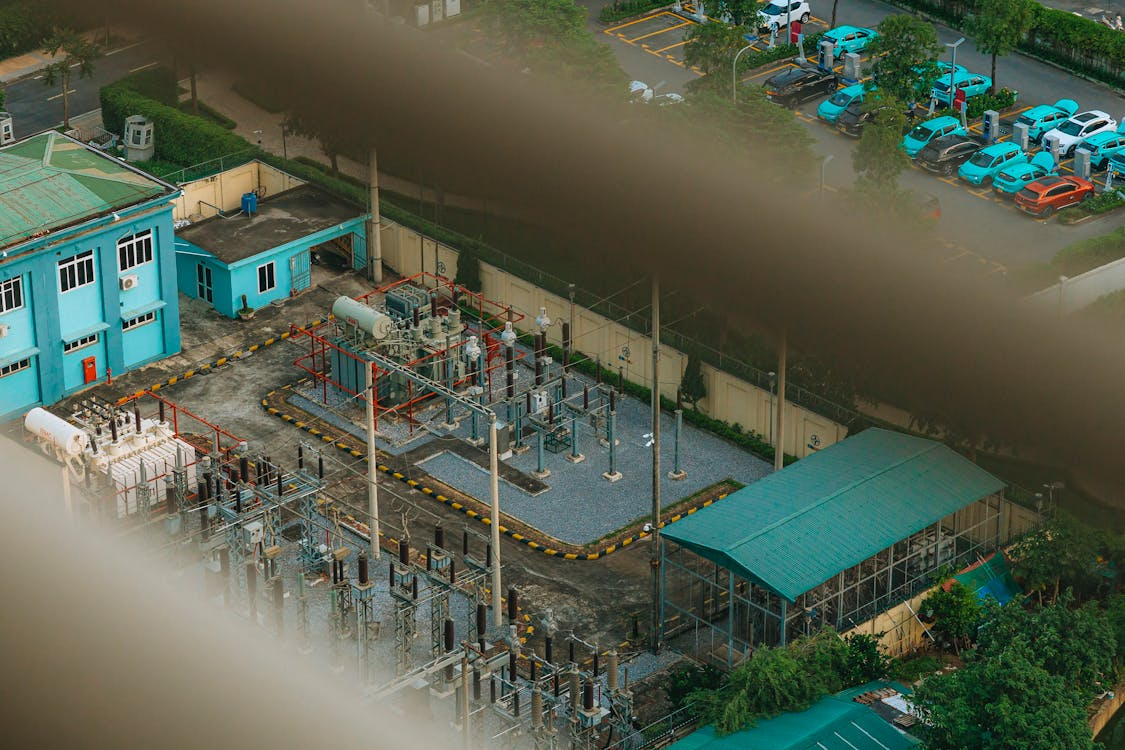
Managing Renewable Variability with Large Power Transformers
As renewable capacity grows, so does the demand for large power transformers capable of managing bulk power transfer across high‑voltage transmission corridors. Unlike smaller distribution units, these transformers are built for substantially higher MVA ratings, which allows them to move large volumes of energy from generation sites to major load centers.
They also feature greater thermal and mechanical strength to withstand short‑circuit forces and frequent load variations, while their ability to operate at higher voltages ensures efficient long‑distance transmission.
In renewable‑rich regions, large power transformers play several key roles:
- Managing high‑capacity output from centralized wind and solar installations.
- Stabilizing transmission‑level voltages during steep output changes.
- Supporting bi‑directional power flow as storage and distributed resources expand.
- Enabling flexible capacity planning, helping operators balance resource adequacy and system flexibility.
CHINT’s high‑capacity transformer designs are built with these needs in mind. They feature high short‑circuit resistance, low losses, and advanced digital monitoring capabilities that provide utilities with real‑time insight into transformer health and loading. These features allow grids to maintain stability while accommodating more renewable power.
Power Plant & Power Station Transformers for Renewable Projects
Power Plant Transformers in Renewable Generation Sites
At renewable generation sites—solar farms, wind power plants, and hybrid facilities—the power plant transformer is the first critical interface between electricity production and the broader grid. Its main job is to step up voltage from the relatively low levels produced by inverters or turbines to the high voltages needed for efficient transmission.
Transformers at these sites must also manage conditions that differ from conventional power stations, including:
- Bi‑directional flow requirements when battery storage is included.
- Constant voltage fluctuations due to intermittent renewable output.
- High ambient temperatures, especially at solar farms.
- Continuous cycling and frequent load changes that introduce additional thermal and mechanical stress.
Power Station Transformers as Critical Grid Nodes
The power station transformer functions as the key connection point between renewable projects and the transmission system. These transformers operate at higher voltages and are built to handle more rigorous mechanical and thermal conditions.
CHINT’s Power Transformer demonstrates these capabilities. The company manufactures units up to 1000 kV and 1000 MVA, with installations in more than 120 countries and regions. These transformers are engineered for high reliability, exceptional short‑circuit resilience, low noise, low partial discharge, and compatibility with smart grid platforms. Their proven performance in short‑circuit withstand testing places them among the leading solutions globally.
Environmental considerations also play a growing role in transformer selection. Renewable projects often have strict requirements for noise levels, space constraints, and lifecycle sustainability. CHINT’s designs address these needs through efficient cooling, compact layouts, and materials that enhance durability and environmental performance.
Natural Ester and Dry-Type Adaptability
As sustainability becomes a top priority, transformer technology is moving toward greener alternatives. Natural ester oil‑immersed transformers offer benefits such as:
- Superior fire resistance for safer installation in sensitive areas.
- Biodegradability and reduced environmental impact.
- Better thermal endurance, supporting higher overload capability.
CHINT has made significant strides in this area, producing Natural Ester Oil-Immersed Transformers across a wide range of voltages (35 kV to 750 kV) and securing third‑party type test certifications for these units.
Dry‑type transformers are another important option, particularly for urban and indoor renewable projects where fire safety is critical. The SCB series cast‑resin dry‑type transformer, for example, is widely used in residential buildings, commercial facilities, and industrial sites. These transformers offer low noise, strong moisture resistance, and robust fire performance—features that make them suitable for modern renewable installations.
Building a Smarter, More Adaptable Grid with Transformer Digitalization
As renewable penetration increases, real‑time situational awareness becomes essential for maintaining grid stability. Digital monitoring tools allow operators to track transformer health, loading trends, and harmonic distortion, enabling faster decision‑making and reducing the risk of unexpected outages.
Industry research emphasizes the importance of system flexibility, advanced forecasting, and coordinated inverter interactions in renewable‑heavy networks. Modern transformer technology supports these requirements through:
- Smart sensors that monitor temperature, partial discharge, and vibration.
- Online oil analysis systems for tracking insulating fluid health.
- IoT‑ready features that integrate transformer data with SCADA systems.
- Predictive maintenance algorithms that detect issues early and reduce downtime.
These capabilities reduce downtime, extend asset life, and provide the adaptability needed for grids undergoing rapid transformation.
Conclusion
The movement toward clean energy is changing the way countries manage their power systems and the ease of power system integration is demanding flexibility, stable voltage management, efficient power transfer, and real-time visibility. As one of the primary assets within the system, the power transformer performs safe voltage adjustments and is key to reliable operation during renewable energy output fluctuations.
CHINT’s solutions give the resilience and digital intelligence needed to adapt networks from generation to transmission and distribution for utilities to build a sustainable energy future.