

Introduction
People often think that solar power relies mainly on panels and batteries. But did you know that the reliability of your solar and storage systems depends on DC protection and measurement? Components like DC breakers manage the current flow and isolate faults, ensuring your system is as efficient as possible.
Why Solar and Storage Systems Depend on Specialized DC Components
In solar and storage systems, the real work actually happens in the DC component. It’s where the PV strings, MPPT inputs, combiner boxes, and battery racks work together to make the system reliable. These constantly deal with fluctuations, reverse currents, and fault energy, which is why they need to be protected from long-term damage.
Each DC component has its own vital function, which is to protect, isolate, and measure. Protection comes from DC breaker, fuses, and surge protectors, which guard against faults and overloads, preventing equipment damage or fire hazards.
Isolation allows technicians to safely disconnect parts for maintenance or troubleshooting. DC disconnectors disconnect switches and create a break in the circuit. If not properly isolated, equipment can be unsafe to touch.
Lastly, measurement devices track data such as voltage, current, temperature, and output, which help analyze system performance and battery health. With these three functions, the solar and storage systems can reach their optimum performance.
DC Breakers for Solar and Storage Protection
DC breakers play a crucial role in solar and storage systems. They protect every component in the system to ensure it functions properly. In PV arrays, the DC breaker isolates faulty strings and prevents reverse currents. In charge controllers, these prevent electronics from overloading. In battery banks, they help interrupt short-circuit currents. DC breakers are needed because DC circuits require specialized mechanisms compared to AC circuits. To know the two, here’s a table to better understand what makes them different:
Because of the above features, solar systems with DC breakers should be able to handle voltages up to 1000V in multi-string PV systems. These should have high interrupt ratings so that they can safely break short circuits from panels or battery packs. To reach its full potential, outdoor installations must have wide temperature tolerance and altitude compatibility, too.
To make DC breakers work best, they should be paired with surge protection, fuses, and MPPT inputs and installed inside combiner boxes, rooftop arrays, and ESS racks. They should also be able to withstand fluctuating irradiance and frequent charge and discharge cycles. Without these critical requirements, DC arcs can cause a catastrophic system failure which is why it's important to hold DC breakers to a much stricter standard compared to the usual AC breakers.
DC Disconnectors for Safe Isolation in PV and ESS Systems
It’s important to note the difference between DC breakers, which protect and interrupt currents automatically when something goes wrong, and a DC connector, to isolate.
DC disconnectors are required, especially in maintenance shutdowns. Isolation helps technicians to work on the systems without live DC power present. DC disconnectors also help isolate PV arrays before inverter work, or anything that involves touching or opening wires. These are also needed when working on battery banks, which supply continuous current even when the inverter is off.
DC disconnectors are installed outdoors, which is why they’re held up to stricter environmental design requirements. These should have IP protection levels that guard against dust, rain, and moisture. They must also be made with UV-resistant material, especially when they’re exposed to sunlight. Most importantly, these should have high thermal endurance to operate even under heavy heat loads.
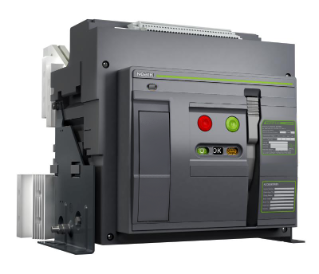
Disconnectors like Chint’s NH4 Switch Disconnector or ASD16 DC Disconnector are ideal because they comply with the standards needed for storage systems. For example, NH4 is designed for safe circuit isolation, recommended for residential and commercial applications. Meanwhile, ASD16 can withstand current up to 75 kA, at 1500 Vdc and is made for ungrounded systems.
Electricity Meters for Solar Output and Consumption Monitoring
Aside from protection and isolation, measurement is an important part of your solar and storage installation. Measuring determines if your system is performing as expected, if panels are shaded, or if inverters are producing the right amount of energy. In addition, this helps detect underperformance or shading, fulfill feed-in tariff or export requirements, and enable billing, net metering, and load tracking into how much energy is flowing to and from the grid. Measurement through the electricity meter helps homeowners and businesses understand how the energy is used and spot spikes in consumption.
Meters in solar applications are designed to measure active energy, instantaneous power, voltage, and current so users can see the system’s behavior. Many smart electric meter models adhere to strict accuracy classes of Class 1.0 or 0.5, ensuring that readings are interpreted through the analysis of billing and performance.
Aside from that, electric meters also support multi-tariff metering, which track energy usage across varied rate periods. This helps to make informed decisions about consuming power.
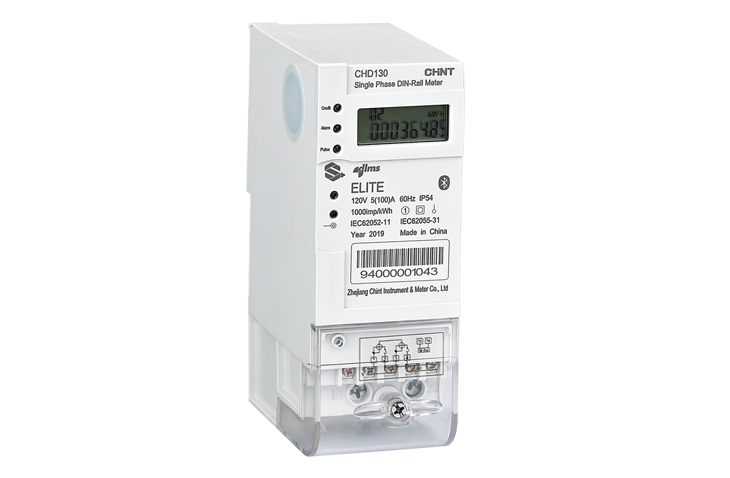
Electric meters like CHINT’s CHD130 Single Phase DIN-Rail Meter is an example of a modern standard with features of class 1.0/0.5 accuracy, IP54 rating, a 110-240V operation, and event logging capabilities.
Smart Electric Meters for Hybrid Solar + Storage Control
Aside from basic measurement of energy, smart electric meters are capable of advanced functionalities. These are usually equipped with two-way communication, automated control features, and real-time monitoring which allow a solar and storage system to operate efficiently.
In hybrid setups, meters coordinate battery charging schedules if they need to charge or discharge. They also prevent reverse power flow into the grid, a critical detail in areas with strict export limits. Smart electric meters also provide demand response data, integrating smoothly in EMS and BMS platforms that manage the system.
Smart meters usually are equipped with communication interfaces such as the RS485, PLC, or wireless option, or use protocols like the DLMS, COSEM, or STS for secure exchange of data.
Smart electric meters like CHINT’s CHD130 offer functions that meet the modern standards. Its anti-tamper detection, credit modes, and data logs add an extra layer of control and transparency to your systems.
Ultimately, smart metering helps reduce operational risks, improve energy efficiency, and support remote monitoring. These factors ensure that performance is optimized and energy is managed effectively, making your solar and storage systems operate to its maximum potential.
How Power Components Work Together in Solar and Storage Systems
DC breakers, disconnectors, and meters have different functions, but they work together in a coordinated protection and monitoring scheme. Breakers protect circuits, disconnectors provide isolation from maintenance, and meters supply real-time and accurate data to verify performance or detect abnormalities. With all these elements, risks can be prevented and guides can help provide information for system decisions.
CHINT’s lineup of components help illustrate how integration works in practice. For one, the NB1-63DC provides branch-circuit protection for PV strings. NH4 is made for compact rooftop isolation. ASD16 DC Disconnector provides high-capacity switching for elevated DC voltages. Meanwhile, the CHD 130 supplies measurement, captures voltage, energy, and current data for monitoring.
By using components from a unified family, it can help EPCs eliminate issues in terms of compatibility and coordination. This is because these components were designed in a coordinated manner, simplifying wiring layouts, reducing errors on installation, and making the whole system more manageable.
Moreover, unified component families function as intended; creating a safer and reliable solar or storage system. When all elements are aligned, faults can be seen and interrupted fastly, arrays can be isolated, and operators can work safely and make guided decisions when it comes to installation and maintenance.
Conclusion
Reliable solar and storage systems rely on DC components which provide protection, isolation, and monitoring. Through these precise components, your system’s performance stays safe, functional, and consistent in all operating conditions. CHINT supports this through products with robust, standard-compliant devices suited to modern PV and ESS architectures.