

Introduction
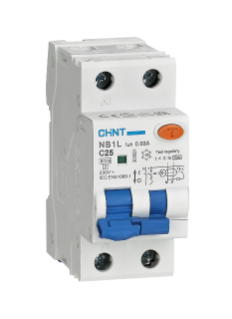
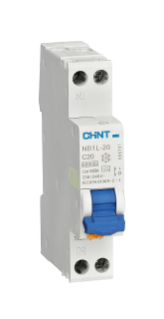
CHINT’s NB1L-20 Slim RCBO is an electromagnetic leakage protection that conforms to IEC/EN 61009-2-1 standards. With its 18mm width for 1P+N, it allows users to save space compared to classical RCBOs. This circuit breaker operates independently of voltage, has sustainable low-voltage power distribution, and performs well under electromagnetic interference.

What Is the NB1L-20 Slim RCBO?
What is the NB1L-20 Slim RCBO? The CHINT NB1L-20 Slim RCBO is an electromagnetic, voltage-independent RCBO that complies with IEC/EN 61009-2-1. This power distribution unit boasts a width of 18mm (1P+N) and is ideal for individuals who want to maximize modular space.
Its main functions as an RCBO include:
• Personnel protection - Safeguard individuals from potential hazards resulting from short circuits, overvoltage, and electrical shock.
• Overload - Avoid overloads and subsequent consequences.
• Short-Circuit Protection - Short circuits pose a constant threat at any home or workplace; having the proper measures in place can help you avert more severe consequences.
The NB1L-20 Slim RCBO has a rated voltage of AC 230/240V, 50/60Hz. It has rated currents of 6, 10, 13, 16, and 20A. The NB1L-20 Slim is suitable for EU markets due to its reliable measurements.
Check out the NB1L-20 Slim RCBO and distribute power safely to your outlets today!
Key Technical Advantages for Power Distribution

Power distribution units enable power to travel from a single source to multiple outlets. Power distribution is an excellent tool to use when you are operating a commercial or industrial establishment. Can break a current when needed with precision and urgency.
Here are the advantages of using the NB1L-20 Slim RCBO:
• Fast Fault Current Breaking
When a fault current occurs, you must act with urgency. A fault current occurs when an unintended surge or electrical current bypasses its normal pathway. The NB1L-20 Slim RCBO breaks the current and prevents any mishaps from happening.
• Low I²t Limiting Energy
The NB1L-20 enables operators to quantify the energy being let through during faults or short circuits. This is an excellent feature for protecting pathways and connected devices or machines when needed, as it only allows 1/10 of the current that a regular circuit breaker does.
• Protecting Downstream Devices
Whenever a fault or short circuit occurs, failing to act promptly can result in damage to connected devices. The NB1L-20 quickly shuts down the pathway, protecting your devices from being affected.
Our product also provides top and bottom feeding without the need to derate the connection, making it perfect for compact layouts. Now you can maximize a connection even in tight spaces.
Due to its electromagnetic nature, our product is not easily affected by voltage surges. This enables the NB1L-20 to perform well even in the presence of interference.
Our product takes pride in meeting EU LV distribution requirements. This means that users or operators are protected from any potential mishaps, such as electric shock, which is a valuable certification as it allows the product to be operated by all user categories.
Application Scenarios: OEM, Building Panels, LV Systems
An OEM panel acts as a control center or board for industrial processes. This is an integral part of any industrial setting as it allows operators to automate, control, and monitor machines. Typically, when integrating an OEM panel, there may not be sufficient space for a standard distribution board. With the CHINT NB1L-20, operators can now incorporate an OEM panel in compact areas. This attribute makes our product great, even for residential or commercial building panels, as it can fit any compact setup.
What makes the NB1L-20 great for industrial, residential, or commercial applications is that, as an LV power distribution unit, it complies with European regulations. This means that this power distribution unit is safe to use, preventing users and operators from experiencing electric shock or other forms of mishap. Excellent for accident-prone areas such as factories, residential, and commercial establishments.
Aside from safety, an LV power distribution unit like the NB1L-20 offers energy efficiency, as it can operate even under interference and prevent any faults or charges straying from their pathway. Lastly, the product
Selection and Installation Guide for NB1L-20 Slim RCBO
There are numerous available automation and power distribution solutions. However, it is essential to note the rated and tripping curves your setup requires. You should note your load type and the environment in which the application will run. This is an important step that lets you and your operators prevent faults and shorts from occurring. Once you’ve selected the solution of your choice, you can then proceed with installing your panel.
Installing a panel can be challenging, especially if you’re working with limited space. This makes the NB1L-20, with its 18mm width, a great option to use.
To proceed with the installation, you can follow these instructions below:
1. Mount the DIN rail on the enclosure or space you wish to use. Ensure it is securely attached to a sturdy material, such as a metal rail.
2. Next, tighten everything to make sure that everything is in place.
3. Then, ensure that the positive and negative terminals are connected correctly.
4. After that, feed the top and bottom terminals accordingly. The industry standard is top line and bottom load.
5. Once done, it is optimal to test your panel before regular use to make sure that you comply with safety standards.
Once done, you can use your control panel to enable you or your operators to enhance machine automation. Not only that, but your power distribution will also be more efficient, which can greatly benefit your system integrators and facility managers.
Conclusion
CHINT’s NB1L-20 Slim RCBO is a great addition to any building panel or OEM system due to its efficiency and safety-compliant features. It is also great for small enclosures, making it a great low-voltage power distribution solution.
For more information, please contact CHINT for datasheets, technical support, or product selection guidance.
If you have any questions or need further assistance, don't hesitate to reach out to us.