

In today's fast-evolving energy and manufacturing landscapes, product safety, performance, and reliability are under greater scrutiny than ever before. For OEMs (Original Equipment Manufacturers) and players in the renewable energy sector, one certification has emerged as a gold standard—UL certification.
Although not legally mandatory in all regions of North America, UL (Underwriters Laboratories) certification is widely accepted, highly trusted, and often considered non-negotiable by project stakeholders, product specifiers, and compliance officers. When the stakes involve high-voltage systems, megawatt-level equipment, or critical infrastructure like data centers or HVAC systems, the absence of UL certification can become a barrier to market entry and a risk to end users.
This article explores why UL certification should be a top priority for OEMs and renewable energy developers, especially when it comes to circuit protection components from trusted brands like Noark.
NOARK — An electrical brand under CHINT Group, serving Fortune 500 companies worldwide, setting safety benchmarks in demanding fields such as data centers, renewable energy, and rail transit. Backed by dual R&D centers in China and Europe, NOARK offers a full range of products certified to both IEC & UL standards, seamlessly bridging global specifications with regional requirements.
1. UL Certification: Not Legally Required, But Practically Essential
One common misconception is that UL certification is mandatory in the U.S. and Canada. In truth, UL is a voluntary certification, but in practice, it’s become a de facto requirement.
The North American market has long regarded UL as a hallmark of safety and quality. Many local inspection authorities (AHJs), insurance providers, and project developers will only accept UL-listed products, especially when it comes to electrical safety. Products without UL approval may face rejection during inspections, costly delays, or outright bans from certain markets.
UL certification covers a wide range of performance and safety aspects, including:
• Fire and electrical shock protection
• Overload and short-circuit handling
• Component interoperability
• Environmental durability (temperature, humidity, etc.)
In other words, UL is not just a box to check—it, it's a vital risk mitigation tool.
2. Renewable Energy Systems: High Voltage, High Stakes
Renewable energy projects are often operating at the cutting edge of power distribution, where traditional low-voltage standards fall short.
Consider these industry trends:
• DC voltages up to 1500V in solar PV arrays
• AC voltages up to 800V in inverters and storage systems
• System sizes ranging from megawatts (MW) to gigawatts (GW)
At these scales, even minor faults can result in major hazards—equipment fires, arc flashes, system-wide outages, or worse. That’s why using UL-certified overcurrent protection devices is not optional, but essential.
UL tests these products under the most demanding conditions to ensure they meet or exceed industry safety expectations. In large renewable systems, even the smallest breaker failure can ripple across the entire grid.
Noark Electric, a global provider of low-voltage electrical components, offers UL-certified circuit protection solutions that address exactly these high-risk conditions.
3. Noark Circuit Protection Devices: Built for the Energy Transition
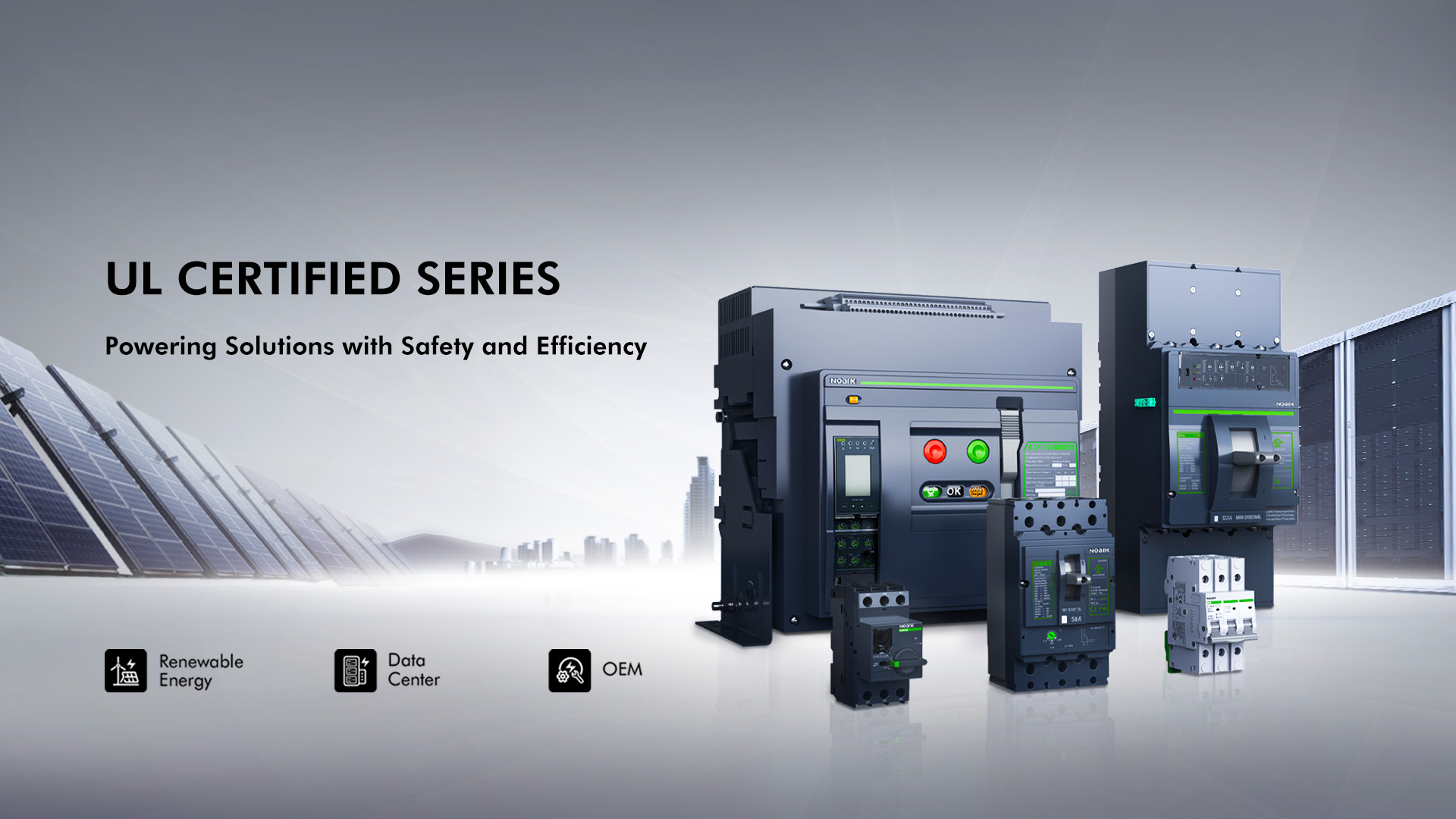
Renewable energy systems and OEM applications both depend on robust overcurrent protection, and Noark Electric has become a go-to brand in these markets. Their product range includes:
• ACBs (Air Circuit Breakers) for high-capacity switching and protection
• MCCBs (Molded Case Circuit Breakers) for medium- to high-power systems
• MCBs (Miniature Circuit Breakers) for branch circuit protection
• Disconnect Switches (Isolators) for safe and reliable circuit disconnection during maintenance, commissioning, or emergency shutdowns
Each of these devices is tested and certified under stringent UL standards, including:
• UL 489 – the primary standard for molded-case and miniature circuit breakers used in low-voltage systems
• UL 98 – covering enclosed and open disconnect switches for load-break applications
• UL 1066 – the standard for low-voltage AC power circuit breakers typically used in switchgear assemblies
UL 1066 is especially critical for ACBs used in renewable energy systems with megawatt- or gigawatt-scale capacity, ensuring they can reliably interrupt high fault currents without failure.
For example, Noark’s ACBs are ideal for use in solar farms, wind power substations, or battery inverter stations, where safety, selective coordination, and fast interruption are key. Disconnect switches, on the other hand, are essential in systems that require routine servicing, clear isolation points, or emergency stops—frequent needs in both renewable and OEM applications.
With these products, Noark ensures a complete solution that meets UL standards across the board, offering peace of mind for engineers, inspectors, and system operators alike.
4. OEM Industry: Diverse Applications, Common Need for UL
In the OEM world, various sub-industries have specific electrical protection needs, but they all share one thing in common: a need for UL-listed products to ensure seamless integration into North American systems.
Let’s explore some key segments:
HVAC Systems
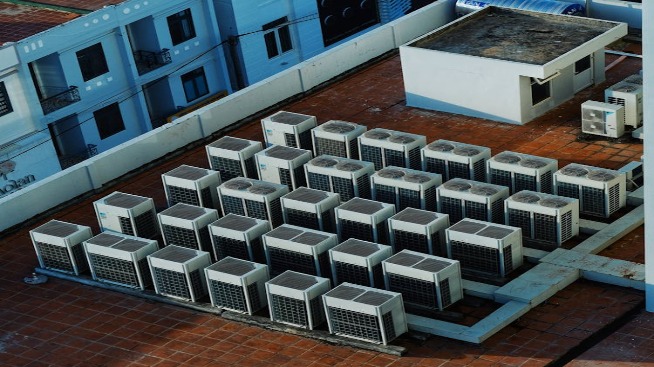
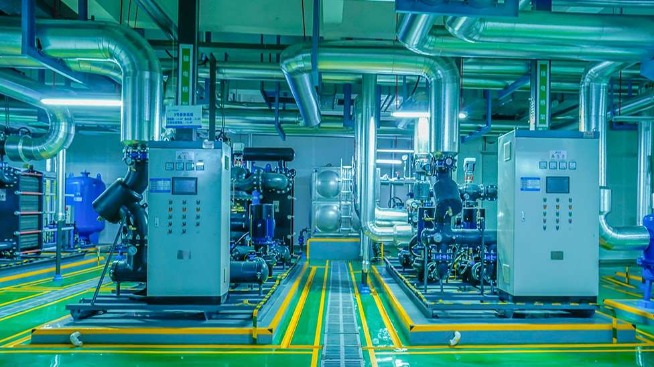
Heating, Ventilation, and Air Conditioning systems are central to modern building management, especially in commercial and industrial applications. These systems rely on reliable power distribution and protection, typically using Noark M1 series MCCBs, which are:
• Compact
• UL 489 certified
• Suitable for motor protection and distribution panels
OEMs in the HVAC sector value the M1 series for its cost-effective reliability and ease of UL compliance, which accelerates product development and deployment timelines.
Data Centers & Compute Infrastructure
With the rapid growth of AI, cloud computing, and edge networks, data centers are emerging as power-intensive environments requiring high-precision electrical control.
Noark’s M6 electronic MCCBs are specifically tailored for this application. With features like:
• Adjustable trip settings
• Remote monitoring and communication
• High interrupting capacity
…they help prevent downtime and damage in environments where every second of uptime counts. And because the M6 series is UL certified, it integrates smoothly into the compliance landscape of hyperscale and colocation data centers.
5. Certification is the Gateway to Innovation
OEMs and renewable developers are constantly innovating—faster switching technologies, smarter controllers, higher-efficiency systems. But innovation must be matched by safety.
Without UL certification:
• You may face project delays due to failed inspections
• Your products could be excluded from bid specs
• Your liability risk increases significantly
With UL certification:
• You assure customers of quality and reliability
• You accelerate time-to-market
• You unlock access to more projects and regions
It’s not just a piece of paper—it’s a passport to growth.
Conclusion: Don’t Compromise on Safety or Market Access
Whether you're building the next generation of solar infrastructure, engineering efficient HVAC systems, or supplying advanced circuit protection for AI-powered data centers, UL certification should be the baseline—not an afterthought.
Brands like Noark make it easier by offering a wide range of UL-certified protection devices that meet the evolving needs of both renewable and OEM applications.
In high-stakes sectors where lives, assets, and reputations are on the line, choosing UL-certified products is not just a good idea. It’s non-negotiable.