

Table of Contents |
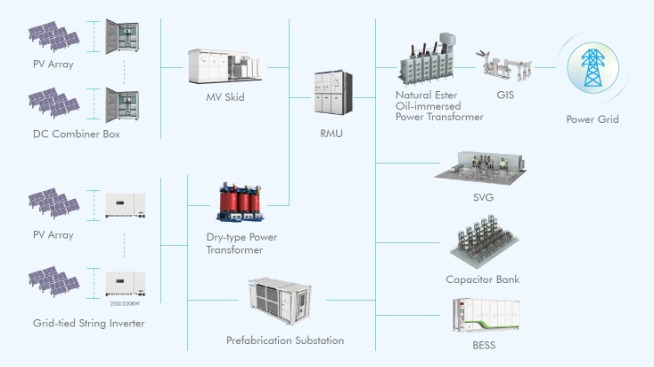
RMU, Ring Main Unit, is a medium voltage switchgear, consisting several electrical components, Load Break Switch, Circuit Breaker, Fuse, Surge Arrester, Instrument Transformer, Protection Relay, etc.
In the rapid growth of new energy applications, such as photovoltaic(PV), energy storage(BESS) and wind power, grid connection reliability and efficiency are important. RMU is the key equipment of this segment. Through the combination of multiple electrical switches, RMU realizes the operation of switching on, disconnecting and protecting of the electric energy.
Key Challenges of RMU in New Energy Applications
RMU is so important, so what may the problems customers face when choosing RMUs?
Application scenario 1:Prefabricated substation
1. Space Constraints
In PV, BESS and wind power applications, RMU is most used inside the prefabricated substation with a container or similar enclosure. Since transformers also need to be installed, the installation space left for RMU is quite limited. If the size of the RMU is too large, it is not easy to install.
2. Dust Effects
Some prefabricated substations may choose an open structure, with all equipment installed on the base. That solves the space limitation, but the installation environment of RMU will be changed from indoor to outdoor. Then it will be affected by sand and dust, which may cause RMU failure after a period of time.
3. Salt-spray Corrosion
Many of these new energy power plants will be installed on the coast. Equipment will suffer from salt spray corrosion for a long time. This may lead to gas leakage, cabinet rust, mechanism stuck and other problems in the RMU.
4. High Maintenance Cost
In new energy applications, the cost per kWh is an important factor affecting customer revenue. As a result, equipment requiring maintenance will increase operation and maintenance costs and reduce revenue. Especially many plants are located in remote areas, which further exacerbates this issue.
5. Installation Convenience and Operational Safety
Regardless of the installation method, the convenience of on-site installation and the safety protection of the operator are indispensable considerations.
Application scenario 2:Wind Tower RMU
In some of wind power plants, RMU is also installed in the prefabricated substation near the wind tower. But with the increase of wind turbine capacity, some manufacturers will choose to install RMU in the wind tower in order to reduce the cost per kWh.
In this case, RMU will be required to enter and exit through the tower door, and its maintenance conditions will be more harsh than prefabricated substations. This puts forward higher requirements on how to reduce RMU size, reduce maintenance cost and improve the stability of RMU products.
CHINT Solution
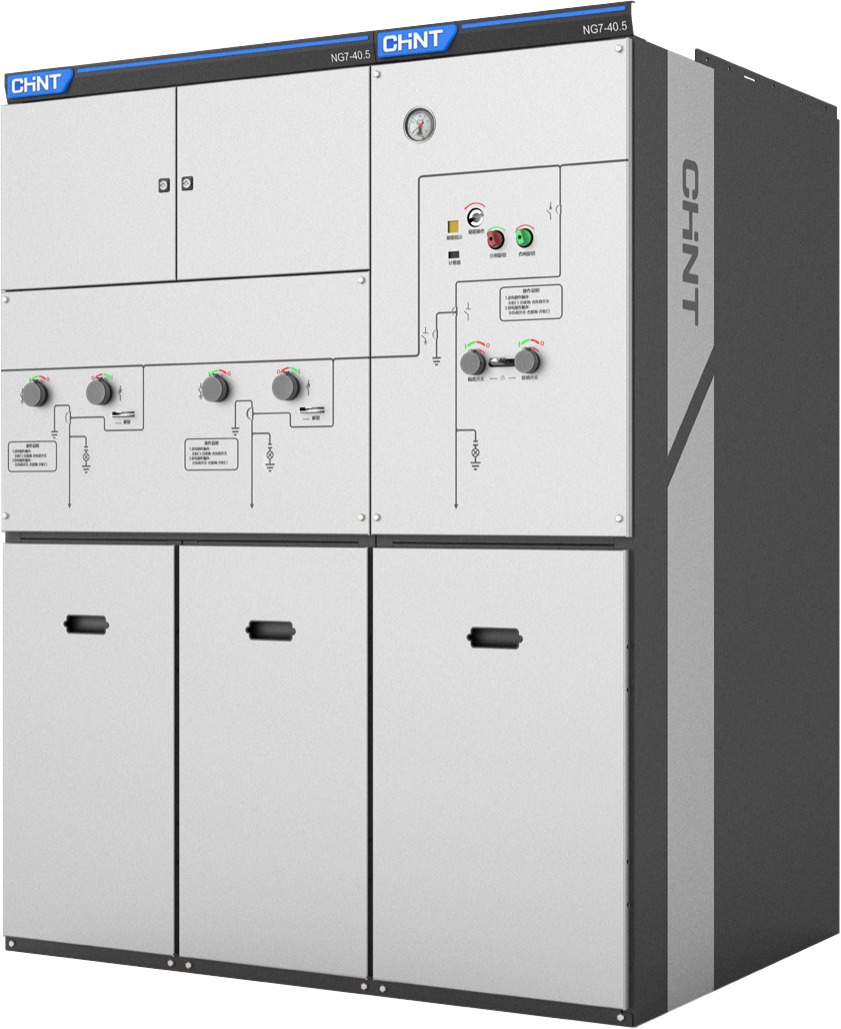
CHINT RMU NG7-40.5 is designed, manufactured and fully type tested according to IEC 62271-200. It's a product specifically designed and developed for new energy applications. With CHINT solution, you may get the following benefits and solve your concerns.
1. Can be installed within limited space
Extremely compact design makes it one of the smallest products at 36/40.5kV level.
2. Withstand high sandstorms and high corrosion harsh environments
Zn-Ni alloy mechanism, IP67 stainless-steel gas tank, IP4X cabinet and IP54 outdoor enclosure with advanced coating process. These features fulfill strong dust-proof and anti-corrosion capabilities.
3. Save maintenance time and costs
With a fully sealed and insulated structure, all switch and active parts are protected, which makes maintenance free.
4. Installation on site is convenient and flexible
All compartments are designed modular and individully. Gas work is fully done before delivery. Only building block installation is required on site.
5. Safe and reliable for operators and system
Comprehensive mechanical interlocking is designed for the products which can prevent accidental operation.
Conclusion
As new energy projects scale up globally, the need for reliable and adaptable grid connectivity solutions becomes critical. CHINT RMU not only solves the technical and environmental challenges, but also improves operational efficiency and profitability for customers. CHINT addresses customer challenges through innovation and supports the development of the new energy industry.