Please enter keywords to search

Global |EN

Choose your country & Language

Asia Pacific

Australia & New Zealand
India
Indonesia
Malaysia
Philippines
Singapore

Middle East & Africa

Kenya
Saudi Arabia
South Africa
United Arab Emirates
Tunisia

Europe

France
Kazakhstan
Netherlands
Spain
Italy
Turkey
United Kingdom
Poland

Latin America

Brazil
Colombia
Ecuador
Peru

North America

Canada
Mexico
United States

Choose your country & Language

Australia & New Zealand
India
Indonesia
Malaysia
Philippines
Singapore
Kenya
Saudi Arabia
South Africa
United Arab Emirates
Tunisia
France
Kazakhstan
Netherlands
Spain
Italy
Turkey
United Kingdom
Poland
Brazil
Colombia
Ecuador
Peru
Canada
Mexico
United States

Please enter keywords to search

Your search term contains restricted words. Please use different keywords.
NXHB-125 Switch Disconnector

NXHB-125 Switch Disconnector

The NXHB-125 Switch Disconnector is designed for reliable isolation and control in low-voltage distribution systems up to 125A. Complying with IEC60947-3, it provides safe manual disconnection for electrical circuits under load, ensuring both operational safety and maintenance convenience. Built with compact modular design, high dielectric strength, and robust mechanical endurance, the NXHB-125 is ideal for residential, commercial, and industrial power applications requiring dependable isolation performance.

Product Information

Recommend Blogs
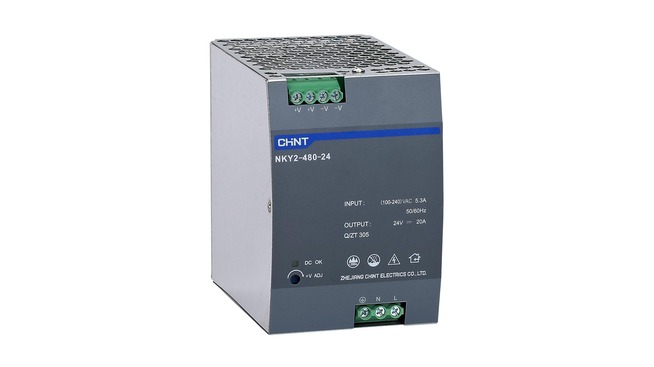
OCTOBER 27, 2026 A Practical Guide to Choosing a DIN Rail Power Supply for Industrial Control Panels

Choose a DIN rail power supply for an industrial control panel by checking output load, inrush, environmental derating, protection and PLC compatibility.

OCTOBER 27, 2026 Why Do Capacitor Banks Need Dedicated Switching Contactors?

A capacitor bank does not switch like a motor load. Learn how dedicated capacitor switching contactors manage inrush, switching duty and protection in power factor correction panels.

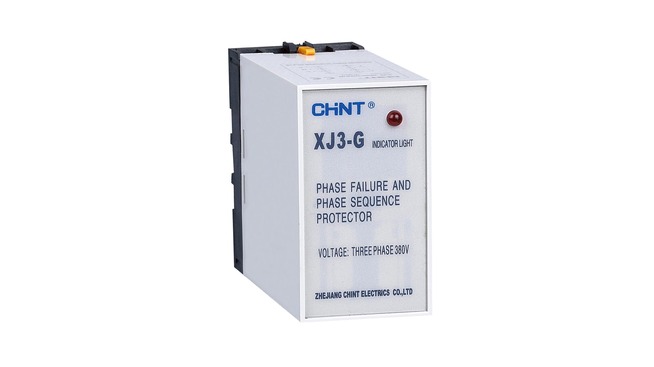
OCTOBER 27, 2026 Phase Loss and Reversal: How Phase Monitoring Relays Protect Three-Phase Motors

Learn how a phase monitoring relay detects phase loss and phase reversal, how it should be wired into a motor control circuit, and where its protection ends.

OCTOBER 27, 2026 Natural Ester vs. Mineral Oil Transformers: Which Fits Your Project Requirements?

Compare natural ester and mineral oil transformers across fire performance, environmental exposure, temperature behavior, maintenance and project fit.

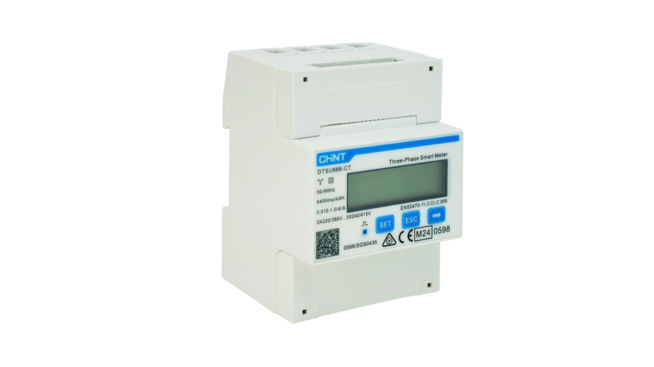
OCTOBER 26, 2026 Industrial Energy Monitoring: How Smart Meters Cut Waste and Improve Power Reliability

Learn how industrial energy monitoring turns meter data into lower energy waste and stronger power reliability, with CHINT DTSU666-CT and PD7777 options.

OCTOBER 26, 2026 Control Relay Selection and Wiring Guide for Industrial Control Panels

Learn how to select and wire a control relay for an industrial panel, including coil voltage, contact form, load rating, suppression, and CHINT NXJ and NJX12 options.

OCTOBER 26, 2026 How to Select an Electromagnetic Starter for OEM Motor Control Panels

Select an electromagnetic starter for OEM panels by checking motor duty, AC-3 ratings, protection coordination, control options, enclosure, and mounting.

OCTOBER 26, 2026 Static VAR Generators: A Practical Guide to Reactive Power Compensation

Understand reactive power compensation, how static VAR generators differ from SVC systems, and where CHINT NXW APF and SVG modules fit in industrial power systems.

SEPTEMBER 23, 2026 How Voltage Stabilizers Protect Three-Phase Industrial Power and Generator Systems

Voltage fluctuation quietly damages industrial equipment. Learn how a three-phase voltage stabilizer works and why independent phase regulation matters for generator-backed power.

SEPTEMBER 10, 2026 Automatic Transfer Switch Explained: How Dual Power Switching Keeps Critical Systems Running

Learn how automatic transfer switches detect faults and switch between two power sources to keep hospitals, data centers, and factories running 24/7.

Need Support From Us?

Blog
Blog

Find expert perspectives on the trends and technologies driving your business.

View Now
Download Center
Download Center

Download new and previously released documents including product document, solutions, cases, coporate report.

View Now
Contact Us
Contact Us

Reach out to us to receive more information, technical support, assistance with complaints and more.

Get Support
Collapsed
Expand

FAQs


What is the primary purpose of the NXHB-125 Switch Disconnector?

It serves as a manual isolating device, safely disconnecting electrical circuits for inspection, maintenance, or emergency shutdowns without risk of electrical shock or system damage.


What type of electrical systems is the NXHB-125 suited for?

It’s ideal for AC low-voltage power distribution systems (230/400V) used in industrial, commercial, and residential environments.


What makes the NXHB-125 suitable for high-demand applications?

Its 6kV impulse withstand voltage, 12Ie short-time withstand current, and 20Ie making capacity ensure stable operation even under heavy load switching conditions.


How long can the NXHB-125 operate reliably?

It provides up to 10,000 mechanical operations and 3,000 electrical operations, guaranteeing long-term durability in daily switching use.


How is the NXHB-125 installed?

The device supports TH35-7.5 DIN rail mounting, with screw-clamp terminals for secure wiring. The installation angle must be within 5° of the vertical for optimal performance.