

Table of Contents |
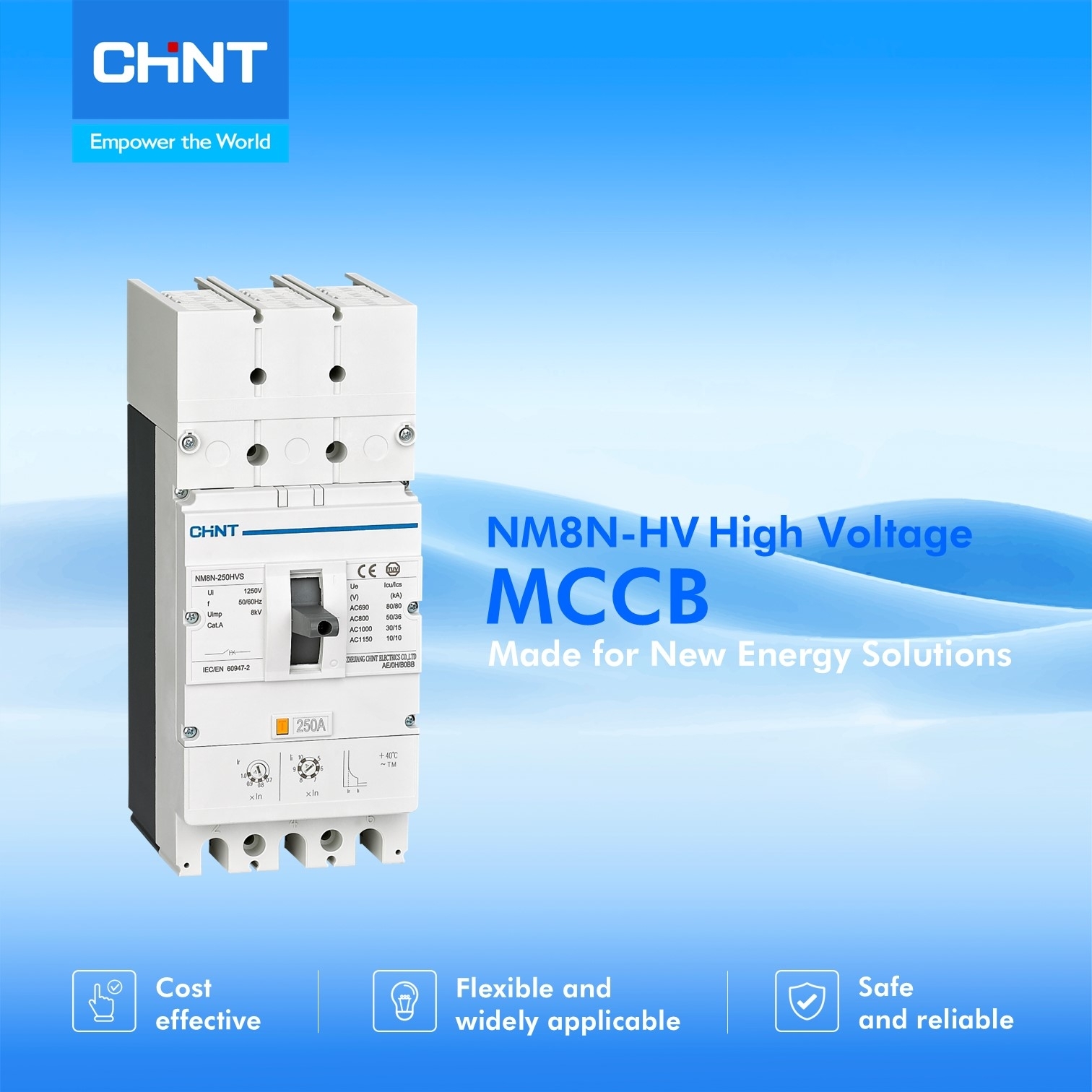
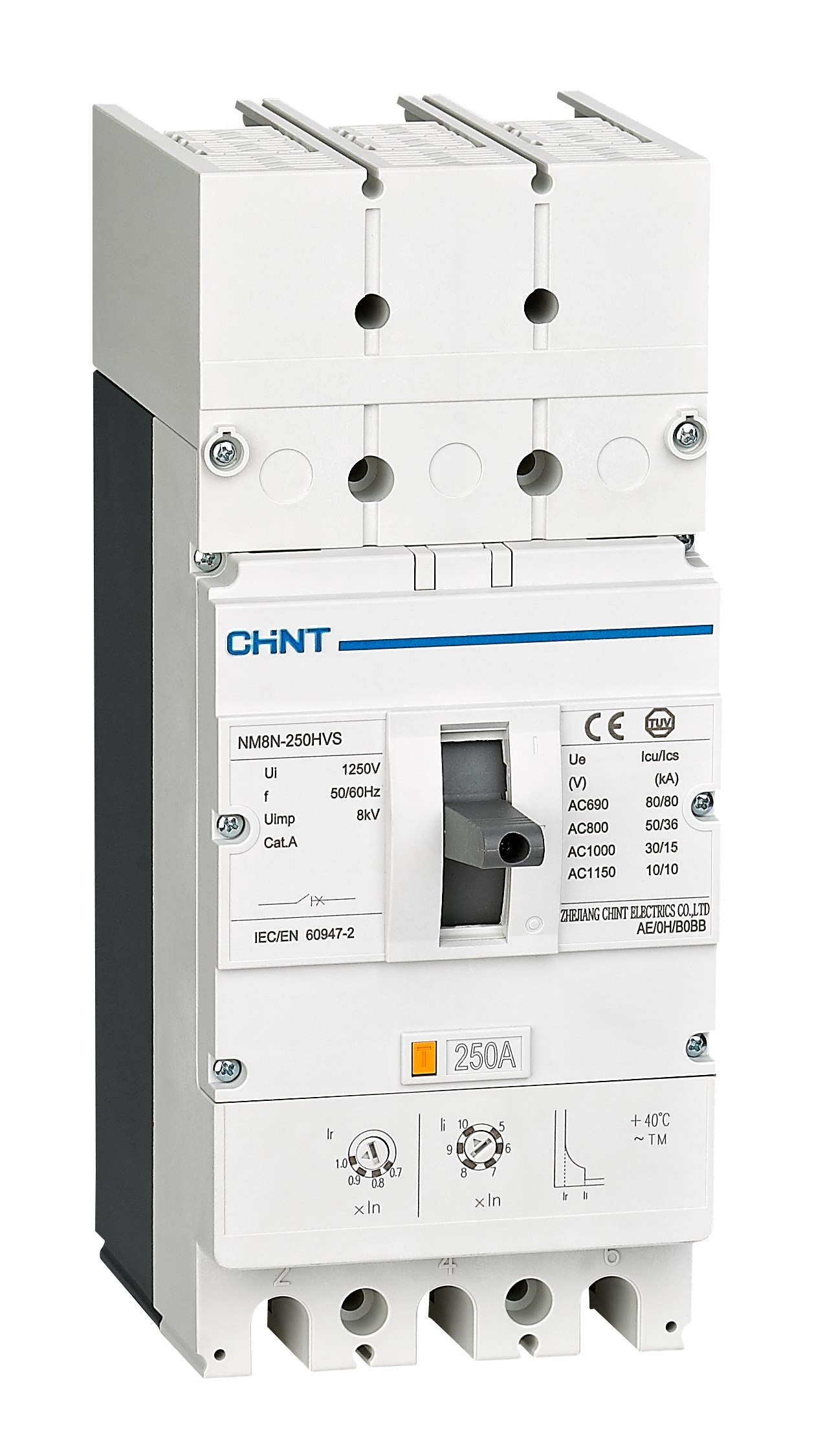
Electrical protection is essential in solar power systems. Without it, these installations face serious damage risks and safety hazards. The consequences can be costly and dangerous. The NM8N-HV Molded Case Circuit Breaker can help avoid these consequences. It’s a critical component in this protection scheme that specifically guards the AC output side of solar systems. This CHINT MCCB device prevents damage from electrical faults while ensuring system reliability.
NM8N-HV: Key Features
The NM8N-HV MCCB offers multiple advanced features. It works effectively in high-voltage environments. Some of its most important characteristics include:
1. Excellent Performance
The NM8N-HV operates flawlessly from -40°C deep freezes to scorching +70°C heat. This makes it suitable for various climates and conditions. It handles high voltage requirements up to AC 1150V with ease. This molded case circuit breaker also achieves impressive short-circuit breaking capacity up to 50kA at AC800V.
These specifications make the NM8N-HV ideal for solar inverter outputs and AC combiner boxes. The zero-arcing circuit-breaking capability further enhances its performance profile.
2. Safe and Reliable
Safety comes first with the NM8N-HV design. The advanced molded case circuit breaker features a high-rated insulation voltage of 1250V. The impulse withstand voltage reaches 8kV for 250A frame size and 12kV for 400A/630A frame size. These ratings provide robust protection against voltage surges.
Apart from these attributes, the MCCB circuit breaker also meets IEC/EN 60947-2 reliability standards. Its thermal magnetic or magnetic release units respond quickly to fault conditions. This rapid response prevents equipment damage and potential fires.
3. User-friendly
Installation and maintenance of the NM8N-HV is straightforward. Its three-pole configuration fits common solar system requirements. Different frame sizes exist, including 250A, 400A, 630A. These accommodate various system capacities. The molded case circuit breaker also has clear status indicators. These help technicians quickly assess breaker conditions.
Precision-built for uninterrupted performance, this MCCB minimizes both maintenance hassles and lifecycle costs. Its robust design is an insurance against expensive downtime and frequent replacements.
How It Addresses Common AC Side Challenges in Solar Systems
Solar power systems face specific electrical challenges on the AC output side. These issues can compromise system performance and safety. The NM8N-HV molded case circuit breaker directly addresses these problems. Its design targets the most common AC-side issues.
1. Short Circuits
Short circuits occur when electrical current finds an unintended path. Faulty wiring and damaged components are common causes. Loose connections can also cause them. The consequences include equipment damage, fire hazards, and complete system shutdown. The NM8N-HV MCCB circuit breaker detects these faults instantly.
The CHINT MCCB trips with zero arcing to isolate the affected circuit. Its high breaking capacity handles even severe short circuits. This protection prevents cascade failures throughout the solar system.
2. Overloads
Overloads happen when power demands exceed system capacity. They commonly occur when the AC side draws more power than the inverter can handle. Persistent overloads cause overheating and premature equipment failure. The NM8N-HV molded case circuit breaker features precise trip units. When overloads occur, the breaker trips before damage happens. This function preserves expensive inverters and associated equipment from thermal stress.
Application in Brazil
Brazil’s solar market has embraced the NM8N-HV molded case circuit breaker for high-voltage applications. The country’s expanding solar installations require reliable protection solutions. The key example is the Brazilian DC1500V photovoltaic system with AC800V output requirements. This system requires a robust MCCB to protect inverter outputs. The NM8N-HV was used for this purpose and performed beyond expectations. The installation benefited from the breaker’s high-temperature tolerance in tropical conditions. Its zero-arcing feature proved particularly valuable.
The market response demonstrates the product’s effectiveness. NM8N-HV sales in Brazil exceeded 3,300 units in 2023 alone. This number grew dramatically to over 5,000 units in 2024. The increasing adoption reflects installer confidence in the reliable molded case circuit breaker. Brazilian solar farms continue to specify this MCCB for new projects and expansions.
Conclusion
Overall, the NM8N-HV MCCB provides essential protection for AC outputs in solar power systems. Its excellent performance spans extreme temperatures and high voltages. Its key safety features ensure reliable operation under challenging conditions. The breaker effectively handles short circuits and overloads that threaten system integrity. At CHINT, we specialize in delivering many such reliable electrical solutions. Our years of industry expertise reflect our commitment to quality and innovation. Contact us for more information about our complete range of solar system protection solutions.