


Introduction
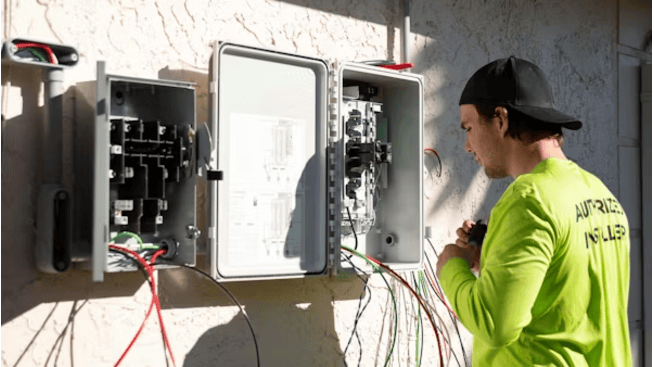
IEC 61439 is the modern blueprint for the LV assembly standard and has been referenced by many engineering teams. However, their impact on real-world electrical performance is rarely explored. Implementing an IEC switchboard design poses the question, “How much stronger would your switchboard designs be if each performance claim could be traced back to verified engineering rules instead of assumptions?”
IEC Switchboard Design as a Framework
Before discussing the IEC switchboard design as a framework, let us first discuss the role of IEC 61439. The purpose of IEC 61439 is to ensure LV assemblies behave predictably under real-world operating stresses. This makes LV assemblies up to standard and lets operators indicate if the switchboard is handling stress during live operation.
When designing an IEC switchboard, there are two entities responsible. Original manufacturers are in charge of the initial design of a system and confirming that it abides by the various standards set by the organizing bodies. Assembly manufacturers, on the other hand, take care of building the switchboard and delivering it to the customer.
The IEC 61439 is about the engineering discipline. That means consistent thermal limits, dielectric paths, mechanical robustness, and verifiable performance are results of implementing IEC 61439. Lastly, IEC supports the notion that better clarity is achieved during design reviews, procurement, and commissioning.
Inside IEC 61439 — The Requirements That Shape Real Switchboards
When taking a look at the IEC 61439 and why it is the current LV monitoring standard, we should take a look at its core performance pillars.
- Temperature rise limits are the difference between the operating temperature and the ambient air.
- Dielectric withstand tests the insulation of a device to determine if it can withstand stress without shutting down.
- The short-circuit withstand verification in IEC switchboards tests the ability of an assembly to handle faults without damage.
- Mechanical operation refers to processes that change the state of materials.
- IP protection degrees standard is important as it measures whether an enclosure can protect wiring from different elements.
- Protective circuit continuity makes sure that fault currents have a safe pathway back to their source.
These criteria aren’t just abstract tests as they directly affect thermal stability, enclosure safety, and panel lifecycle. These are important to make sure your equipment, circuits, and operators are safe.
Why the LV Assembly Standard Reshapes MDB and SMDB Architecture

There is a shift from old standards like IEC 60439 to performance-oriented requirements for real installation conditions. How IEC 61439 improves LV assembly safety and long-term performance? The new LV assembly standard allows for better enclosure choices, device spacing, conductor routing, and functional separations for a safer workspace. In fact, the LV assembly standard has impacted MDBs that are ACB-centric and SMDBs that are MCCB-centric. We will now discuss and compare MDBs vs. SMDBs in terms of how the new standard has affected them.
IEC 61439 Design Verification for MDBs
The IEC 61439 design verification for MDBs has three methods. These verification methods are testing, comparison, and assessment. In fact, these methods have affected MDB design decisions through the use of busbar rating, ACB integration, proper conductor sizing, and enclosure geometry. Verification data enables traceable engineering decisions rather than assumptions. This is key to maintaining safety and efficiency on operations.
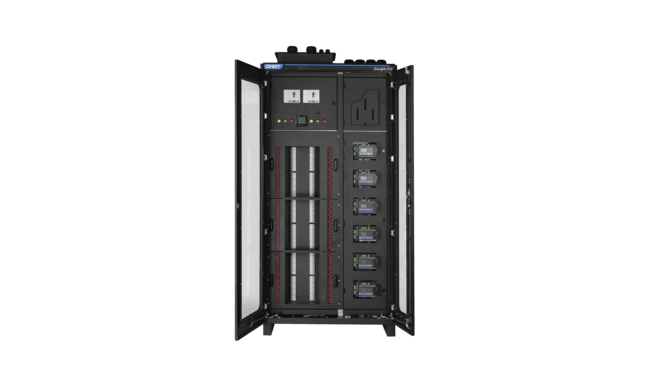
Verification also reduces redesign time during reviews and approvals, as following performance-based standards allows your switchboard to be on par with modern requirements. Examples of which are CHINT’s main distribution boards that are MDBs that integrate ACBs and standardized busbar systems.
How IEC 61439 Improves LV Assembly Safety Under Real Electrical Stress
IEC 61439 improves LV assembly safety through its thermal, dielectric, and mechanical criteria. The standard aims to counter rising harmonic content, heavier loads, motor starts, and faulty energy levels. For example, thermal performance requirements for LV switchboards allow for better protection from extreme temperatures to protect your circuit.
Tested assemblies mitigate operator risk, reduce disturbance zones, and support safer maintenance routines for a better workplace. This is evident in commercial-grade LV assemblies like CHINT’s switchgear platforms, which use coordinated device families. These device families are ACBs, MCCBs, and protection modules. These aim to maintain verifiable performance that removes any guesswork and eliminates time-consuming retrofits during reviews.
Allowing for not only a safer operation, but a more efficient one.
Modern LV Assembly Platforms Embed IEC 61439 Principles
We will now take a look at how modern LV assembly platforms embed IEC 61439 principles. Let’s take a look at how CHINT’s MDBs and SMDBs use standardized thermal pathways, verified busbar systems, and coordinated ACB/MCCB frameworks.
Solutions such as reactive power compensation can be integrated into IEC-compliant assemblies and support stable operation, power factor, and reduced losses. A stable operation allows for better output from your equipment, while better power factor leads to better energy efficiency, which lowers losses. These benefits are great, especially for SMDB LV boards and switchgear panels. When talking about compliance maturity, CHINT’s global engineering background consists of 40 years of expertise, especially in low-voltage equipment and smart energy solutions.
Adhering to IEC 61439 principles allows LV assembly platforms to be up to par with modern requirements. This leads to fewer renovations during reviews and better working environments for workers and equipment. Lastly, adhering to standards will protect your circuit and equipment, which can reduce unplanned shutdowns, and improve your efficiency.
Conclusion
IEC 61439 is not just an approval box; it is an engineering framework that produces safer, more predictable assemblies. Having IEC switchboard design principles on your LV assembly platforms helps engineers build MDBs and SMDBs that withstand heat, faults, and years of operational change. Remember that CHINT’s LV platforms support these principles through coordinated, globally aligned switchgear architectures.