

Table of Contents |
Gas-insulated switchgear, or GIS switchgear, is a viable alternative to air-insulated switchgear (AIS). It offers many benefits for substations and other applications. GIS is more compact, requires less maintenance, and is often more efficient than AIS.
Once you’ve decided to use GIS, you must choose the right product for your needs. There are many different options on the market, but if you understand what you need and what to look for, you can make the best choice for your applications. Read on to learn some tips for choosing the right GIS.
What is GIS in Switchgear?
Switchgear is designed to stop the flow of electricity in the event of a surge. It protects equipment from power surges and allows for equipment maintenance. All switchgear has some type of insulation. In an AIS setup, the switchgear is housed in a metal compartment, and air acts as an insulator.
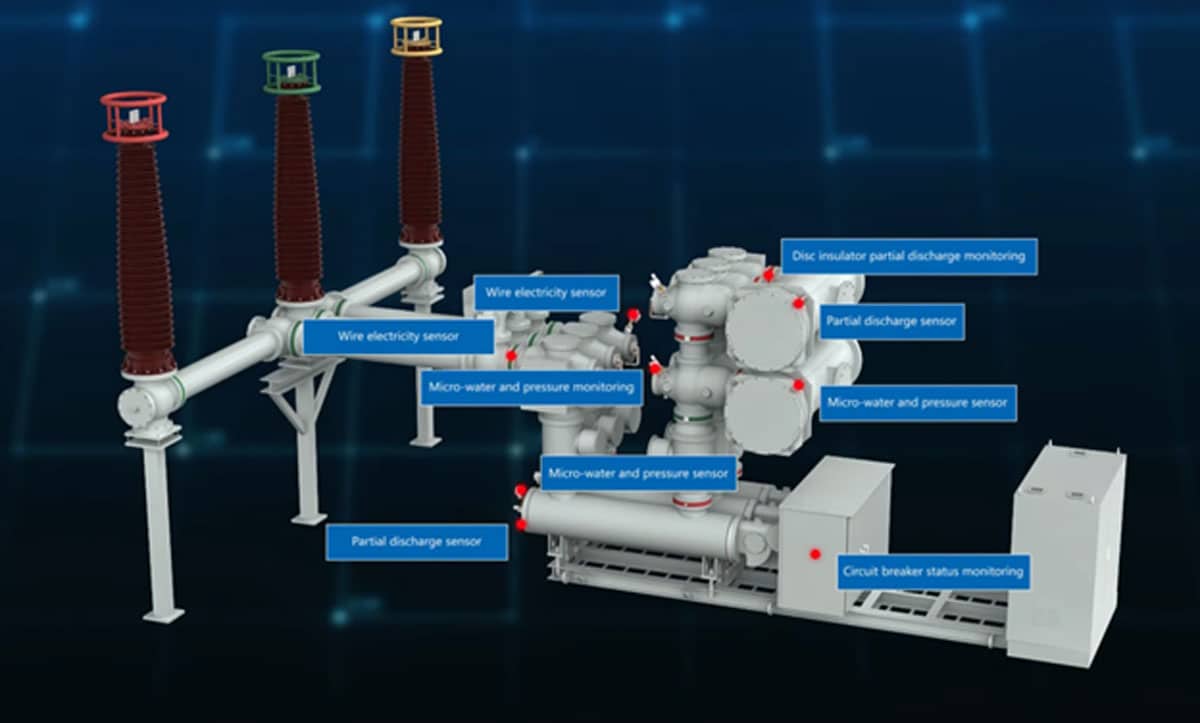
With GIS, sulfur hexafluoride gas (SF6) acts as an insulator. It is inside a metal frame, and each component is inside a compartment surrounded by SFX. Compartments are shielded with barrier devices. Components include bus bars, circuit breakers, and transformers.
When the power circuits break during a power surge, a valve releases SFX gas into the chamber to extinguish the arc by ionizing electrons. Once the arc is extinguished, the gas is released to a low-pressure tank. It is recycled for subsequent use.
Why Use GIS Switchgear?
There are many reasons to choose GIS over AIS switchgear. If you are short on space, GIS is much more compact than AIS. Some GIS systems are up to 40% smaller than their AIS counterparts. GIS also offers a quicker installation, making it a good option if you are pressed for time.
If you have a system with higher voltages, GIS is better equipped to handle it. For example, some GIS systems offered by Chint Global can handle up to 145 kV.
While GIS systems tend to have a higher initial cost than AIS, they cost less over time. GIS systems require little to no maintenance. You will typically need to check it every two years to ensure everything is working correctly, but you will rarely need repairs. You will save on maintenance costs.
What are the Essential Parts of GIS Switchgear?
GIS is composed of several essential components, as discussed below.
Circuit breakers protect equipment in the case of a power surge. When the breaker detects a surge, it will separate the circuit and create an arc, immediately stopping the power flow.
Switch disconnectors stop the current so that you can perform maintenance on the switchgear.
You will also use earthing switches during maintenance operations. The earthing switches preserve parts of the current while making other parts safe for maintenance. Earthing switches are only used under special conditions and are not intended for use during normal operations.
The switchgear’s operating mechanisms help to distribute the power to the rest of the system. It also monitors for any aberrations in the current. The operating mechanisms keep the switchgear working properly.
Key Considerations for Choosing the Right GIS
Once you’ve decided that a GIS system suits your needs, you need to pick the right GIS. Not all GIS systems are the same. Below are some of the factors to consider before you make a choice.
Component Trustworthiness and Range
Anytime you purchase equipment that handles high levels of electricity, you want to ensure that you choose a quality product. It’s essential to choose a company with a good reputation. Chint Global is known for its high-quality products and innovative technology.
You also want to ensure that the components of a GIS perform to the highest standards. As each piece of the GIS is essential, all of the components must be of the highest quality so that you will get the best service.
Voltage and Application Suitability
Carefully consider your situation, particularly what voltage you need, the space you have, and how you plan to use the GIS. Most GIS systems are rated for medium- to high-voltage applications, so choosing the correct one for your situation will ensure efficiency.
Eco-friendly Aspects
It’s vital that businesses always choose the most eco-friendly options to help mitigate their impact on climate change. When handled properly, GIS is an eco-friendly option, as SF6 is a good insulator. It can also be used over and over again. Many GIS systems are equipped with monitoring features, which allow the switchgear and other equipment to run efficiently, saving you money and helping the environment.
Earthquake Resilience
If you live in an area with a lot of seismic activity, consider each GIS option’s earthquake resilience.
When to Use GIS Switchgear
GIS has many use cases. It is particularly helpful when space is limited. It can manage a lot of power in a small amount of space. GIS is perfect for compact spaces and is more lightweight than AIS despite the heavier gas. For example, urban areas may benefit from GIS, as it can fit into smaller spaces and is often easily integrated into aesthetics.
Because GIS systems are essentially airtight, they are a good option for outdoor environments that are exposed to harsh conditions. They are less susceptible to weather, dirt, or other harmful materials. Both of Chint’s GIS products have a seismic resisting ability of 9 degrees, meaning they can withstand significant seismic activity.
Conclusion
Choosing the right GIS switchgear will ensure you can make the most of a small space without sacrificing efficiency. By carefully considering your needs, you can find the product that works best for you.
Chint Global is experienced in providing high-quality smart energy solutions. Chint representatives can help you find the best GIS product for your needs. Contact us today for more information.