

Introduction
A generator control system can decide whether your genset protects the load or leaves it exposed during an outage. For generator OEMs and power specifiers, generator control system selection should happen during standby power system design, before panel layout, breaker selection, or commissioning choices limit your options.
The commercial need is clear. The global standby generator market was valued at USD 12.08 billion in 2024 and is projected to reach USD 19.21 billion by 2032, at a CAGR of 6.94%, according to Fortune Business Insights.
Asia Pacific held the largest market share at 31.20% in 2024, reflecting infrastructure and industrial power demand, according to 2024 Generator Market insights. Emergen Research, citing NIST, reports that outages cost U.S. businesses USD 150 billion to USD 180 billion annually, and cites FEMA’s estimate that 40% of businesses never reopen after a disaster.
For OEM teams, it is only part of the decision. You also need the right diesel generator electrical components to detect supply loss, start the set, transfer load, protect circuits, and restore normal operation.
What Is A Generator Control System And Why Does It Matter?

A generator control system is the electrical and logic package that manages the standby sequence. It monitors utility supply, detects voltage or frequency problems, starts the generator, confirms generator output quality, commands transfer, supervises outage operation, and manages retransfer when utility power returns.
A practical system usually includes:
AMF relay or generator controller: Detects source failure and starts the generator
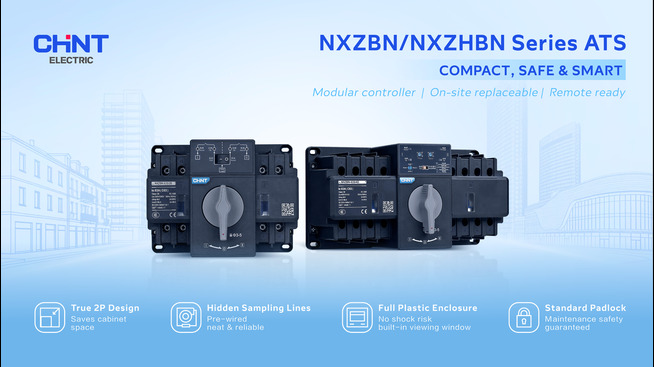
ATS or motorized changeover switch: Transfers load between normal and standby sources
Voltage and frequency monitoring: Confirms source quality before transfer
Time delay relays or timers: Reduces nuisance starts and premature retransfer
MCCBs or ACBs: Protect generator output and feeders
Contactors, relays, motor starters: Execute control commands
Meters and communication modules: Support diagnostics and remote monitoring
An automatic transfer switch (ATS) transfers power from the primary source to a backup source such as a standby generator, while preventing utility backfeed. ATS functional elements detect source failure, start the generator, verify voltage or frequency, and connect the load to generator power, according to Pacific Northwest National Laboratory (PNNL).
Timing matters. Modern commercial standby systems restore power within 5 to 30 seconds of outage detection, with healthcare facilities required to meet tighter transfer timelines under NFPA standards. If the start delay is too short, the generator may start during a momentary sag. If retransfer delay is too short, the load may return to unstable utility power.
Single Vs Dual Power Supply: Choosing The Right Architecture
Your first architecture decision is whether the application needs a single standby path or a generator dual power supply arrangement.
A single power supply system usually has one utility source and one generator. The ATS monitors the utility, starts the generator when supply quality drops, waits for stable voltage and frequency, then transfers load. This arrangement suits many commercial buildings, retail sites, pumping systems, telecom rooms, and standard industrial standby loads.
A generator dual power supply system adds redundancy or a more complex switching arrangement. It may involve utility-generator, generator-generator, two utility supplies, or multiple standby paths. This architecture suits hospitals, data centers, process sites, and infrastructure applications where one supply path should not carry the full continuity burden. A generator dual power supply control system solution should support utility-generator and generator-generator applications through dual power supply products.
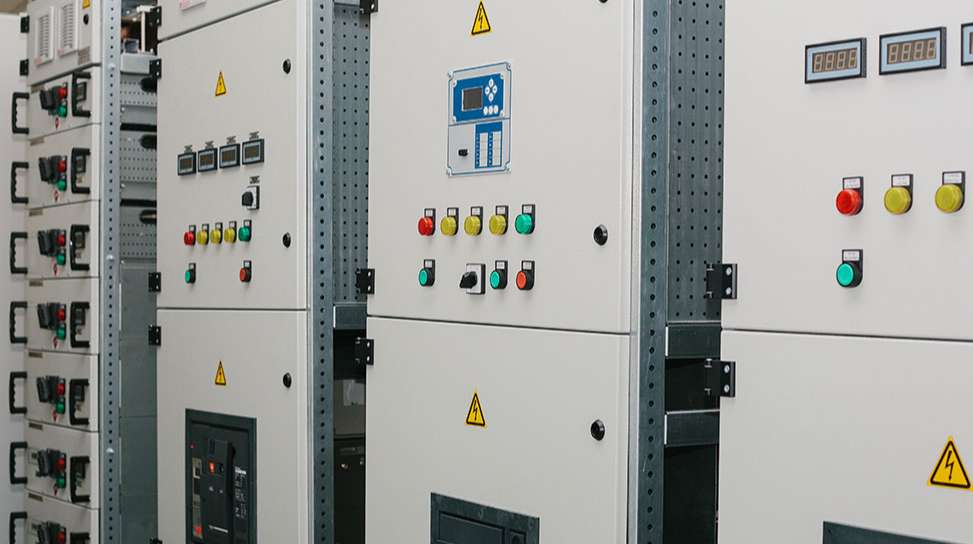
Use these questions during standby power system design:
Question |
Likely Direction |
Can the load tolerate a brief interruption? |
Single utility-generator ATS may fit |
Does the load need higher continuity? |
Review dual source or closed transition |
Does maintenance need to happen with the load energized? |
Consider bypass isolation or redundant paths |
Can sources ever parallel? |
Specify synchronization and interlocking |
Do codes or owner standards set transfer timing? |
Confirm architecture early |
Transition type is part of this decision. Open transition, or break-before-make, interrupts the load during transfer and is common in standby systems. Closed transition, or make-before-break, transfers between two live sources without disrupting the load. Delayed transition adds a pause so residual voltages on inductive loads can dissipate before transfer.
For ATS generator changeover, interlocking must match the single-line diagram. Unless the design supports synchronized paralleling, the system must prevent sources from closing together.
ATS Selection: What Specifiers Get Wrong
The ATS carries load current, verifies source availability, executes transfer timing, and separates power sources. A weak ATS specification can create redesign work or commissioning delays.
Start with connected load current. The ATS should be rated for the full connected load, not only generator output. Account for motor starting current, non-linear loads, future expansion, ambient temperature, duty cycle, and upstream protection.
Short-circuit withstand also needs early review. The ATS must withstand the prospective fault current at the installation. Site transformer size, utility fault level, upstream protection, and panel rating all affect this requirement.
Use this ATS generator changeover checklist:
Parameter |
Specify |
Voltage and frequency |
System voltage and Hz |
Current rating |
Full connected load current |
Short-circuit rating |
Prospective fault current and upstream protection |
Pole count |
Three-pole or four-pole |
Transition type |
Open, delayed, or closed |
Time delays |
Start, transfer, return-to-normal, cool-down |
Bypass isolation |
Required or not required |
Control power |
AC, DC, battery-backed, or derived |
Three-pole versus four-pole selection deserves early attention. A switched neutral may be required in separately derived systems or where neutral and grounding arrangements need full source separation. Late neutral changes can affect enclosure size, cable routing, protection settings, and approvals.
Bypass isolation also matters for loads that cannot be de-energized during ATS maintenance. Hospitals, data centers, telecom facilities, and process loads often need this maintenance path.
Circuit Breaker And ACB Selection For Generator Applications
Genset circuit breaker selection differs from standard building distribution because generator-fed fault current behaves differently from utility-fed fault current. A utility source can supply high sustained fault current. A generator may deliver lower current, and that current may decay based on alternator design, excitation, impedance, and protection settings.
Breakers still need to trip correctly under generator-fed conditions. They also need to coordinate with downstream devices, protect conductors, report status, and support automatic operation where required.
For diesel generator electrical components, review these breaker criteria:
Selection Area |
What To Check |
Rated current |
Generator full-load current and ambient conditions |
Breaking capacity |
Available fault current and interrupting rating |
Trip settings |
Long-time, short-time, instantaneous, undervoltage, ground fault |
Selectivity |
Coordination with downstream protection |
Accessories |
Shunt trip, undervoltage release, auxiliary contacts, motor operators |
Communication |
Remote status, trip indication, event records |
Mechanical duty |
Operation count and automatic closing needs |
MCCBs fit many small and mid-size generator applications. ACBs are used in higher-current systems, larger generator sets, paralleling switchgear, and applications that need adjustable trip settings, communication, and remote monitoring.
CHINT’s generator control system solution provides control and protection for generator control systems, including overload, short circuit, undervoltage, and grounding protection.
Good genset circuit breaker selection should answer three questions before the panel ships: Will the breaker trip under generator-fed fault conditions? Will the controller know the breaker state? Will the breaker support automatic operation if the sequence requires it?
PLC-Based Control: When Manual Control Is Not Enough
AMF relays work well for many single-generator standby systems. They detect utility failure, send a start command, check source availability, and command transfer. For one generator, one utility source, and a simple ATS, this keeps the panel clear.
PLC-based control fits applications with more sequence paths. Multi-generator plants, paralleling systems, load shedding, remote sites, fuel management, run-hour tracking, and BMS or SCADA communication often need programmable logic.
A PLC-based generator control system can support:
Multi-generator sequencing: Starts units by load demand or runtime balance
Load priority control: Keeps selected loads within available capacity
Fault logging: Helps diagnose no-start, trip, and transfer issues
Remote monitoring: Gives operators visibility across unmanned sites
BMS or SCADA communication: Shares source, breaker, alarm, and load data
Runtime records: Supports maintenance planning
The decision is not PLC for every project. Ask whether relay logic will remain clear after the site adds loads, generators, monitoring points, and maintenance needs. If not, PLC control may give your team a cleaner sequence and better diagnostics.
5 Common Generator Control Specification Mistakes
Specification gaps appear only when the system is tested under load. Use these checks before procurement.
1. Specifying ATS Amperage To Match The Generator, Not The Connected Load
The ATS should be selected around full connected load current, load type, future growth, and fault conditions. Generator kW alone does not describe the switching requirement.
2. Using Open Transition ATS For Loads That Cannot Tolerate A Momentary Interruption
Open transition works well for many standby loads. If the load cannot accept a brief interruption, review closed transition, delayed transition, UPS coordination, or a generator dual power supply architecture.
3. Failing To Specify A Switched Neutral On Separately Derived Systems
Neutral treatment affects grounding, protection, and transfer switch selection. Decide three-pole versus four-pole early, then coordinate the ATS, bonding, protection, and commissioning tests around that choice.
4. Using Standard MCBs With Too-Low Breaking Capacity On Generator Output Circuits
Generator output circuits still need protection that matches the fault study and installation duty. Low breaking capacity can create redesign work and weaken system coordination.
5. Omitting Time Delay Settings From The Specification
Do not leave start delay, transfer delay, return-to-normal delay, and cool-down delay to field defaults. These settings shape how the system reacts to momentary sags, unstable utility recovery, and generator shutdown.
Conclusion
Generator control system selection is not a box-ticking exercise. The architecture, components, and timing settings decide whether standby power responds cleanly when utility supply fails.
Choose the right source arrangement, specify ATS ratings, confirm breaker protection, define neutral switching, and document transfer, retransfer, start, and cool-down delays before procurement. Those details reduce commissioning rework and help your customers trust the system during real outages.
For application-specific component guidance, explore CHINT’s Generator Equipment OEM Solution and contact us to discuss your load profile, source configuration, protection requirements, and control sequence for each standby or prime power project before design release stage.
Frequently Asked Questions
What is a generator control system?
A generator control system is the combination of components that manages the automatic starting, load transfer, monitoring, and shutdown of a generator set. It includes an AMF (automatic mains failure) relay that detects utility failure, a contactor or ATS to switch the load, and protection devices on the generator output circuit. More advanced systems use PLCs, remote monitoring, and battery-backed communications to provide full visibility over system status.
What is the 20-20-20 rule for generators?
The 20-20-20 rule is a maintenance guideline for a diesel generator solution, recommending that a standby generator runs for at least 20 minutes under at least 20% of its rated load, at least every 20 days. Regular testing under load verifies that the generator starts reliably and exercises critical components, including the fuel system, cooling system, and battery. Running under no load or very light load is less effective and can cause wet stacking in diesel engines.
What is the average lifespan of a standby generator?
With proper maintenance, commercial standby generators can operate for 20–30 years. Lifespan depends heavily on run hours, fuel quality, maintenance schedule, and operating environment. Generators that run primarily in standby mode with regular test cycles and scheduled servicing typically outlast those subjected to prime power or irregular maintenance. Critical components including the battery, control board, and transfer switch require replacement before the generator itself reaches end of life.
What is the difference between a single and dual power supply generator system?
A single power supply generator system has one utility source and one generator, with an ATS switching between them. It is suitable for most standby applications. A dual power supply system provides two independent sources (typically two utility feeds or one utility plus a generator), with a more complex switching arrangement to ensure no single failure can interrupt supply to critical loads. Dual supply systems are used in data centres, hospitals, and critical industrial operations where even brief interruptions are unacceptable.
What are the key compliance standards for standby power systems?
The most widely referenced standards include NFPA 70 (National Electrical Code, USA), NFPA 110 (Emergency and Standby Power Systems), and IEC 60947 series for low-voltage switchgear and controlgear. Healthcare facilities must comply with NFPA 99 and NFPA 101. For ATS specifically, UL 1008 is the key product standard in North America. In international markets, IEC 60947-6-1 covers automatic transfer switching equipment. Local utility interconnection requirements and building codes may impose additional requirements. Always confirm the applicable standards with the authority having jurisdiction before finalising a specification.