


Table of Contents |
If you want to know about circuit breaker and contactor, then you must understand the primary difference between a circuit breaker and a contactor is that the contactor is controlled with an electrical switch that connects the load with the power.
In the case of the circuit breaker, this is an electric protective device that disconnects the load from the power source when a fault occurs. Let’s know more about the interesting topic of contactor vs circuit breaker.
Definition and Basic Information of Circuit Breaker and Contactor
Circuit breaker
There are different types of circuit breakers and they are different in their construction. However, the overall and the common matter of a circuit breaker is that it consists of multiple movable and fixed contacts similar to an electrical contactor, but they usually contact physically through pneumatic and mechanical pressure or electromagnetic attachment.
The circuit breaker has voltage and current sensing circuits which is missing in a contactor. This is because a circuit breaker is operated automatically, and it works all by itself when a fault appears.
Contactor
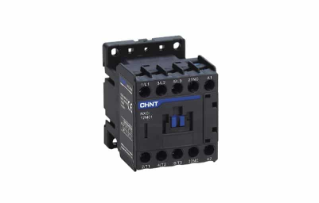
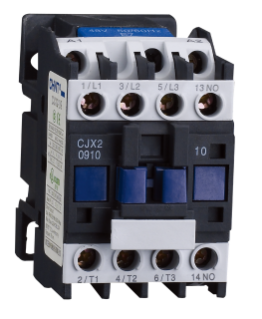
What is a contactor? The contactor is simple than the circuit breaker and has several contacts. Many of them are movable then others are fixed, and this is to ensure the service when electromagnet attracts it. A contactor has an electromagnetic coil to operate at a low current and voltage. So, when the control is applied to the coil, the movable parts touch the fixed contacts and attach the load with the power source.

Working principle of Circuit Breaker and Contactor
Working Principle of Circuit Breakers
The working principle of the circuit breaker is made with two metallic contacts, fixed and moving. Other than this it has an operating coil. In a normal condition, in the case of closed circuits, the contacts touch each other and allow the flow of current. The moving contacts are put together with the help of mechanical pressure or through compressed air. For instance, the pressure on the moving contacts is gained through the energy stored in the mechanism.
When an overload happens, the coil is charged with the potential energy, and a plunger is used to the system of the moving contacts. This reassesses the stored energy and separates the contacts. After the separation, the circuits inside the breaker open and interrupt the flow of electric current. This protects the system from damage.
Furthermore, it’s crucial to understand the method of arc. The moment current passes through a gap, plasma discharges are known as the arc. This can also happen in the electrical wiring of a house, but it will occur during circuit breaker operation. This can damage the system and can cause a fire if the arc is not managed. So, the mechanism of a circuit breaker is to control and prevent damages as much as possible.
Working Principle of Contactors
The working principle of a contactor happens through an electromagnetic field that generates the current flow where the coil attaches. Then the moving contact is pushed in the front, then the force creates with the electromagnet, which holds the fixed and moving contacts together.
For the de-energizing, the coil of the contactor returns to the electromagnetic coil and the previous position, and there is no current flow in the circuit. If AC energized the contactor, then a small part of the coil is the shaded one. In this place, the magnetic flux in the center is delayed. This is an average effect that prevents the buzzing of the core on the twice line.
This also consists of internal tipping sections, that ensure fast action so the contactors can close and open quickly. From the source of the supply that gives the switch, that is the moment the switch is turned on the electricity flows through the coil of the contactor and attracts the moving center. The contactor attached with the moving center closes and the motor starts immediately. When the switch is turned off, the electromagnetic field returns to the previous position and the power supply is cut off instantly.
The Operational Differences Between Circuit Breaker and Contactor
There are functional differences between these two electrical systems. The difference between contactor and circuit breaker is a popular topic among engineers and students. Let’s explore the differences between the two.
Electrical Contactor
The primary function of contactor is to attach the load with the current flow, and this should be of high voltage. The contactor also has benefits, as it is constructed to release and close quickly. The moving contactor is required when the control is needed or for a transfer to high and low voltage.
Circuit Breaker
On the other hand, the function of the circuit breaker is automated as it disconnects the current supply whenever a short circuit or overload occurs. Experts can manually work with a circuit breaker, and they connect it to the contacts for electric supply. Thus, in the normal phase, this system works as a switch.
Other Important Differences Between Contactor and Circuit Breaker:
- An electronic contactor is a simple switching device, whereas the circuit breaker is a protective system. The primary function of a contactor is controlling the power. A circuit breaker does the protecting.
- Contactor works under normal situations. But a circuit breaker works only when a fault occurs.
- Medium voltage is required for a contactor. On the other hand, a circuit breaker requires high voltage.
- Using a contactor means there will be more sparkling and flashing. With the other, there’s no chance of that.
- A contactor isn’t made for automation. But the other one can start and stop automatically whenever a fault appears in the system.
- The electromagnetism system works to build a connection between the movable and fixed contacts. In the case of circuit breaker mechanical and electromagnetism, pressure is required to build the connection between movable and fixed contacts.
- Contactor has no arrangement for the quenching of ARC. But current and high voltage circuit breakers have the same facility.
- There is no electric voltage sensing system in a contactor. Whereas circuit breaker has current and voltage sensing parts. For more information, you can contact CHINT.
Conclusion
Check out this discussion on contactor vs circuit breaker in this article, and you will understand the functions of the two systems, and how they are used. For more information, ask a reputed electrical mechanic.
If you have any questions or need further assistance, don't hesitate to reach out to us.