

Introduction
Pump electrical control systems shape how reliably a pump starts, runs, stops, protects its motor, and responds to changing demand. For pump OEM engineers, building services engineers, and water infrastructure managers, the water pump control panel deserves the same level of attention as pump sizing, pipework, and hydraulic design.
Today, let’s get to know more of the four major application areas for pump electrical control systems: water supply, sewage and wastewater, fire pump systems, and pump room distribution.
Why Pump Electrical Design Is More Detailed Than It Looks
Pumps are demanding electrical loads. Many run for long periods with limited rest, especially in high-rise buildings, municipal systems, industrial utilities, lift stations, and booster sets. That operating profile places sustained thermal and mechanical stress on motors, starters, contactors, protection relays, VFDs, distribution boards, and isolation devices.
Demand also changes across the day. A building booster set may see low demand overnight, peak demand in the morning, then fluctuating pressure needs through the afternoon. A fixed-speed pump responds by running at full speed or stopping. That simple pattern can waste energy and increase wear, especially where throttling valves or repeated start-stop cycling try to compensate for changing flow.
Application type changes the electrical design. Clean water booster pumps need pressure stability and low energy draw. Sewage pumps need jam, overload, and phase protection. Fire pumps need a dedicated control approach with automatic start and reliable source transfer. Pump rooms need coordinated distribution so one fault does not remove every pump from service.
A good water pump control panel is not a generic box with a starter inside. It is an engineered control point that links supply, sensing, motor drive, protection, isolation, alarms, and service access into one workable architecture.
VFDs For Water Supply Pumps: Matching Speed To Demand
A VFD water supply pump setup adjusts motor speed by varying frequency and voltage. Instead of forcing the pump to run at full speed, the VFD can follow a pressure transducer or flow signal and adjust speed through PID control. That gives the system a practical way to meet demand without relying on constant throttling or repeated across-the-line starts.
This matters for energy. In the affinity law principle: flow changes with speed, head changes with speed squared, and pump input energy draws changes with speed cubed. For example, a 20% speed reduction can reduce pump input energy draw by 51%.
VFDs can also reduce electrical and mechanical stress. Across-the-line starting can draw six to seven times full-load motor current, and VFDs can save energy in pump applications, provide motor protection, reduce wear, support diagnostics, and lower maintenance needs.
For pressure control, a transducer gives the VFD a live signal. This setup is a way for the VFD pump drives to slow down or speed up the pump to maintain constant pressure, with monitoring that can protect the pump from dry running when the system cannot maintain set pressure within the normal speed range.
Specifier checks for a VFD water system should include:
Selection Area |
What to Check |
Pump duty |
centrifugal, positive displacement, booster, circulation, transfer |
Torque rating |
variable torque or constant torque based on pump load |
Feedback |
pressure transducer, flowmeter, level sensor, redundant sensor where needed |
Protection |
dry-run, deadhead, under-pressure, over-pressure, broken pipe, overload |
Installation |
enclosure rating, ventilation, harmonics, cable length, service clearance |
VFD sizing should be based on overload needs. Consider variable torque ratings of 110% or 120% (rated amps) for one minute, and constant torque of 150% for the same period.
Your water supply control system solution should integrate PLC and touch-screen control with star-delta and VFD start schemes, and includes a specialized water supply VFD as the motor drive component.
Sewage And Wastewater Pump Motor Protection
Sewage and wastewater applications need a different mindset. Solids, rags, grit, grease, corrosive gases, wet wells, and frequent level-based starts make motor protection a central design issue. A clean-water starter arrangement may not give enough fault visibility for a lift station or wastewater inlet pump.
Sewage pump motor protection should cover thermal overload, blocked impeller conditions, phase loss, phase imbalance, short-circuit protection, leakage detection where supported by the motor, and correct restart logic after a fault. A motor protection relay with thermistor input can help detect winding temperature rise before insulation damage progresses.
Here, the control circuit matters. Electrical Engineering Portal describes a pump control arrangement where PLC, VFD, motor, and field measuring devices work together for control, supply, protection, and monitoring. In its submersible pump example, a level signal goes to the PLC, then PID logic calculates required flow by adjusting motor speed through the VFD.
For starter-based sewage pump systems, AC3 contactor duty is a key check. A DOL starter on a sewage pump may face frequent starts and high current during clogged or heavy-load conditions. The contactor, overload relay, and motor circuit protection device must match that duty, not only the motor nameplate current.
Sewage vs Clean Water Pump: Electrical Specification Differences
Here’s how the two differs:
Specification Area |
Clean Water Pump |
Sewage Pump |
Main risk |
pressure fluctuation, energy draw |
jamming, overload, corrosive atmosphere |
Control input |
pressure or flow |
level, flow, alarm floats, pressure where used |
Protection focus |
dry-run, over-pressure, low flow |
overload, jam, phase loss, leakage, high temperature |
Enclosure |
project-dependent |
IP65 for exposed panels, higher rating for wet locations |
Materials |
painted steel, GRP, stainless by site |
stainless or corrosion-resistant construction in harsh rooms |
With CHINT’s sewage control system solution, it’s easy to support sewage pump control applications. It is a relevant reference point for OEM teams building panels for wastewater duty.
Fire Pump Control: Why It Needs A Dedicated Approach
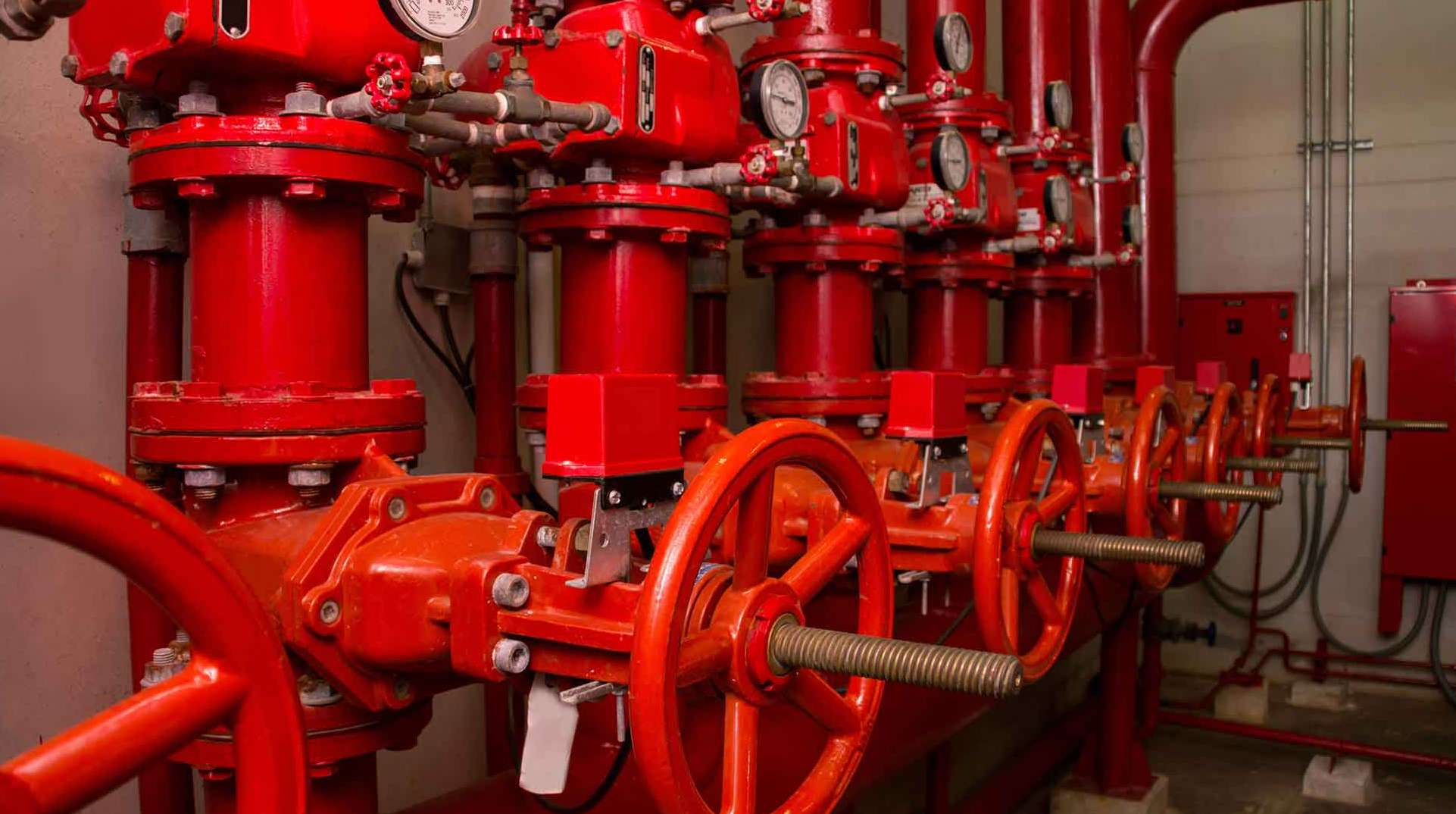
A fire pump control system is not standard pump motor control with a red label. It serves a life safety role, so the control design must support automatic start, source reliability, correct monitoring, and code-driven operation. In many projects, NFPA 20 is used as a major reference for fire pump installation and controller requirements, with final design governed by the local authority and project code basis.
A fire pump normally starts on pressure drop. The controller must receive the pressure signal, start the motor or engine, and keep the pump available during an event. Overload handling differs from ordinary process pumps. A standard motor starter that trips to protect the motor may conflict with fire pump operating intent, where the priority is keeping the pump available during fire conditions.
Common specification errors include feeding the fire pump from the same board as normal building services, using a general starter where a fire pump controller is required, weak source transfer design, poor pressure signal setup, and unclear test or alarm interfaces.
Key elements usually include:
Requirement |
Control Design Implication |
automatic start |
pressure sensing and start logic |
dedicated source path |
separation from normal loads where required |
source transfer |
automatic or manual switching by code and project design |
monitoring |
run, fail, phase, source, alarm, test status |
service access |
safe test and maintenance procedures |
CHINT’s fire pump control system solution uses primary and backup source systems with an emergency start device. NH40 isolation switches and automatic transfer switches support manual and automatic source switching for continuous fire pump operation.
Pump Room Switchgear: Distribution And Coordination
In a large building or infrastructure site, the pump room may contain booster pumps, sump pumps, sewage pumps, transfer pumps, circulation pumps, jockey pumps, and fire pumps. Pump room switchgear has to distribute supply, isolate faults, protect motor circuits, support maintenance, and give operators quick visibility during abnormal conditions.
Start with the incoming supply and fault level. The main MCCB, ACB, or switch-disconnector should match the available fault current and site selectivity plan. Each pump circuit then needs its own labeled protective device, starter or VFD, control circuit protection, and lockable isolation point.
Busbar and feeder sizing should reflect realistic simultaneous operation. A booster set, sump pump, and transfer pump may run together. Fire pump circuits may need separation from normal pump services. Good panel layout helps maintenance teams isolate one circuit without shutting down the whole room.
Monitoring is becoming more useful in pump rooms. Current, run hours, trip history, phase condition, thermal alarms, and VFD fault codes can help your teams move from reset-and-react maintenance to planned intervention.
A good pump room solution identifies pump rooms and fans as high-energy building equipment and considers NGL5 high-protection distribution cabinets, NJRP5 soft starters, IP54 distribution cabinets, and CB-level automatic transfer switching for source continuity.
Specifier’s Checklist: 5 Questions Before You Finalize The Panel
To make sure your panel delivers the performance required, ask the following:
Have you matched the VFD duty rating to the pump type? Centrifugal clean-water pumps commonly suit variable torque ratings. Heavier or positive displacement loads may call for constant torque capacity.
Does the motor protection relay cover the right fault modes? Check phase loss, phase imbalance, overload, thermistor input, leakage input where available, and alarm output.
Does the enclosure rating match the installation location? A clean electrical room differs from a wet well, basement pump room, or outdoor kiosk. Review IP rating, corrosion resistance, ventilation, drainage, and gland selection.
Is the fire pump control system treated as a dedicated package? Confirm the applicable code basis, source arrangement, transfer logic, pressure sensing, controller listing needs, and alarm interface.
Can your team isolate one pump without shutting down the full room? A good pump room switchgear layout gives each pump a clear protective device, isolator, label set, and service access path.
Conclusion
The pump can only perform as reliably as the electrical system that starts, controls, protects, and isolates it. For specifiers, that means treating pump electrical control systems as a core part of pump performance, not a late-stage panel decision.
The key takeaways?
A VFD water supply pump setup can reduce energy use and improve pressure control where demand changes throughout the day.
Strong sewage pump motor protection helps defend motors against jams, phase faults, heat, and harsh operating conditions.
A compliant fire pump control system needs a dedicated design path that supports reliable starting during an emergency.
Well-planned pump room switchgear lets your team isolate faults, protect each circuit, and maintain service continuity across the room.
For application-specific guidance, explore CHINT’s pumps & vacuum equipment OEM solution, including solutions for water supply, sewage control, fire pump control, and pump room distribution.
Frequently Asked Questions
What are the major types of pump controls?
The main pump control types are direct-on-line (DOL) starters, soft starters, and variable frequency drives (VFDs). DOL starters are the simplest and most affordable, but produce high inrush currents and offer no speed modulation. Soft starters reduce inrush current and mechanical stress during start-up, but still run at a fixed speed. VFDs provide full variable speed control, the greatest energy savings for variable-demand applications, and advanced pump protection functions. The right choice depends on motor size, starting frequency, and whether the system demand varies over time.
What is the control system of a pump?
A pump control system manages the starting, stopping, speed, and protection of a pump motor. At minimum it includes a motor starter or VFD, overload protection, and an isolation device. More advanced systems add pressure or flow feedback for automatic speed adjustment, remote monitoring, and communication with a building or process management system. For critical applications such as fire pumps, the control system must also include an automatic transfer switch and dedicated power supply.
How do VFDs protect pump motors?
VFDs protect motors by monitoring current, voltage, and thermal conditions continuously. They can detect and respond to overload, under-voltage, over-voltage, phase loss, and phase imbalance conditions. Pump-specific VFDs additionally detect dry running (loss of prime), deadhead conditions, and pipe fill states. These protection functions reduce the likelihood of motor burnout and extend motor service life significantly compared to across-the-line operation.
What is the difference between a soft starter and a VFD for a pump?
A soft starter gradually ramps voltage up at start and down at stop to reduce inrush current and mechanical shock. Once at full speed, it bypasses itself and the motor runs at fixed speed. A VFD continuously varies the motor speed across the full operating range, essential for applications where demand varies. For systems where demand is fairly constant, a soft starter may be adequate. For systems with variable flow or pressure requirements, a VFD delivers better energy efficiency and process control.
What should I look for in a pump room switchgear setup?
A pump room distribution board should include individually rated and labelled MCCBs or motor circuit protectors for each pump circuit, with appropriate breaking capacity for expected fault currents. Each circuit needs a lockable isolator to enable safe single-circuit maintenance. Busbar sizing should account for the possibility of simultaneous pump operation. Increasingly, pump room panels include run-hour counters and current monitoring to support predictive maintenance. The enclosure IP rating should match the pump room environment, commonly IP54 or higher in wet pump rooms.