

Introduction
Grand View Research estimates the global warehouse automation market at USD 19.23 billion in 2023 and projects USD 59.52 billion by 2030, at 18.7% CAGR. Warehouse automation is raising the load on fulfillment center electrical systems. As e-commerce volume grows, conveyors, lifts, sensors, and control boxes must run across long operating hours with few service windows. So, let’s break down the control panels, motor starters, and logistics automation switchgear behind reliable movement, including conveyor motor control panel design.
What Makes Logistics Electrical Control Different From Standard Industrial?
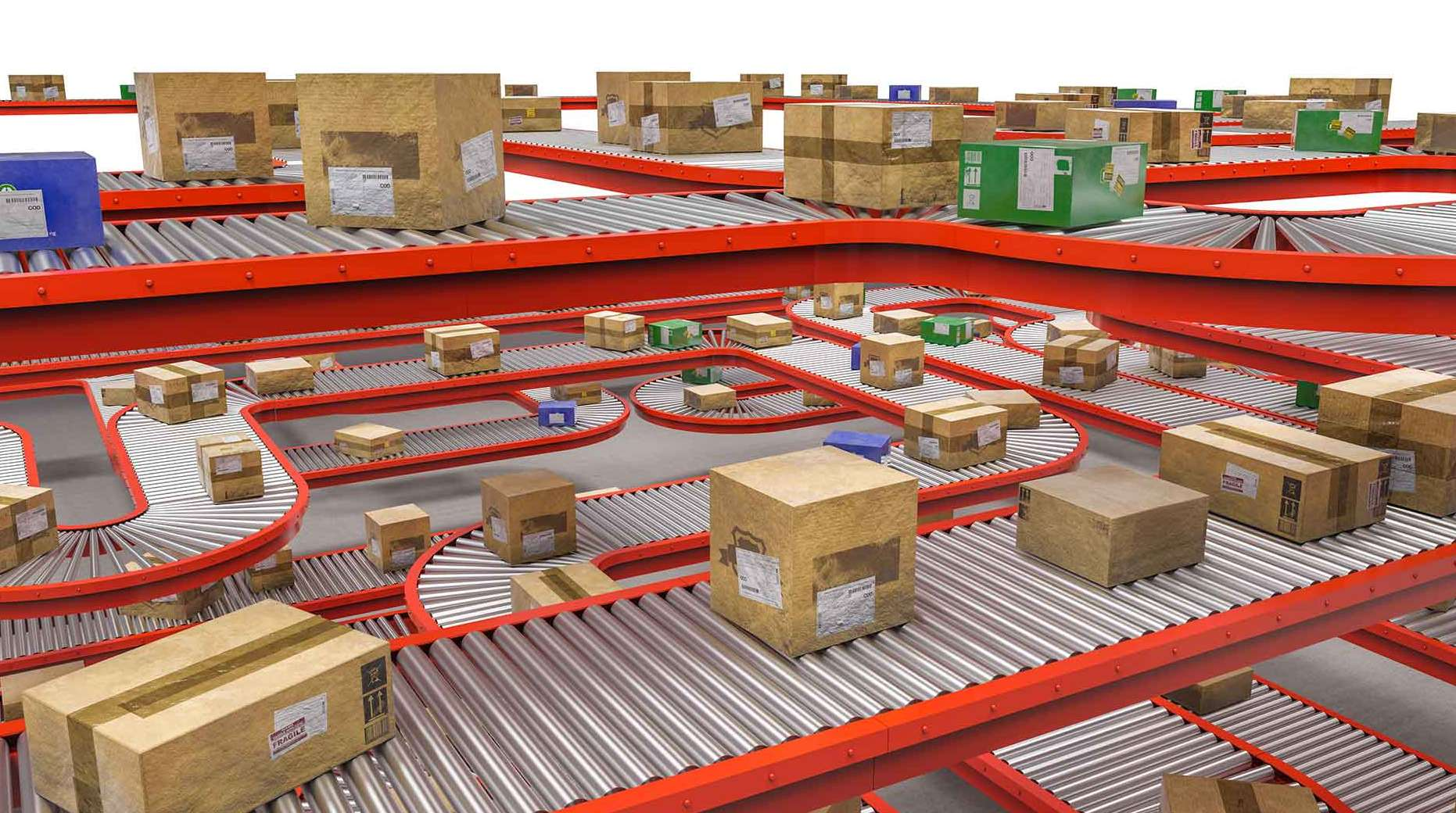
Automated logistics facilities combine scale, density, and cycle frequency in ways many standard industrial panels do not. A large fulfillment center may run hundreds of conveyor motors across receiving, sorting, picking, packing, and dispatch zones. Each motor may be small, but the aggregate load can be large, distributed, and sensitive to stoppages.
The operating pattern is also different. Many conveyor sections start, stop, index, reverse, or accumulate based on sortation logic. That creates repeated inrush current and mechanical stress. If the warehouse motor starter or contactor duty rating only matches motor size, not actual starts per hour, early wear can follow.
The environment adds another layer. Cardboard dust, packaging fibers, forklift traffic, vibration, and frequent cable movement put pressure on enclosure selection and cable entry. This is why warehouse automation projects need a conveyor motor control panel and logistics automation switchgear plan that accounts for duty cycle, floor conditions, and maintenance access.
According to warehouse automation statistics, more than 250,000 logistics robots were sold globally in 2023, compared with 75,000 in 2019, which shows how quickly equipment density is rising. Electrical design has to match that pace.
Conveyor Motor Control: Selecting The Right Starter For Each Application
Conveyor control starts with the motor profile. How often does the conveyor start? Does it need speed matching? Will parcels accumulate and release in short bursts? These questions decide whether a direct-on-line starter, soft starter, or VFD belongs inside the conveyor motor control panel.
A Direct-On-Line (DOL) starter is simple and cost-conscious for small conveyors with infrequent starts. It applies full voltage at start, so inrush current is high. For conveyors that start and stop often, that can stress both electrical and mechanical parts.
A soft starter reduces inrush and gives a smoother ramp-up. It works well for medium-size motors where controlled starting matters, but fixed-speed operation is still acceptable after start.
A Variable Frequency Drive (VFD) gives full speed control, acceleration, and deceleration. It suits accumulation conveyors, sortation loops, and variable-throughput zones. CHINT’s conveyor control box solution, for example, uses the NVF5 series VFD for conveyor motor speed regulation and adjustable speed control.
But which starter is the right for your needs?
Starter Type |
Inrush |
Speed Control |
Typical Use |
Recommended Where |
DOL |
High |
No |
Small conveyors |
Infrequent starts |
SOft Starter |
Reduced |
Medium conveyors |
Moderate start frequency |
|
VFD |
Controlled |
Yes |
Sortation and accumulation |
Variable speed or frequent starts |
For high start frequency, specify AC4 duty where plugging, inching, or repeated starts apply. A warehouse motor starter should match the real duty cycle, not only the motor kW rating.
Telescopic Conveyor Lifts: Managing Variable Load And Stroke Cycles
Telescopic conveyor lifts bring different electrical requirements from flat conveyor sections. They extend, retract, lift, stop at limits, and handle mixed loads. A parcel stream can include light cartons, heavier cases, and shifting load positions in the same operating window.
Good telescopic conveyor lift electrical design starts with directional control and overload protection. The system must manage forward and reverse movement, extension and retraction, and end-of-travel stops. Limit switches and position sensing help prevent overtravel. Load sensing helps protect motors, belts, and lift mechanisms when the conveyor handles heavier materials.
Electrical braking also matters. A VFD can control acceleration and deceleration, while dynamic braking resistors or regenerative braking options help manage stopping energy. This is useful when the lift must stop cleanly at extension limits or align with loading docks.
Programmable Logic Controller (PLC) or motion control can coordinate stroke logic, sensor input, and communication with warehouse systems. CHINT’s control box solution for telescopic conveyor lifts features a VFD control scheme for precise control and improved energy use.
For OEMs, the key is repeatability. Define load range, stroke frequency, braking method, sensor points, and control interface before panel build.

Protecting Control Panels In Dusty, High-Traffic Environments
Distribution centers are active electrical environments. Control panels may sit near conveyor belts, packing areas, pallet traffic, loading doors, and service aisles. Dust ingress, vibration, impact, and heat can all reduce service life if the enclosure is underspecified.
For open warehouse areas, IP54 is a practical minimum for panels exposed to dust and splash risk. Near conveyor belts, packing machinery, or dust-generating zones, IP65 gives stronger ingress protection. The rating only holds if cable glands, conduit entries, and unused holes are sealed correctly. One unsealed entry can compromise the whole enclosure.
Impact protection should also be specified. IK ratings under IEC 62262 classify enclosure resistance to mechanical impact. Panels placed near forklift paths or material handling traffic should have a higher IK rating than panels placed inside protected electrical rooms.
Thermal design needs equal care. VFDs, starters, contactors, power supplies, and relays generate heat. Sealed enclosures may need thermal calculation, spacing, filtered ventilation, heat exchangers, or cabinet cooling. Too little ventilation raises temperature. Poorly placed ventilation can pull dust into the panel.
Zone Type |
Recommended IP Rating |
IK Consideration |
Open floor |
IP54 |
Moderate impact risk |
Near conveyor |
IP65 |
Higher vibration and dust |
Packaging area |
Dust and fiber exposure |
|
Protected electrical room |
Project-specific |
Lower impact risk |
Specify logistics automation switchgear with the installation zone in mind, not only the panel schematic.
Modular Control Box Design: Speed And Flexibility At Scale
Large logistics projects rarely stop at one conveyor line. Facilities expand zones, add lanes, change sortation paths, and increase throughput. Modular control box design helps OEMs repeat tested electrical assemblies across equipment sections.
A modular box is a pre-assembled, factory-tested panel with standard interfaces for power, control wiring, sensors, emergency stop, and communication. It can serve a conveyor segment, lift section, or equipment zone without custom field wiring for every installation.
A well-planned module can include a motor circuit protector, contactor or soft starter, overload relay, control terminals, auxiliary relays, control power supply, emergency stop provision, and communication interface.
This approach supports distribution centre power distribution because electrical rooms and feeder paths can be planned around repeatable loads. Spare modules also simplify maintenance because site electricians can diagnose and replace standard assemblies faster than custom one-off panels.
CHINT’s modern logistics equipment OEM solution covers logistics equipment including warehousing, loading and unloading, packaging, intelligent logistics equipment, and material handling systems. Pairing that solution with the conveyor control box solution gives OEM teams a practical path for modular conveyor motor control panel and logistics automation switchgear planning.
5 Questions To Ask When Specifying Electrical Components For Logistics OEMs
These questions help you catch reliability and maintenance issues before procurement. In automated logistics systems, small specification gaps can repeat across dozens or hundreds of conveyor zones.
1. Are motor starters rated for the actual start frequency, not only the motor size?
Frequent starts increase electrical and mechanical stress. The right starter rating helps reduce nuisance trips, premature contact wear, and unplanned downtime.
2. Have control enclosures been matched to each zone’s IP and IK needs?
Open floor panels, packing-zone panels, and conveyor-side boxes face different dust, vibration, and impact exposure. Proper enclosure selection protects the logistics automation switchgear inside.
3. Can distribution centre power distribution handle expansion without full rewiring?
Automated facilities often add lanes, sensors, conveyors, or lift modules after launch. Planning spare capacity and isolation points early makes expansion less disruptive.
4. Are telescopic conveyor lift electrical systems specified with end-of-travel protection, position sensing, and braking requirements?
Telescopic lifts move under changing loads and stroke cycles. These protections help control stopping accuracy, reduce overtravel risk, and support smoother operation.
5. Can maintenance teams isolate one conveyor segment, lift, or control box without shutting down a wider operating area?
Circuit-level isolation helps technicians service equipment while the rest of the facility keeps moving. This matters in sites with tight service windows and high throughput targets.
Based on warehouse automation statistics, 70% of supply chain professionals viewed automation as positive for warehousing, and more than 75% of companies are expected to adopt some form of cyber-physical automated warehouse process by 2027. Procurement teams should match that adoption curve with component choices that support service access and future capacity.
Conclusion
As warehouse automation grows in volume and system complexity, electrical control deserves the same care as robotics and software. Poor warehouse motor starter selection, weak enclosure protection, and rigid distribution centre power distribution can create avoidable reliability problems. The stronger path is to define duty cycle, enclosure rating, control logic, braking, isolation, and expansion needs during design.
For application-specific support, see CHINT’s modern logistics equipment OEM solution and contact us to discuss conveyor control boxes, telescopic lift controls, and electrical components for your next logistics automation project.
Frequently Asked Questions
What is automation in a warehouse?
Warehouse automation is the use of technology to perform tasks traditionally done manually, including moving, sorting, picking, and storing goods. It encompasses conveyor systems, robotic picking arms, automated storage and retrieval systems (AS/RS), automated guided vehicles (AGVs), and the control systems coordinating them. The goal is to increase throughput, reduce errors, and lower labour costs.
What electrical systems are critical to warehouse automation?
The critical electrical systems in an automated warehouse include motor control centres (MCCs) or distributed control panels for conveyor and sortation systems, power distribution boards supplying each zone, VFDs or soft starters for variable-load applications, and emergency stop networks for safety. Building management and programmable logic controllers integrate with warehouse execution systems to coordinate electrical loads in real time.
What are the main causes of conveyor downtime in a distribution centre?
The most common causes include motor and starter failures from under-rated components or incorrect duty cycle selection, contactor wear from high start frequency without proper AC4-rated equipment, control panel failure from dust ingress or inadequate thermal management, and cable damage from forklifts or mechanical impact. Most of these failures are preventable through correct component specification and enclosure protection at the design stage.
How do VFDs improve conveyor performance in a warehouse?
VFDs allow conveyor speeds to be varied in real time, matching throughput to demand and reducing mechanical stress during starts and stops. This reduces belt slip, extends motor and mechanical component life, and improves the accuracy of item positioning at merge points and sortation zones. VFDs also reduce inrush current on start, which protects the distribution system from repeated current spikes in high-frequency start environments.
What is a modular control box for conveyors?
A modular control box is a factory-assembled, pre-tested panel that includes all the electrical components needed to control one or more conveyor motors (a motor circuit protector, contactor or soft starter, overload relay, and control terminals). Modular boxes use standardised interfaces for rapid installation and connection to a conveyor segment without custom wiring on site. In large fulfilment centres, modular control boxes reduce installation time and ensure consistent component quality across every conveyor circuit.