

Introduction
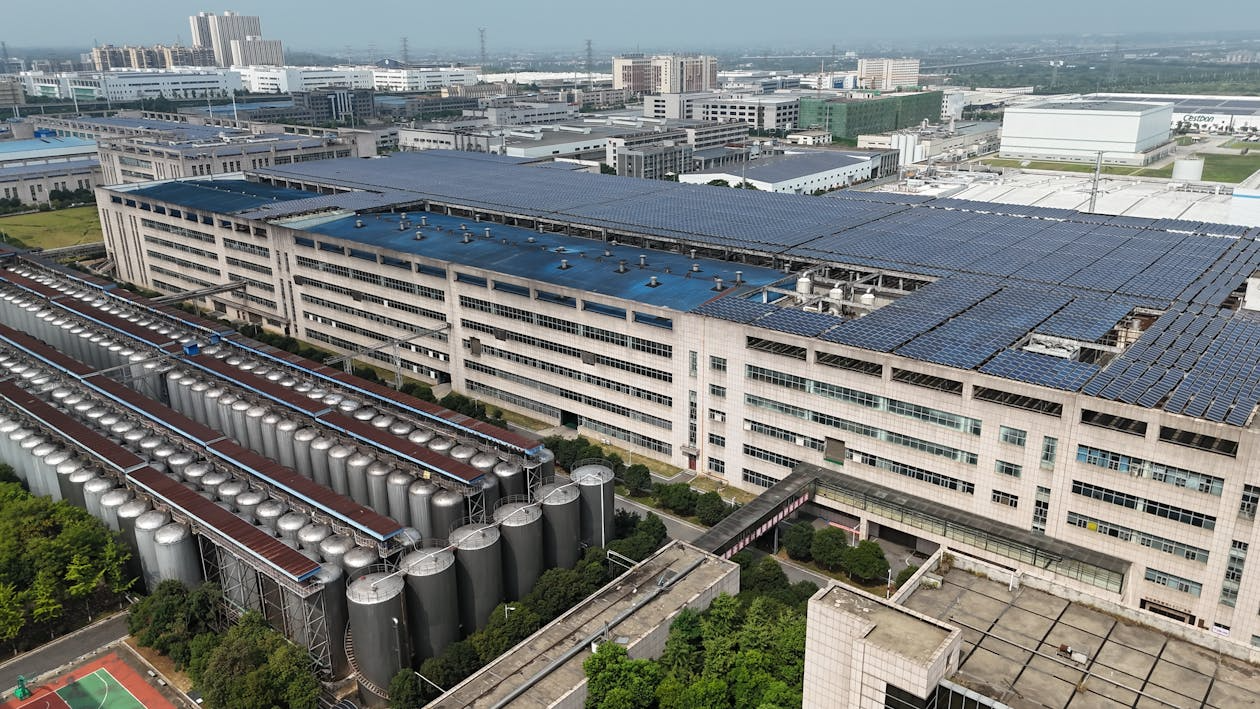
Solar energy storage is no longer a homeowner-style solar decision scaled up for larger roofs. For businesses, commercial solar energy storage involves grid connection, protection, metering, tariff modeling, and long-term asset planning.
The global C&I solar PV market was valued at USD 63.2 billion in 2024 and is projected to reach USD 164.1 billion by 2034, at a 10.1% CAGR. Solar also accounted for 54% of new U.S. electricity-generating capacity in 2025, while solar and storage together made up 79%.
This C&I solar system guide helps energy managers, CFOs, and facilities directors evaluate business solar PV installation, commercial battery storage, and industrial solar ROI with sharper technical questions.
C&I Solar Vs Residential Solar: Key Differences
Residential solar assumptions can mislead business buyers. A home system usually centers on rooftop panels, an inverter, a simple interconnection path, and household consumption. A commercial or industrial project may start at tens or hundreds of kilowatts and scale much higher across rooftops, carports, ground mounts, or multiple buildings.
A business solar PV installation can require a dedicated transformer, medium-voltage connection, protection relays, export controls, and utility interconnection studies. Larger projects may also need switchboard upgrades or new substation infrastructure. These decisions affect schedule, cost, and the point where the project connects to your facility.
Protection and metering also become more detailed. C&I installations need defined metering points for billing, performance tracking, and tariff settlement. Anti-islanding protection usually prevents the PV system from feeding an offline grid during an outage, which protects utility workers and connected equipment.
Finance looks different too. Many business projects use power purchase agreements, leases, or energy service models instead of outright purchase. A useful C&I solar system guide should help you compare both the electrical design and the financial structure, since each shapes your risk, operating savings, and long-term flexibility.
Why Battery Storage Changes The Economics For Businesses
Solar alone reduces grid consumption when the sun is producing and your facility load can absorb that power. Commercial battery storage changes the model because it lets you store midday generation and discharge it when your site needs energy, when tariffs are higher, or when demand peaks appear.
The first value stream is self-consumption. Without storage, a site may export excess solar during low-load periods, sometimes at a lower value than purchased electricity. A battery can shift that energy to later production, cooling, refrigeration, charging, or office loads.
The second value stream is demand charge reduction. In many tariffs, a few short demand spikes can influence a large part of the bill. Battery discharge during those peaks can improve industrial solar ROI when dispatch logic matches your load profile.
The third value stream is resilience. Storage can provide ride-through support for selected loads when paired with suitable controls and islanding design.
Dimension |
Solar-Only |
Solar Plus Storage |
Self-consumption |
Depends on daytime load |
Higher through load shifting |
Demand charge reduction |
Limited |
Stronger peak shaving potential |
Payback |
Based mainly on kWh offset |
Can improve when tariffs reward peak reduction |
Market activity reflects these uses. A C&I energy storage market outlook cites a commonly referenced estimate of about USD 8.5 billion in 2024, rising to about USD 35 billion by 2033, or roughly 17.5% CAGR. The International Renewable Energy Agency (IRENA) reports fully installed battery storage project costs fell 93% from 2010 to 2024. Adding storage can reduce C&I payback from about five years to about three and a half years in suitable cases.
CHINT C&I storage solution and BESS solution support these solar-plus-storage decisions for commercial and industrial applications.
The Electrical Components That Make Or Break A C&I Solar Installation
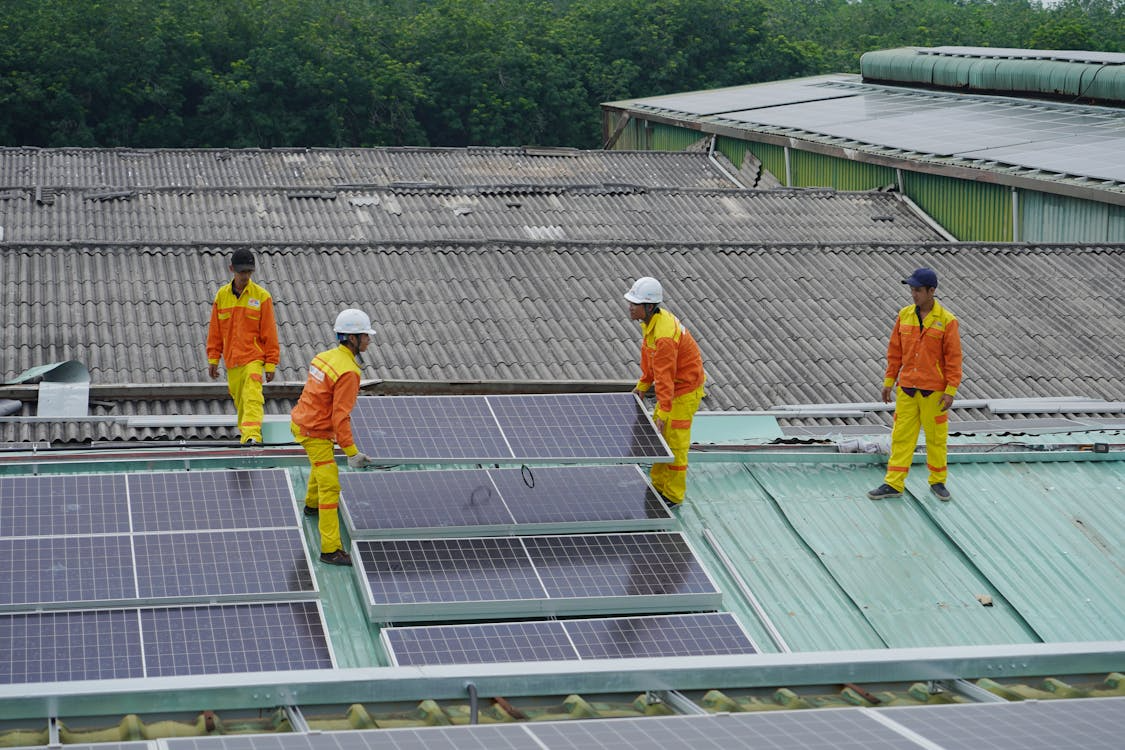
Panels attract the most attention, but solar switchgear for business determines whether the system operates safely, can be maintained, and performs as modeled.
Combiner boxes aggregate DC output from multiple PV strings. They should be rated for the system voltage and environmental conditions, with individual string fusing where required. Poorly specified combiner boxes can create hotspots, voltage losses, and hard-to-locate faults.
DC disconnect switches and DC-rated MCCBs allow safe isolation during maintenance and fault conditions. AC-rated components should not be substituted on DC circuits. DC arcs behave differently and require devices rated for the application.
Surge protection devices protect inverters, switchgear, and control electronics from transients. Rooftop systems exposed to lightning-induced surges usually need protection on both the DC and AC sides.
AC protection on the inverter output may include MCBs, RCDs, MCCBs, and suitable isolation. Anti-islanding protection and energy meters complete the control and monitoring layer. Accurate metering supports billing, net metering credits where available, and performance review.
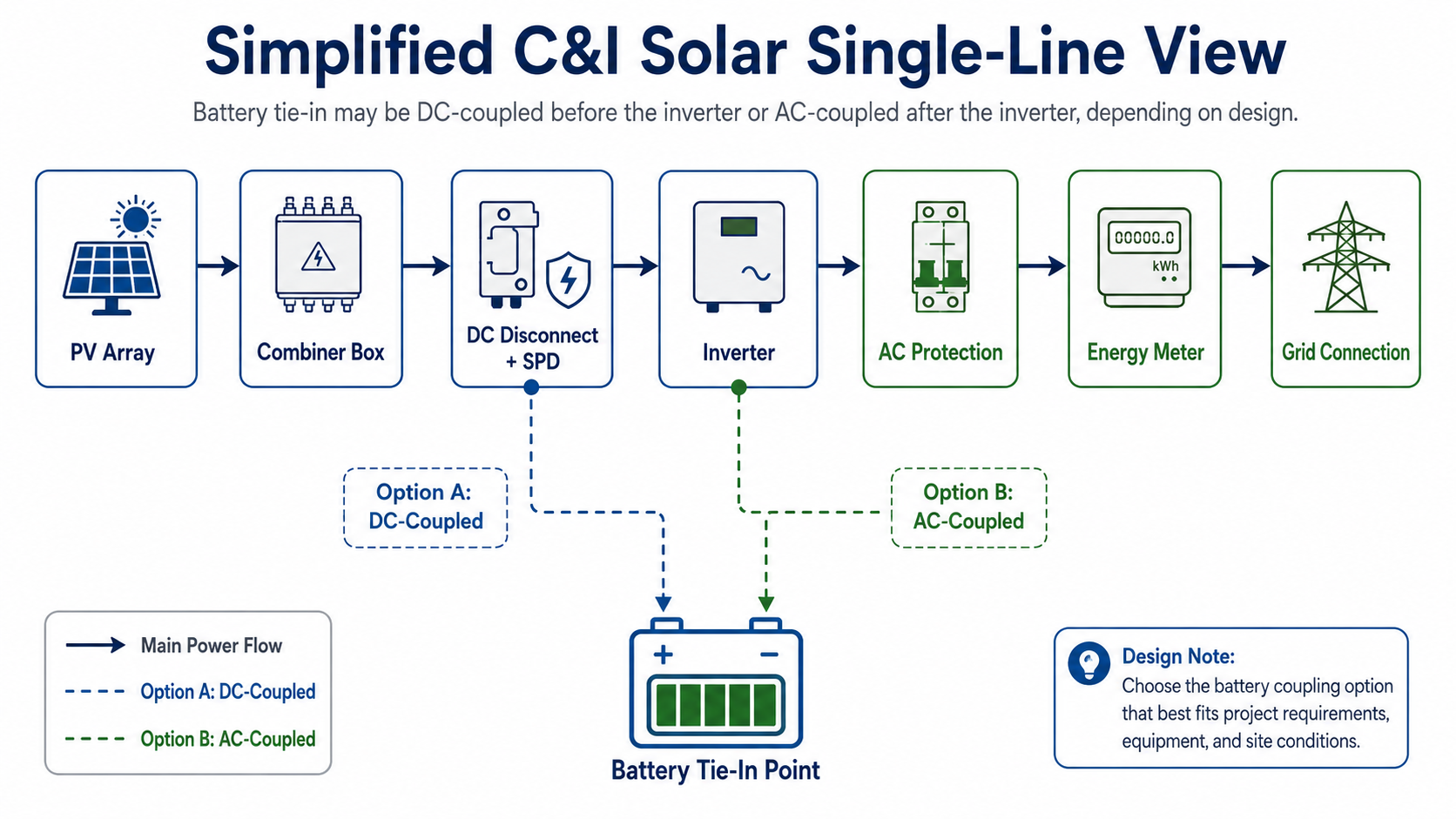
For system-level planning, consider CHINT’s C&I PV solution, which covers commercial and industrial storage across the DC side, battery and PCS, and AC side, grid connection and load.
How To Evaluate A C&I Solar Proposal: What Good Looks Like
Most proposals highlight module output, inverter capacity, estimated savings, and payback. Those items matter, but your team should also test the electrical design behind the numbers.
Ask whether the proposal includes string-level monitoring and fault detection. If a string underperforms, your facilities team should be able to find the issue quickly rather than waiting for monthly production gaps to reveal a problem.
Ask where SPDs are placed. A good proposal should show the DC-side and AC-side protection strategy, not simply state that surge protection is included.
Ask how the combiner boxes are rated. Confirm voltage, current, enclosure rating, and individual string fusing. This is a simple way to find whether the design has moved beyond generic bill-of-material language.
Ask which anti-islanding scheme applies and which local grid code or standard it follows. Also ask what happens when the battery reaches full charge on a sunny, low-load day. The answer should mention export management, curtailment logic, or load controls.
A strong proposal also explains the ROI model. It should show energy offset, demand charges, battery dispatch assumptions, degradation, maintenance, financing cost, export value, and downtime assumptions. Without those inputs, industrial solar ROI can look cleaner than the operating reality.
Red Flags In C&I Solar Specifications
A proposal may look polished and still carry design gaps. Watch for these warning signs before approval.
No DC-rated disconnect switches. DC circuits need components rated for DC voltage and arc behavior. Standard AC substitutions create maintenance and safety issues.
No SPDs on either side of the inverter. Surge events can damage inverters, meters, communication modules, and switchgear. Missing SPDs raise avoidable asset risk.
Combiner boxes without individual string fusing. This can make string faults harder to isolate and can weaken protection for larger arrays.
No anti-islanding detail. A compliant C&I system should state how it prevents backfeed into an offline grid.
No grid code or interconnection reference. Utility requirements shape protection, export limits, commissioning tests, and schedule.
Payback excludes demand charge reduction. If the project includes commercial battery storage, the model should show peak shaving logic and tariff assumptions, not only solar energy offset.
No metering plan. Billing, net export, performance review, and battery dispatch all require accurate metering.
No maintenance isolation strategy. Facilities teams need safe access to inverters, batteries, combiner boxes, and AC boards without unnecessary shutdown of wider operations.
No clear battery full-charge scenario. The design should explain export, curtailment, load shifting, or control response.
Conclusion
Commercial solar energy storage rewards careful specification. Panels and batteries matter, but electrical architecture, protection, storage dispatch, metering, and switchgear decide whether the project performs financially and operationally. A buyer who understands these details can compare proposals with more confidence and avoid costly design omissions.
For technical guidance on commercial solar energy storage, solar switchgear for business, and component selection, explore CHINT’s C&I PV Solution, C&I Storage Solution, and BESS Solution, then talk to our specialist to discuss your site profile and project goals.
Frequently Asked Questions
What is the difference between C&I solar and residential solar?
Commercial and industrial (C&I) solar systems are larger than residential systems, starting at 50 kW and reaching tens of megawatts. They connect to the grid at higher voltages, require more complex protection systems, and are financed through PPAs or lease structures rather than outright purchase. The electrical design, including transformers, switchgear, protection relays, and metering, is more involved and must be engineered to utility interconnection requirements.
How does commercial battery storage improve solar ROI?
Battery storage improves commercial solar ROI in three ways: by increasing solar self-consumption (using stored energy when generation is low), by reducing demand charges (discharging during peak demand periods to avoid high tariff spikes), and by providing backup power resilience. Adding storage can reduce the payback period of a solar-only project from around five years to around three and a half years.
What size solar system does my business need?
The right system size depends on your business's electricity consumption, the grid connection capacity available at the site, available roof or land area, and your financial objectives. A business consuming 500,000 kWh per year might consider a 400–600 kW system as a starting point, but detailed modelling of load profiles, shading, orientation, and tariff structure is required to size the system accurately. Always engage an independent energy consultant or engineer before accepting a proposal.
What electrical components are critical in a C&I solar installation?
The critical electrical components are: DC combiner boxes (with individual string fusing), DC-rated disconnect switches, DC-side and AC-side surge protection devices (SPDs), inverter output circuit protection (MCBs or MCCBs), anti-islanding protection relaying, accurate revenue-grade energy metering, and an AC connection switchboard with appropriate ratings. For solar-plus-storage systems, battery management systems (BMS) and battery protection switchgear are also critical.
What questions should I ask before signing a solar contract?
Key questions include: Is the specification compliant with local grid code and interconnection requirements? What monitoring and fault detection is included? What protection devices are specified on the DC and AC sides? What happens if the battery is full and the sun is still generating (is there a curtailment or export management strategy)? What is the maintenance and warranty support for all components, including switchgear and protection devices? And, critically, does the payback calculation include all cost categories, including demand charge reduction where applicable?