Please enter keywords to search

Global |EN

Choose your country & Language

Asia Pacific

Australia & New Zealand
India
Indonesia
Malaysia
Philippines
Singapore
Singapore (Sunlight)
Vietnam

Middle East & Africa

Saudi Arabia
South Africa
UAE
Egypt
Kenya

Europe

France
Kazakhstan
Italy
Netherlands
Spain
Turkey
United Kingdom

North America

Mexico
USA
Canada

Latin America

Brazil
Colombia
Ecuador
Peru
Choose your country & Language

Australia & New Zealand
India
Indonesia
Malaysia
Philippines
Singapore
Singapore (Sunlight)
Vietnam
Saudi Arabia
South Africa
UAE
Egypt
Kenya
France
Kazakhstan
Italy
Netherlands
Spain
Turkey
United Kingdom
Mexico
USA
Canada
Brazil
Colombia
Ecuador
Peru

Please enter keywords to search

Your search term contains restricted words. Please use different keywords.
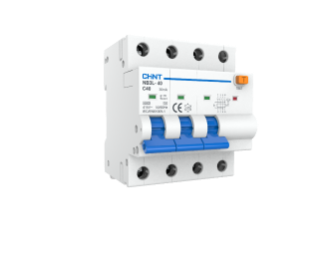
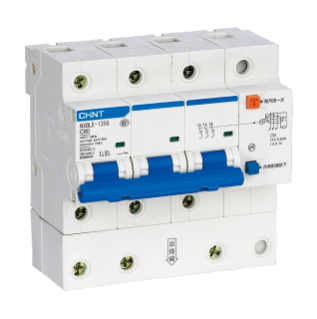
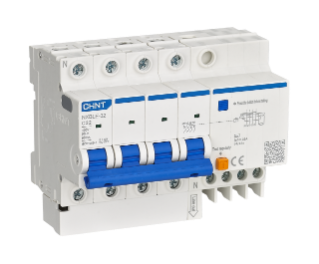
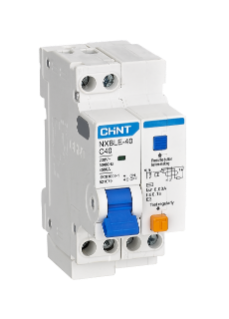
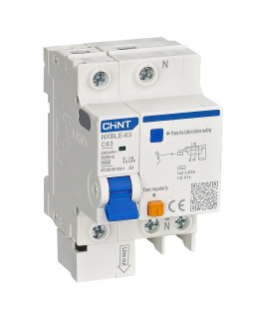
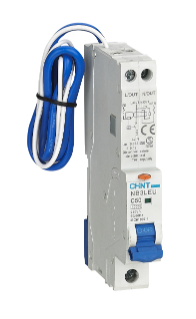
NB3LEU Residual Current Operated Circuit Breaker with Over-current Protection (Electronic)

NB3LEU Residual Current Operated Circuit Breaker with Over-current Protection (Electronic)

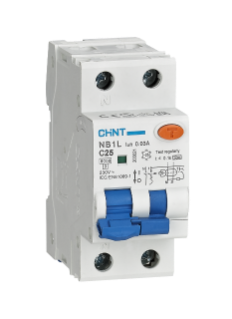
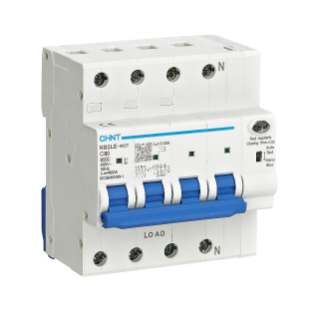
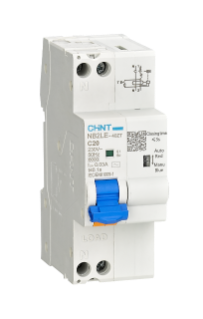
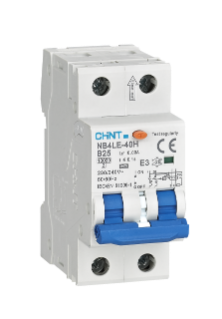
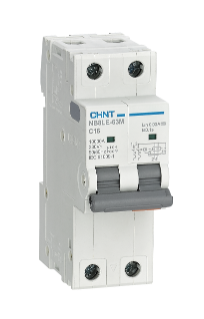
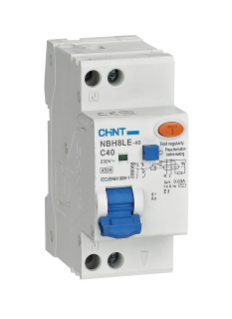
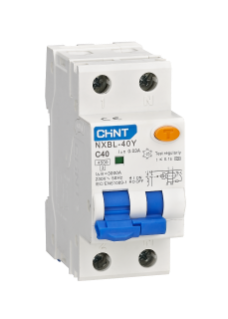
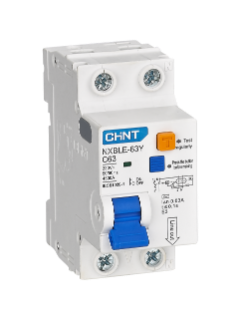
The NB3LEU Residual Current Operated Circuit Breaker (RCBO) is an advanced electronic device that delivers integrated overload, short-circuit, and comprehensive earth leakage protection. It accurately detects residual currents (Type A and AC class) to enhance safety against electric shock and fire hazards. Available in various current ratings, this compact RCBO ensures rapid, reliable fault disconnection, making it ideal for residential, commercial, and industrial electrical installations.

Product Information

Recommend Blogs
JULY 30, 2026 Automatic Transfer Switch Explained: How Dual Power Switching Keeps Critical Systems Running

Learn how automatic transfer switches detect faults and switch between two power sources to keep hospitals, data centers, and factories running 24/7.

MAY 25, 2026 Getting More from Your Solar Investment: How Smart Switchgear Maximises PV Performance

Long-term solar performance depends on the electrical system, not just the panels. A practical guide to smart switchgear, protection, and combiner box selection for PV.

MAY 25, 2026 Fan and HVAC Control Systems in Large Buildings

HVAC uses up to 40% of a commercial building's energy. The electrical control system determines efficiency, reliability, and BMS integration. Here's what to know.

MAY 25, 2026 Power Quality in Oil and Gas: Why It Matters More Than You Think

In oil and gas, poor power quality can trigger safety shutdowns and damage instrumentation. A practical guide to power quality monitoring for operations teams.

MAY 25, 2026 Emergency Lighting and Power Continuity in Commercial Buildings

In commercial buildings, emergency lighting is a legal requirement. A practical guide to system design, compliance, and integrating backup power with life safety.

MAY 22, 2026 Keeping the Lights On: Power Reliability Strategies for Food & Beverage Facilities

Unplanned downtime in food manufacturing is expensive. Learn how the right electrical components prevent costly stoppages in food processing plants.

MAY 22, 2026 How to Choose the Right Generator Control System for Your Application

Choosing the wrong generator control components causes failure when it matters most. A practical guide to ATS, circuit breakers, and dual supply design.

MAY 22, 2026 Building a Reliable Microgrid: From Planning to Power-On

Plan resilient microgrid projects with practical guidance on topology, storage sizing, switchgear, islanding protection, and technical support teams.

MAY 22, 2026 Electrical Protection in Mining and Petrochemical Environments

In mining and petrochemical sites, standard LV components are never enough. A guide to hazardous area equipment, motor protection, and reliable distribution.

MAY 22, 2026 Reducing Energy Waste in Steel and Metals Manufacturing

Steel plants are among the most energy-intensive operations on earth. Here's where energy efficiency in steel manufacturing starts, and the role of the electrical system.

Helpful Links

Blog
Blog

Explore expert insights, trends, and CHINT perspectives on the smart energy industry.

Read More
Resources
Resources

Download essential CHINT resources for your business needs.

Download Now
Contact Us
Contact Us

Have questions? Contact us for support and solutions.

Get Support
Collapsed
Expand

FAQs


What makes the NB3LEU RCBO different from traditional breakers?

It combines leakage, overload, and short-circuit protection in one compact device using electronic tripping, offering faster response and improved reliability over purely thermal types.


What are Type A and Type AC sensitivities?

Type A: Detects both AC and pulsating DC leakage currents.

Type AC: Detects only sinusoidal AC leakage currents.

This ensures compatibility with various load types and system conditions.


Can this breaker handle high fault currents?

Yes. The NB3LEU offers a 10 kA short-circuit capacity, making it suitable for robust protection in both residential and commercial environments.


What installation options are available?

It can be mounted on a 35 mm DIN rail and connected via cable, U-type, or pin-type busbars, supporting flexible panel configurations.


Does temperature affect performance?

Performance is rated at 30 °C, but derating applies above that (e.g., 0.9 at 50 °C, 0.85 at 60 °C) to ensure safe operation in warmer environments.