Please enter keywords to search

Global |EN

Choose your country & Language

Asia Pacific

Australia & New Zealand
India
Indonesia
Malaysia
Philippines
Singapore
Singapore (Sunlight)
Vietnam

Middle East & Africa

Saudi Arabia
South Africa
UAE
Egypt
Kenya

Europe

France
Kazakhstan
Italy
Netherlands
Spain
Turkey
United Kingdom

North America

Mexico
USA
Canada

Latin America

Brazil
Colombia
Ecuador
Peru
Low-voltage
Instruments and Meters
EV Charging
Telecom & Data Center
Buildings
Products
Solutions
Project References
Corporate Reports
CHINT Global
CHINT's Insights
Careers
Locate Us
Contact Us
Call Us +65 6329 3110
Email Us sales.apac@chint.com
Privacy Policy
Online Services

Choose your country & Language

Australia & New Zealand
India
Indonesia
Malaysia
Philippines
Singapore
Singapore (Sunlight)
Vietnam
Saudi Arabia
South Africa
UAE
Egypt
Kenya
France
Kazakhstan
Italy
Netherlands
Spain
Turkey
United Kingdom
Mexico
USA
Canada
Brazil
Colombia
Ecuador
Peru

Please enter keywords to search

Your search term contains restricted words. Please use different keywords.
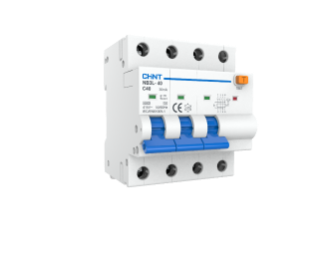
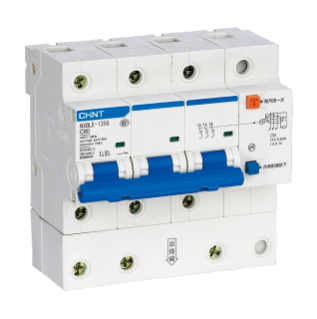
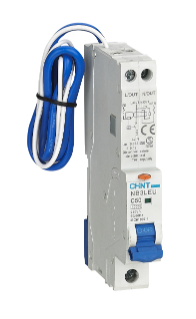
NB3LEG-40 Residual Current Operated Circuit Breaker with Over-current Protection (Electronic)
NB3LEG-40 Residual Current  Operated Circuit Breaker  with Over-current Protection (Electronic)

NB3LEG-40 Residual Current Operated Circuit Breaker with Over-current Protection (Electronic)

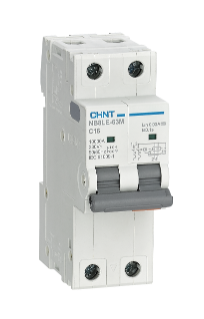
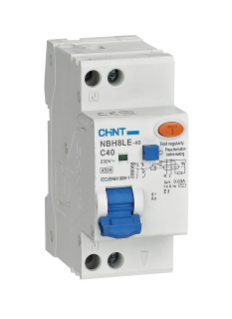
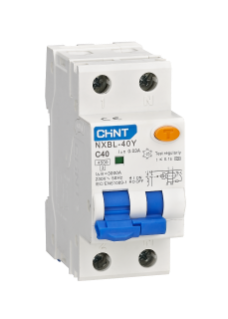
The NB3LEG Residual Current Operated Circuit Breaker (RCBO) is an advanced electronic device combining overload, short-circuit, and earth leakage fault protection for comprehensive electrical safety. It offers enhanced protection against electric shock and fire hazards and provides precise circuit control and reliable fault disconnection. With various current ratings and B/C tripping curves, this versatile RCBO is ideal for safeguarding electrical installations in residential, commercial, and industrial environments, especially where modern electronic equipment is present.

Product Information

Recommend Blogs
APRIL 15, 2026 Why MCCBs Are Critical for Industrial Safety and Compliance at High Voltage Levels

A fuse box upgrade is essential to ensure that your consumer unit can keep up with your current power demand and electric safety needs. Learn more in this article.

APRIL 14, 2026 Creating Energy-Efficient Electrical Installations

Learn how final distribution boards, smart meters, and proper electrical installation design work together to create energy-efficient homes that reduce power waste.

APRIL 14, 2026 Selecting the Appropriate Circuit Breaker for Residential and Industrial Applications

Proper circuit breaker selection entails understanding of circuit breaker types and important selection factors to consider. Learn more in this article.

APRIL 14, 2026 RCCB Tripping Explained: Causes, Nuisance Tripping, and Electrical Fault Diagnosis

In this article, we explain the role of RCCB tripping in electrical safety and what causes unintended or nuisance tripping.

APRIL 14, 2026 Why OEMs Are Standardizing on Modular Breaker Platforms

Learn why OEMs adopt modular circuit breaker platforms to cut engineering time, boost design flexibility, and streamline industrial projects.

APRIL 14, 2026 Why Modular Electrical Solutions Offer Faster ROI

Discover how modular electrical systems and prefabricated LV/MV solutions deliver faster ROI through reduced timelines and predictable costs.

APRIL 14, 2026 How to Plan a Fuse Box Upgrade: Costs, MCB Installation, and Safety Benefits

A fuse box upgrade is essential to ensure that your consumer unit can keep up with your current power demand and electric safety needs. Learn more in this article.

APRIL 13, 2026 Common Wiring Mistakes That Reduce Safety in Homes

How do hidden home wiring mistakes impact safety, and why electrical compliance matter? Learn how correct MCB selection reduces risk in modern homes and long-term reliability.

APRIL 13, 2026 How to Install and Use Your Home EV Charger Safely

Learn how to safely manage home charging with expert tips on EV charger installation, daily use, and protective measures for reliable, stress-free charging.

MARCH 10, 2026 How Surge Protective Devices (SPDs) Keep Your Small Business Equipment Safe

Learn how surge protection and electrical protection strategies support small business power needs, reduce downtime, and keep equipment reliable as demand grows.

Helpful Links

Blog
Blog

Explore expert insights, trends, and CHINT perspectives on the smart energy industry.

Read More
Resources
Resources

Download essential CHINT resources for your business needs.

Download Now
Contact Us
Contact Us

Have questions? Contact us for support and solutions.

Get Support
Collapsed
Expand

FAQs


What is the main advantage of the NB3LEG-40 RCBO?

It combines residual current detection with over-current protection in one compact device, simplifying panel design while enhancing electrical safety.


What’s the difference between Type A and Type AC models?

Type A: Detects both AC and pulsating DC leakage currents (ideal for modern electronic loads).

Type AC: Detects only sinusoidal AC leakage currents, suitable for simple resistive loads.


How does the NB3LEG-40 handle temperature variations?

It maintains rated performance up to 40 °C. For higher ambient temperatures (e.g., 60–70 °C), the load current must be reduced according to derating coefficients.


What types of loads can this RCBO protect?

It protects resistive, inductive, and mixed loads—from lighting and sockets to small motors—depending on the selected tripping curve (B or C).


Can it be easily installed and maintained?

Yes. It mounts quickly on a 35 mm DIN rail, allows bottom wiring, and includes a visible contact position indicator for safety and convenience during maintenance.