

Introduction

Every facility needs circuit breakers for electrical safety and efficient power distribution. This device can detect electrical fault conditions (e.g., short circuit or overload) promptly and cut the current flow.
However, circuit breakers come in various forms and types. Each type performs a distinct function and comes with unique advantages. We will help you select the right circuit breaker for your facility in this article.
What Are Circuit Breakers and Why They Matter?
Circuit breakers are safety devices that protect a facility’s electrical circuit from damage caused by overcurrent (current flow exceeding the amount the circuit can support) or short circuit (current flowing in an unintended path).
Commercial and industrial establishments can rely on circuit breakers to ensure safety and operational continuity during electric faults. As circuit breakers can automatically detect fault occurrence, they can quickly disconnect power during short circuits or overload, which prevent hazards to facility personnel, equipment, and to the circuit itself.
And as electric circuit breakers protect the facility’s high-cost equipment and machinery, you save yourself from the hefty cost of repairs and replacement.
Key Circuit Breaker Types
There are different types of circuit breakers, and it is crucial to understand their features so you can select which one applies best for your residential or industrial electric safety needs.
MCB (Miniature Circuit Breakers)
MCB is one of the low voltage AC circuit breakers which operate in properties that utilize current flow of not exceeding 1000 V. This is an automatically-operated safety device that opens the circuit when the current flow exceeds the rated limit.
MCBs do not usually trip automatically when a fault is detected. They are designed to trip with a delay of around 2.5 milliseconds for short circuits. This mechanism is to ensure that MCBs will not trip instantly when there is a momentary yet benign surge or when there is an initiation of inductive load due to high inrush current.
This circuit breaker type is common in small commercial establishments because they are affordable, lightweight, and easy to install (even in confined spaces). But they are not recommended in environments with high-voltage applications such as power plants, transmission and distribution systems, and industrial manufacturing facilities.
MCCB (Molded Case Circuit Breakers)
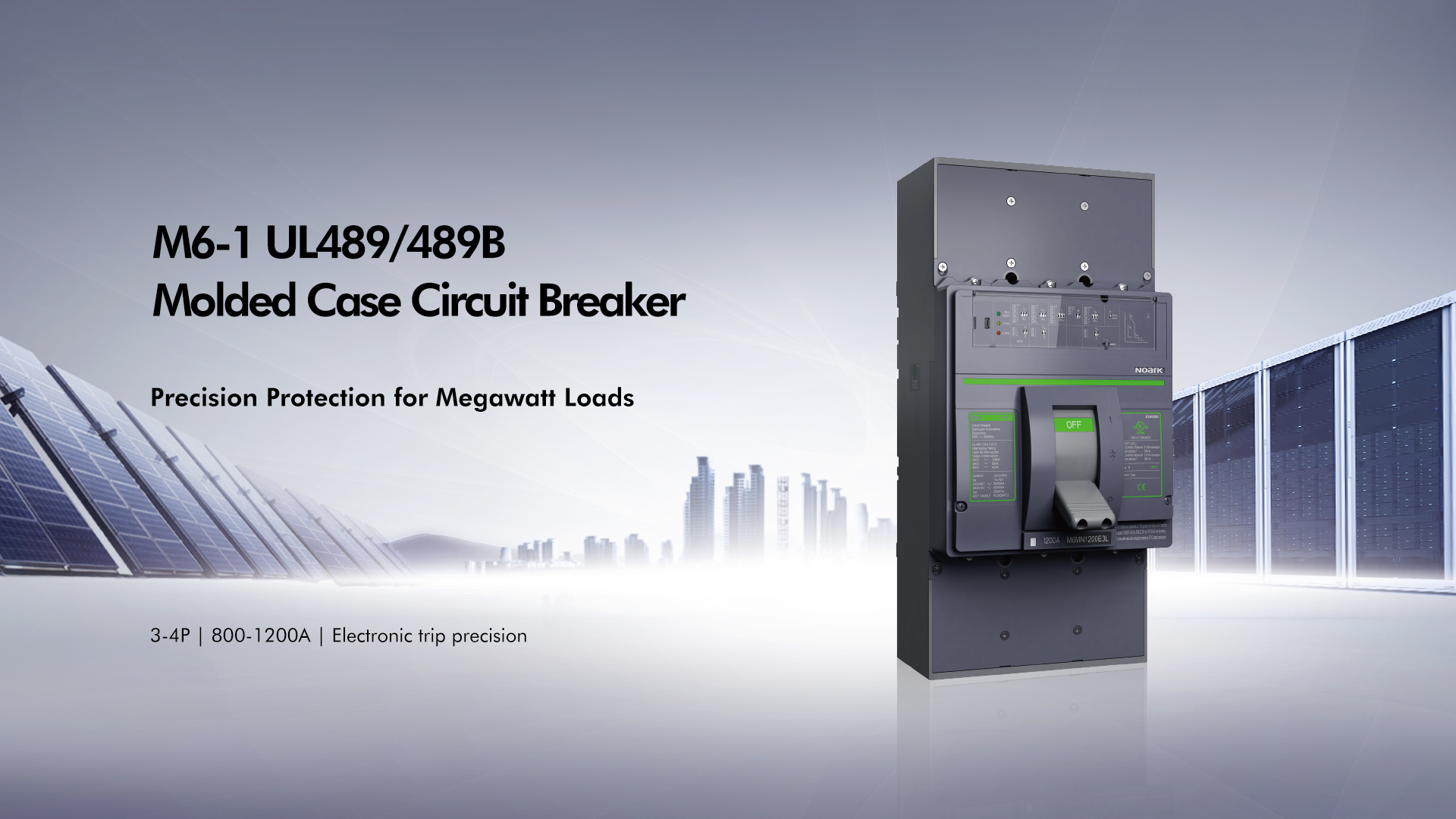
When the current ratings of a circuit exceed the threshold of an MCB, a MCCB is often installed. This type supports current ratings of up to 2500 amperes.
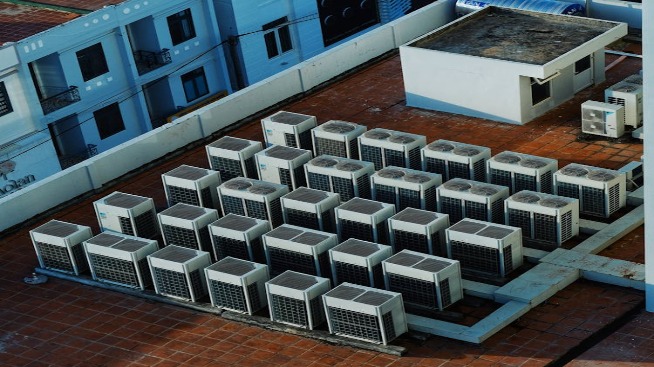
As MCCBs can handle higher breaking capacities, they are commonly used in manufacturing and processing facilities to protect machinery and equipment from electrical faults. They are also used in data centers, where multiple servers and critical systems run simultaneously. Some HVAC systems also use MCCBs to manage the electrical loads associated with large compressors and fans.
CHINT M6 Frame Size 800~1200A MCCB is an example of a high-capacity MCCB that provides a range of rated interrupting voltages from 240 to 690 Vac and 250 to 600 Vdc. This versatility in voltage capacity makes it suitable for diverse industrial and commercial environments, from manufacturing plants to data centers. And as an international standards compliant safety device, CHINT M6 can handle significant fault currents and ensure rapid disconnection in case of overloads or short circuits.
RCD Types (Residual Current Devices)
An RCD interrupts circuit flow when there is earth leakage detected and prevents electrocution or a downed line. This type of circuit breaker operates on the principle of Kirchhoff’s current law, by which it monitors if the circuit’s inflow current is equal to the outflow current. Any imbalance between the two produces a residual current that will trip the circuit breaker.
RCDs have various types, such as:
- Type A: Sensitive to alternating current (electrical current in which the flow of electric charge periodically reverses direction). Sensitive also to pulsating DC or square waveform.
- Type AC: Designed to detect alternating current (AC) earth faults only. Commonly used in standard residential installations where appliances operate on AC power.
- Type F: A newer type designed to detect AC and smooth DC fault currents.
- Type B: Specifically engineered to detect AC, smooth DC, and pulsed DC earth faults. Typically installed in industrial settings, electric vehicle charging stations, and circuits with variable frequency drives (VFDs).
RCBO Types (Residual Current Breaker with Overcurrent Protection)
An RCBO is a circuit breaker that merges protection against residual current (Earth leakage) and overcurrent. It also operates based on Kirchhoff’s law as it determines if the circuit’s current inflow via a live wire is equal to the one that flows through a neutral wire.
Many industrial facilities rely on RCBOs to protect plant workers from electrocution and equipment destruction due to overloads or short circuits. Offices and retail commercial spaces also use RCBOs to prevent interruption of lighting, computer systems, and distribution circuits in case an electric fault condition occurs.
As RCBO is essentially a two-in-one protective device, it saves space and provides comprehensive protection at a lower cost.
Factors to Consider in Circuit Breaker Selection
An on-point circuit breaker selection entails consideration of the listed factors below that focus on the features and functionalities of circuit breaker types.
Rated Current and Voltage
The rated current and voltage of a circuit breaker must match the expected load of the electrical system. This is to prevent overheating, as breakers rated lower than the system load can overheat, which can lead to premature tripping or failure.
Breaking Capacity
Breaking capacity refers to the maximum fault current that a circuit breaker can safely interrupt without sustaining damage. The breaking capacity must exceed the maximum fault current that could occur in the system. Otherwise, it may fail to trip during a fault and cause electric shocks or machinery damage.
Environmental Conditions
Heat, moisture, dust, and other environmental factors can significantly affect circuit breaker performance. For instance, an environment that is often moist and humid can cause corrosion and short circuits, which can compromise the breaker’s integrity.
Coordination with Other Protection Devices
Selective coordination ensures that only the circuit breaker closest to a fault trips, while upstream breakers remain operational. This prevents unnecessary tripping of upstream devices that can cause significant equipment downtime.
Scalability and Future Expansion
If you project that your facility will require increased loads in the future, it is crucial to consider the scalability of the circuit breaker. For instance, between MCB vs MCCB, the latter is a better choice in terms of scalability because of its greater load and voltage capacity.
Larger MCCBs, such as CHINT M6, can handle increased loads, which make them suitable for facilities that anticipate future expansion or additional equipment. Furthermore, investing in a scalable circuit breaker solution reduces the need for frequent replacements or upgrades, which saves money in the long run.
Invest in a Foolproof Electric Fault Protection With CHINT
Proper circuit breaker selection lets you determine if a breaker matches the system's rated current and voltage. Upon careful consideration of these factors, you can reduce the risk of fires and accidents during overloads or short circuits.
CHINT is a leading global manufacturer of top-quality circuit breaker solutions for residential, commercial, and industrial purposes. We are a renowned brand of smart, innovative, and reliable products for a safe, sustainable, and uninterrupted manufacturing and operation.
Visit CHINT today and select from our wide range of circuit breaker types.