

Table of Contents |
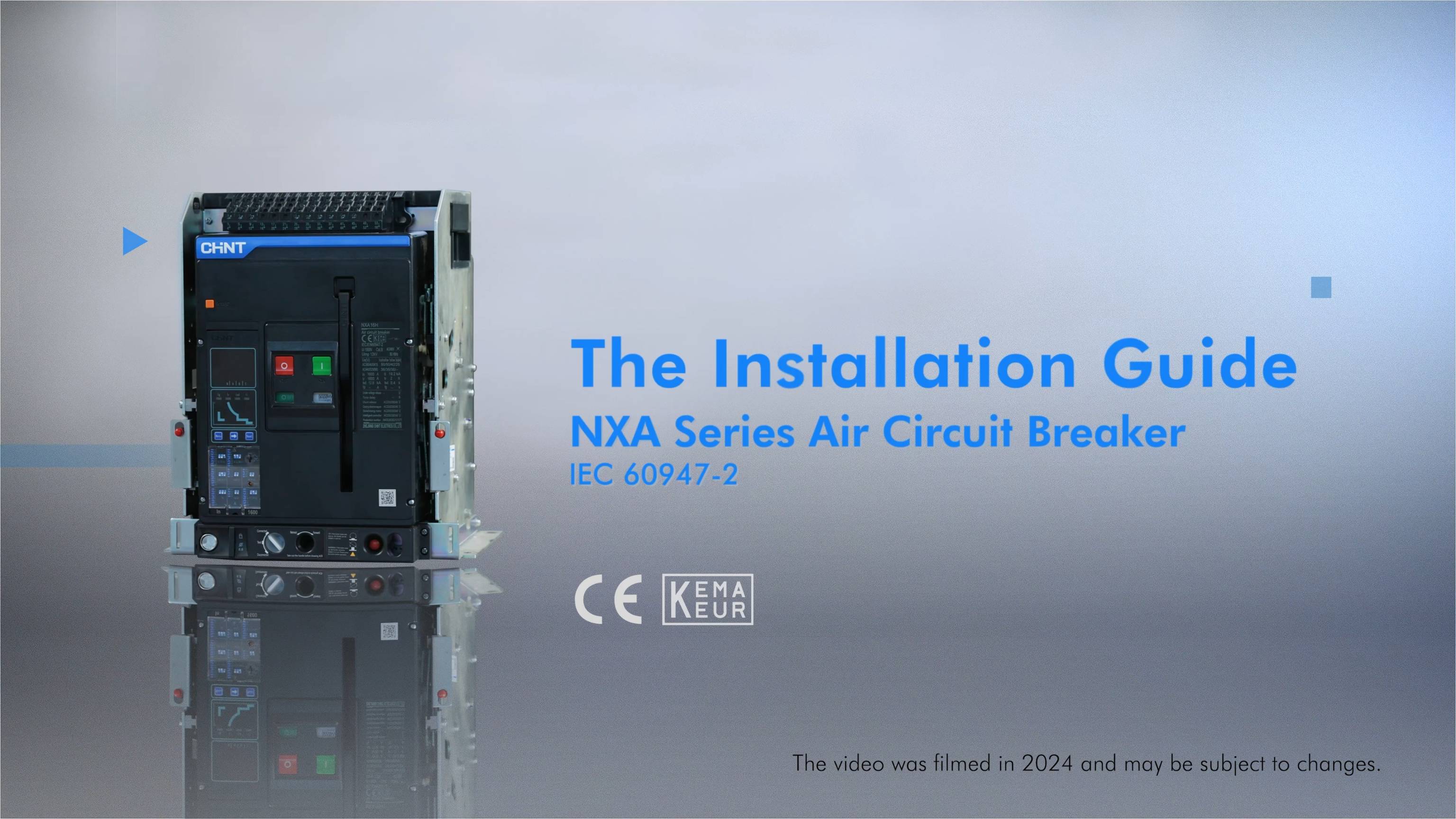
The CHINT NXA Air Circuit Breaker (ACB) is a reliable solution for protecting electrical systems against overloads, short circuits, and other faults. This CHINT ACB is widely used in industrial and commercial installations for its robust design.
This guide provides step-by-step instructions for the proper installation, wiring, and testing of the NXA ACB to ensure optimal performance and safety.
Preparation
Proper preparation is essential to ensure the safe and effective installation of the CHINT NXA Air Circuit Breaker. Follow these steps to get started:
1. Safety Measures
Maintaining these standards helps prevent operational issues and ensures safety:
- Wear insulated gloves and protective goggles.
Confirm that the installation environment meets requirements:
- Temperature: 20°C ± 5°C
- Humidity: 50%-70%
2. Required Tools
Having the correct tools on hand reduces the risk of delays or errors. Prepare the following tools:
- Screwdrivers, wrenches, and scissors.
- A 500V-megohmmeter and insulated gloves.
- Any additional tools listed in the product manual.
3. Initial Checks
Proper preparation ensures a smooth installation and optimal performance of the breaker:
- Match Confirmation: Verify that the breaker matches the nameplate on the order.
- Insulation Resistance Test: Use a 500V-megohmmeter to check resistance of the NXA air circuit breaker. The insulation resistance should not be less than 20ΜΩ, otherwise the isolating switch should be dried.
ACB Installation Steps
Installing the NXA air circuit breaker involves following precise procedures to ensure safe and reliable operation.
1. Drawer Circuit Breaker Installation
For the NXA16 model:
- Secure the drawer base onto the mounting plate of the power distribution cabinet using 4 M8 bolts with washers. (Recommended tightening torque: 10.3–14.4 N·m.)
- Place the breaker body directly onto the drawer seat’s rail and push it inward until fully inserted.
For NXA20-63 models:
- Secure the drawer base using 4 M10 bolts with washers. (Recommended tightening torque: 20–28 N·m.)
- Pull out the rail, place the breaker body onto it, and ensure the protruding brackets of the breaker align with the rail grooves. Push inward until fully seated.
Handle Operation:
- Insert the hex head of the handle into the handle hole of the drawer seat.
- Turn the handle clockwise until the position indicator shows "Connected".
- For the secondary circuit (NXA16 model), ensure there are no gaps. For NXA20-63, listen for clicks on both sides. Stop turning the handle immediately when resistance is met.
Notes: Ensure the breaker’s rated current matches that of the drawer seat before installation to avoid damage. The breaker must remain in the open position while cranking from "Test" to "Connected" to prevent accidents.
2. Fixed Type Breaker Installation
For fixed type air circuit breakers, installation is relatively easy. Please follow the steps below:
- Place the breaker body onto the mounting bracket.
- Secure the breaker evenly with bolts to ensure the load is evenly distributed.
- Connect the main circuit busbars directly to the fixed breaker bus terminals.
3. Adjust Position
After the installation, install a door frame with a pre-cut opening on the cabinet door, ensuring the breaker aligns with the opening for easy access. Secure the breaker in place so that all indicators and controls are visible and operable.
Electrical Connections and Testing
1. Busbar Installation
When connecting busbars, ensure that they are positioned at a suitable distance from the connection to prevent potential short circuits. For higher current ratings (2500A and above), non-magnetic bulkheads should be used to maintain safe and effective performance.
The parameters of the following tables for busbar installations ensure proper power distribution and minimize electrical risk.
Table: Recommendations for busbar installation by user
Frame |
Rated Current (A) |
Ambient temperature(-45-40)°C |
|||
5mm Thick Busbar |
10mm Thick Busbar |
||||
Number of Pieces |
Specification |
Number of Pieces |
Specification |
||
1600A
|
400 |
2 |
50×5 |
1 |
50×10 |
630 |
2 |
50×5 |
1 |
50×10 |
|
800 |
2 |
50×5 |
1 |
50×10 |
|
1000 |
3 |
50×5 |
2 |
50×10 |
|
1250 |
4 |
50×5 |
2 |
50×10 |
|
1600 |
4 |
50×5 |
2 |
50×10 |
|
2000A |
630 |
2 |
50×5 |
1 |
50×10 |
800 |
2 |
50×5 |
1 |
50×10 |
|
1000 |
3 |
50×5 |
2 |
50×10 |
|
1250 |
4 |
60×5 |
2 |
60×10 |
|
1600 |
4 |
60×5 |
2 |
60×10 |
|
2000 |
6 |
60×5 |
3 |
60×10 |
|
3200A
|
1600 |
2 |
100x5 |
1 |
100x10 |
2000 |
4 |
100x5 |
2 |
100x10 |
|
2500 |
4 |
100x5 |
2 |
100x10 |
|
3200 |
8 |
100x5 |
4 |
100x10 |
|
4000A |
3200 |
8 |
100x5 |
4 |
100x10 |
3600 |
7 |
120x5 |
3 |
120x12 |
|
4000 |
8 |
120x5 |
4 |
120x10 |
|
6300A |
4000 |
12 |
100x5 |
6 |
100x10 |
5000 |
14 |
100x5 |
7 |
100x10 |
|
6300 |
16 |
100x5 |
8 |
100x10 |
|
2. Secondary Circuit Wiring
When wiring the secondary circuit, you need to ensure that all connections are secure. Use a torque wrench to tighten the bolts to the recommended specifications (check the tables below) to prevent any loose connections, which could lead to overheating or electrical failure.
Table: Bolt Configuration
Bolt Type |
Application |
Preferred fixed torque |
NXA16, NXA40: M10 |
Fastening the busbar |
(36~52) N·m |
NXA20, NXA32, NXA63: M12 |
Fastening the busbar |
(61~94) N·m |
NXA16-NXA63: M3 |
Fastening the secondary wiring wire |
(0.4~0.5) N·m |
Table: Busbar opening hole size and mounting torque
Drilling Φ (mm) |
Bolt diameter |
Tightening torque |
ΝΧΑ16, NXA40: Φ 11 |
M10 |
(36~52) N·m |
NXA20, NXA32, NXA63: Ф13 |
M12 |
(61~94) N·m |
3. Preliminary Testing
Once the wiring is complete, perform preliminary tests to ensure the breaker is operating correctly.
- Test the open and close functions without power.
- Power up the circuit breaker and check the display and operational functionality.
Fault Diagnosis and Troubleshooting
In case of issues with the NXA Air Circuit Breaker, proper fault diagnosis and troubleshooting are essential for maintaining its performance and safety. Below are common faults and suggested solutions to help you quickly identify and resolve any problems that may arise.
Table: CommonFaultCausesand Solutions (Partial)
Fault Type |
Probable Cause |
Solution |
Breaker does not close |
Loose wiring or misalignment |
Tighten or realign the components |
Abnormal noise |
Dirt on the contacts or loose bolts |
Clean the contacts; tighten bolts |
Display errors |
Software or hardware issues |
Reboot the system or replace parts |
For additional questions, refer to the contents of the user manual for detailed failure analysis and remedies (9.3 Common Fault Causes and Solutions), or contact our regional customer service.
For a more direct look into the installation process and troubleshooting guide of the NXA Air Circuit Breaker, check out our YouTube video:
Conclusion
Proper installation of the NXA Air Circuit Breaker is essential for ensuring electrical safety and reliability. Adhering to the steps outlined in this guide minimizes risks and optimizes performance.
For additional information, visit our official website or contact your local CHINT representative for support.
Safety Disclaimer
- Always follow industry-standard safety practices during installation.
- Ensure all power supplies are disconnected before starting any work.
- Only qualified personnel should perform installation tasks.