

Table of Contents |
Much of modern business involves Big Data collection and cloud computing, leading to the need for advanced technology to manage large amounts of data and sophisticated networking.
While traditional data centers can often manage a company’s needs, MDCs provide several benefits, particularly the ability to keep up with changing technology. Read on to learn more about why you should consider an MDC.
What is the Difference Between Traditional and Modular Data Centers?
A traditional data center houses an organization’s data and applications in one centralized location. They are permanent fixtures and are typically built like any other construction project. Construction and materials are often sourced from several different locations. A traditional data center can handle more information.
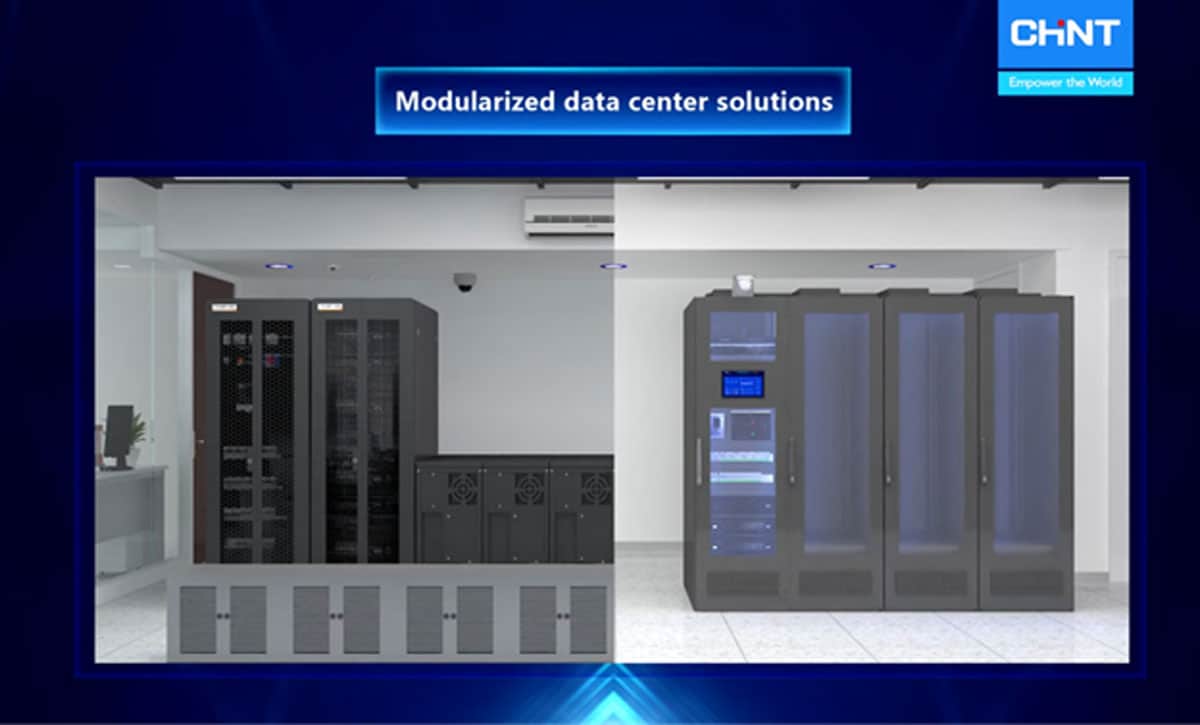
Conversely, modular data centers are self-contained. They are often portable and designed with scalability in mind. The MDC acknowledges the fast pace of developing technology and is designed to adapt to these changes quickly.
It is easy to increase or decrease their capacity and capabilities as your business’s needs change. One company typically constructs the entire center, making it easy to rearrange and switch out parts as needed. All of the parts should be compatible with one another.
There are two different types of MDCs: container and modular. In the container type, the data center is housed in a shipping container. It is assembled in the factory and shipped. The modular version is built in parts at the factory. The parts are put together on-site in a specified location. It can easily be disassembled and reassembled in another location.
Why Use a Modular Data Center?
MDCs offer many advantages. They can improve business operations, save money and space, and are better for the environment. Below are some of the main reasons to consider an MDC.
Advantages in the Whole Industrial Chain
Chint offers modular data solutions that benefit the entire industrial chain in areas like wire and cable energy efficiency, power distribution, monitoring and USP (Universal Storage Platform). Increased performance and efficiency will allow your business to operate more smoothly.
High Density Intelligence
Data centers have a lot of parts, all of them requiring power. MDCs with high density intelligence can run more efficiently and are less likely to have operating issues. The power distribution unit allocates power to individual pieces of equipment.
Some have intelligence capabilities that allow them to monitor the power flow and make adjustments where needed. Some are designed to handle high-capacity data needs as well. These sophisticated systems significantly reduce downtime and eliminate fluctuations in performance.
On-demand Deployment and Flexible Expansion
With a traditional data center, you may spend precious time reviewing designs and sourcing the various components. Even making changes or updates to your existing system will cost you precious time.
MDCs make it easy to choose exactly what you need. You simply decide what you want, and your setup will quickly be on its way. It’s also easy to make upgrades as your business needs change. All materials are standardized, so new parts seamlessly integrate into your existing system.
Construction Time Advantage
Building a traditional data center is a time-consuming process. It often takes a year or longer before the center is ready. If you wish to expand or modify a traditional center, you are looking at another long wait.
With an MDC, construction time is much shorter. Once you place an order, you may receive it in as little as a couple of months. If you need to scale or make any changes, it’s much easier, as you don’t have to start a new construction project.
Operating Cost Advantage
Overall, MDCs are less expensive than traditional data centers. You will not need to include a construction project in your budget, and you won’t need as many contractors to install everything. The initial cost and setup fees are much more affordable for an MDC.
MDCs also use less energy and require less cooling power. They are more efficient and take up less space. An MDC is also cheaper to scale or modify. All of these factors lead to significant savings.
Green Energy Savings
With the current climate crisis, businesses must focus on sustainability. Modular data centers require fewer resources, use less power, and offer efficient scalability options. Many use more efficient batteries, leading to less reliance on electricity and less waste. When using an MDC instead of a traditional data center, you’ll reduce your carbon footprint and do your part to help the environment.
Factors to Consider When Selecting a Datacenter
When selecting a data center, you should always take into account your current needs and your potential future needs. Since scalability is one of the modular data center’s biggest benefits, you want a design that can grow with your business. You also want something that is easy to modify if your needs change.
Energy efficiency is another important factor. Your business will save money in the long run with lower energy bills and your business will be doing its part to help with the environment.
Finally, consider other important factors outside of the data center, like security and software. You want to make sure that everything you use is safe, especially if you are storing sensitive information.
Conclusion
Modular data centers offer many benefits, particularly the capabilities for scaling and modifications. They are easily portable and can be priceless in the event of a power outage.
Chint Global is a leader in technology products with an eye on innovations for the future. If you want to learn more about an MDC and how it can benefit your business, knowledgeable representatives are ready to help. You can check out the many options Chint offers to help you build out the perfect MDC for your business.