

Introduction
Retrofit electrical planning and energy savings now sit at the center of commercial building performance. Rising utility costs, tighter uptime demands, nonlinear loads, and aging distribution equipment mean retrofitting electrical work is no longer a deferred maintenance task. It is a practical route to save energy, lower losses, stronger reliability, and better operating control.
Building Retrofit Energy Efficiency Electrical Assessment
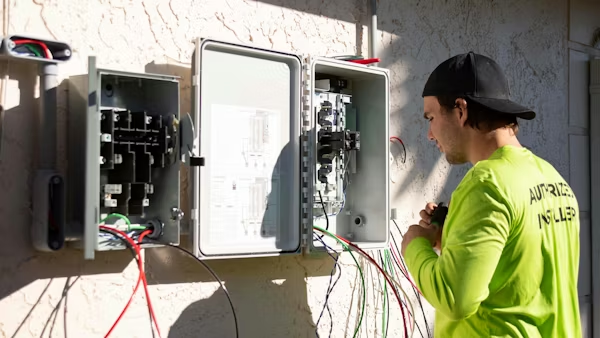
A retrofit should start with measurement. In existing commercial buildings, avoidable losses come from load peaks, low power factor, harmonics, imbalance, thermal stress, or aging capacitor banks. A building retrofit energy efficiency electrical assessment helps find which issue is driving cost, reliability risk, or both.
Start by capturing baseline kWh, peak demand, and load profile by time of day. That shows whether the building suffers from constant overuse, short demand spikes, or poor scheduling.
Next, review power factor and kvar demand to spot utility penalties and excess current flow.
Check harmonics too, especially where VFDs, UPS systems, LED drivers, or EV chargers are present.
Then inspect phase imbalance, neutral loading, transformer and cable hotspots, and the condition of any existing capacitor bank, including failed stages, weak switching, or visible overheating.
Audit depth should match project scope. Refer to ASHRAE audit levels:
Level 1 review suits early screening and quick opportunity identification.
Level 2 audit fits most commercial retrofit planning because it adds measured analysis, end-use breakdown, and stronger project definition.
Level 3 audit is better for capital-heavy upgrades where you need detailed engineering and high confidence before shutdown work or major equipment replacement.
Here’s a deliverables checklist for an accurate assessment:
Assessment Output |
Why It Matters |
How It Guides Retrofit Scope |
Updated single-line diagram |
Confirms actual system layout |
Identifies panel, feeder, and protection changes |
Load profile and demand analysis |
Reveals peaks and timing issues |
Prioritizes control changes and peak reduction |
Power factor measurement report |
Shows reactive power burden |
Supports capacitor or dynamic compensation sizing |
Harmonic distortion readings |
Exposes power quality stress |
Determines whether filtering or tuned compensation is needed |
Thermal scan findings |
Locates hidden losses and overheating |
Flags urgent repairs and overloaded assets |
Phase balance and neutral loading review |
Highlights uneven loading |
Supports redistribution and conductor checks |
Capacitor bank condition report |
Finds failed or unstable compensation |
Decides repair, replacement, or redesign |
Electrical Retrofit Best Practices For Commercial Buildings
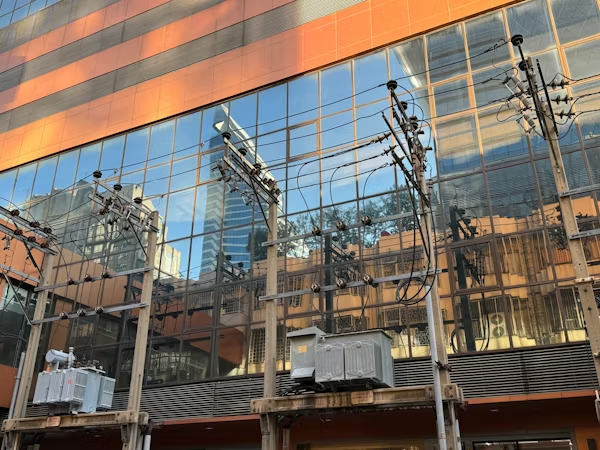
In occupied commercial buildings, retrofit success depends on how you stage the work. The strongest electrical retrofit best practices for commercial buildings reduce disruption, protect uptime, and improve performance in steps you can verify. That means sequencing tasks carefully, addressing the biggest loss points early, and closing the project with clear documentation for operations teams.
Sequence Retrofits To Protect Uptime
Start with no-outage or low-outage tasks first. Metering upgrades, power monitoring, settings review, load trending, and tuning work can move ahead without affecting occupants. Early actions help confirm where losses, instability, or poor power quality are coming from.
Next, bundle outage-dependent tasks into the same planned window where possible. Switchboard modifications, feeder reconfiguration, capacitor bank tie-ins, and similar works should be grouped to reduce repeated downtime and simplify coordination across trades.
Use commissioning gates at each stage. Begin with pre-functional checks, move to functional testing, and validate results through trend verification after the building returns to normal operation.
Target “Loss Reducers” First
Prioritize measures that lower waste quickly and support broader system performance. Demand reduction may include peak shaving strategies, schedule corrections, and control changes. Line loss reduction comes from power factor correction and phase balancing, both of which reduce excess current and relieve upstream equipment.
Watch electrical room heat closely. Rising temperature is a visible sign of losses, imbalance, or harmonic stress. Treat it as a performance signal, not just a comfort issue.
Document Compliance And Handover
Complete the retrofit with updated as-builts, settings sheets, and protection coordination verification. Then give the site team practical O&M notes that explain alarms, expected readings, and what good performance looks like day to day.
How To Improve Power Factor For Energy Savings In Buildings
If motors, HVAC systems, lifts, pumps, or UPS-backed loads draw reactive power, your building may carry more current than necessary for the useful work being done. That extra current increases losses, loads upstream equipment, and in some tariff structures can increase charges.
So, how to improve power factor for energy savings in buildings? Start with the basics.
If the building has a stable, predictable reactive load and low harmonic distortion, fixed capacitors may be enough in a narrow application.
If the reactive demand changes throughout the day, staged capacitor banks usually make more sense.
If the building load shifts quickly, or the network contains stronger distortion and imbalance, dynamic compensation becomes more suitable.
What does good performance look like? It depends on the local utility and tariff, so avoid chasing one universal number. You want a stable power factor that supports lower losses and avoids penalties without overcompensating under light load conditions.
For retrofit scenarios in standard 0.4 kV systems, CHINT’s BAGB Intelligent Combined LV Shunt Capacitor fits well where you want compact modular compensation with integrated measurement, control, switching, communication, and protection. Its 450 V AC rating, 5 to 60 kvar capacity options, RS-485 compatibility, and switching life of at least 300,000 cycles make it useful where panel space is limited and performance visibility matters.
For simpler capacitor applications, CHINT’s NWC5 Self-healing Shunt Capacitor suits projects that need oil-immersed construction, IEC/EN 60831-1 and -2 compliance, 1 to 40 kVar capacity, and low dielectric loss.
Where an oil-free approach is preferred, CHINT’s NWC6 Dry Low-voltage Shunt Capacitor offers a dry self-healing design, 5 to 40 kVar capacity, compliance with IEC/EN 60831-1 and -2, use in systems up to 1000 V, and a stated lifetime of at least 200,000 hours. The key point is simple: match the compensation method to the load profile and harmonic condition, not just to the kvar target.
Commercial Building Harmonic Mitigation Retrofit Solutions
Harmonics are usually the hidden blocker that prevents savings and causes repeat failures. A building may install correction equipment, replace panels, or rebalance loads, then still miss targets because distortion keeps losses high and equipment stress elevated. That’s why commercial building harmonic mitigation retrofit solutions must stay measurement-led, using THDi, THDv, temperature, trip history, and kvar stability to guide decisions.
Red Flags That Point To Harmonic Issues
Start with symptoms that persist after ordinary maintenance. Overheating transformers and cables, unexplained breaker trips, repeated capacitor failures, UPS alarms, and audible transformer noise are common warning signs. Nonlinear load growth is another trigger. VFDs, LED lighting, IT loads, and EV charging can reshape the electrical profile of an existing building faster than the original system design can accommodate. When these loads increase, harmonics can quietly undermine both reliability and expected energy savings.
Retrofit Pathways
Selection should follow measured conditions.
If THDi and THDv remain modest and the main issue is reactive power, tuned power factor correction may be enough.
If distortion is high, recurring, and linked to nonlinear loads, filtering is usually needed.
The main mistake to avoid is adding capacitors without considering the harmonic environment, because poorly matched correction can amplify distortion and shorten equipment life.
CHINT’s NXW Series Power Quality Module is one example for complex retrofit sites. It is a power electronic converter-based module that supports reactive power compensation, harmonic filtering, and three-phase unbalance management, with functions that can be configured and combined as needed.
Example Solution Mapping
Problem |
Measured Symptom |
Retrofit Approach |
Verification Metric |
Nonlinear load distortion |
High THDi/THDv, audible noise |
Harmonic filtering |
Lower THDi/THDv |
Unstable capacitor operation |
Failed stages, kvar swings |
Tune or redesign PF correction |
Improved kvar stability |
Thermal stress |
Hot cables or transformers |
Filter plus load review |
Temperature reduction |
Nuisance tripping |
Repeated breaker trips |
Active power quality control |
Fewer trips |
Energy Savings Validation And Retrofit ROI
To confirm energy savings, compare post-retrofit data against a clear baseline and normalize where needed for occupancy, operating hours, and major load changes. Track kWh, peak kW, power factor, harmonic levels, temperature hotspots, and trip frequency.
It also helps to think in packages. Metering plus power factor correction plus harmonic mitigation may produce better economics than any measure alone because each supports the others. The building then runs with lower losses, fewer stress points, and better control. That is how retrofit electrical work turns into energy savings, not just a one-time adjustment.
Frequently Asked Questions
What Is Included In A Commercial Electrical Retrofit?
A commercial retrofit can include metering upgrades, switchboard work, capacitor banks, harmonic mitigation, feeder changes, protection updates, phase balancing, power monitoring, and documentation updates. The exact package depends on what the assessment finds, how the building operates, and which risks or costs are driving the project.
How Do I Know If Power Factor Correction Will Actually Reduce Costs?
Check utility billing first, then measure reactive demand and site power factor over time. If poor power factor is driving penalties, extra current, or upstream loading, correction can cut avoidable cost. If harmonics are the bigger issue, correction alone may not deliver the result you expect.
When Do Harmonics Require Mitigation In Commercial Buildings?
Mitigation becomes more urgent when you see overheating, recurring trips, capacitor failures, UPS alarms, high neutral current, or growing nonlinear loads. In those cases, you need measurement-led action. Solving the reactive power issue without handling distortion can leave the underlying problem in place.
Conclusion
The strongest retrofit programs start with measured conditions, target the biggest electrical losses first, and verify results after commissioning. For commercial buildings under pressure to cut waste and protect uptime, that approach gives you a clearer path to performance. CHINT supports that path with power quality, metering, and reactive compensation solutions built for real operating environments.