

Table of Contents |
Professional electrical meters provide a variety of benefits. In general, they are more reliable and durable than dial gauges. They typically have greater range, accuracy, convenience, visibility, and diagnostic capability than other electrical meters. They are often more appropriate for high-value applications where the potential for a hidden loss is significant, and the location of the meter will not change.
In this guide, we will discuss the features and advantages of a DIN Rail Meter, an increasingly popular type of electrical meter.
What is DIN Rail Meter?
A DIN Rail meter is a compact and modular meter mounted to a standard DIN (Deutsches Institut für Normung) rail. It has a compact design that makes it ideal for saving space in switchgear and control panels. Many of these meters also come with a wide range of features designed to make installation and monitoring easier.
DIN Rail meters are an essential component of industrial control systems, providing a secure and reliable mounting system for circuit breakers, equipment racks, and other small electrical parts. Its sturdy construction ensures that all wiring connections remain firmly in place even during heavy vibration or movement.
With its easy installation process and durable design, DIN Rail meters provide the perfect solution for any application requiring robust structure support without compromising performance.
What is DIN Rail Power Meter Used For?
The current standard electric energy meter is typically mounted to a wall, which can be bulky and inconvenient. The DIN rail power meter offers an advanced solution – it’s small in size, easy to install (simply slots into the standard 35mm DIN rail), and its width aligns with that of miniature circuit breakers so that you can keep the same tidy appearance on your power distribution box. Utilizing this new micro-intelligent technology for 380V/220V systems will make any powered system simpler than ever before.
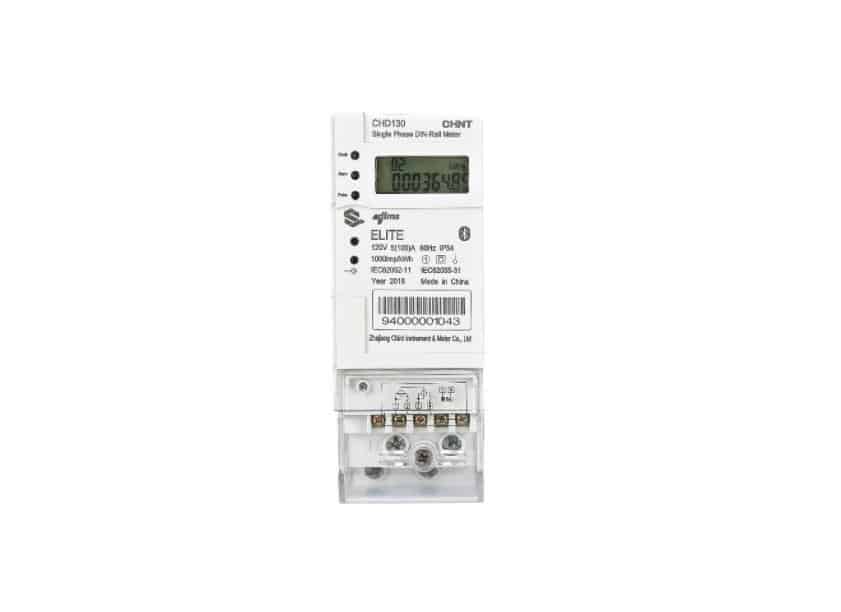
Most DIN rail power meters available in the market are equipped with an LCD display to measure electric energy and other electrical parameters. You can set the parameters such as clock and rate period, and you can also measure the power pulse output.
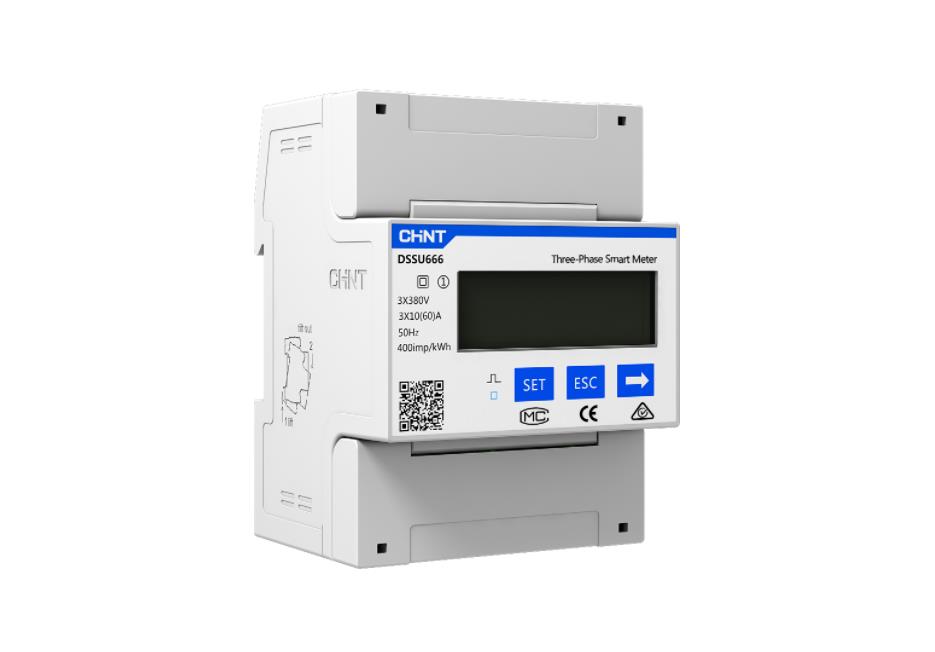
The DTSU666 Three Phase DIN-Rail Meter, for example, has three-phase current measurement, power factor display, and data storage functions. Additionally, this device offers an RS485 communication interface that allows for data transfer between upper computers.
Our innovative Din Rail Power Meter offers a reliable solution for low-voltage lighting systems. Not only does the device meet the technical requirements of DL/T614 but it also is perfect for measuring electric energy in large public buildings or even assessing enterprises and institutions’ power management.
What are the Benefits of Using a DIN Rail Meter?
DIN rail meters are generally used in many situations, from residential applications to industrial ones. For homes, it’s a great way to monitor and measure electricity consumption, allowing homeowners to identify areas of energy consumption that may be costing them more money than necessary.
In industrial applications, DIN rail meters are usually used in conjunction with high-value electrical systems, ensuring reliable data collection and accurate monitoring of energy use over an extended period of time.
Compared to other electrical meters, DIN rail meters offer greater convenience due to their compact size and simple installation process. They are easy to configure and allow data logging and remote monitoring capabilities. With the right configuration, these meters can provide valuable analytics and diagnostics for more complex systems.
Here are some of the benefits of using a DIN rail meter.
- This device can measure both positive and negative active electric energy while also providing a helpful power direction indication. It also features multiple-rate measurement and a digital display, allowing easy monitoring.
- Electric energy can be accumulated and stored based on five distinct charging scenarios: total, peak, flat, and valley. This way, you can get a better understanding of your energy consumption.
- The meter accumulates and retains frozen data for a period of three months. This helps with analyzing long-term trends in power consumption.
- The default setting for the collection and preservation of electric power data is 24:00 on the last day of every month. This provides you with an accurate snapshot in time.
- The stored information will remain safe and retrievable for over ten (10) years, even during power outages. This ensures that your data remains secure.
- Finally, it has a slim design that makes installation easier and helps to save space in the switchgear panel.
What are some common features of DIN Rail Power Meters?
DIN Rail power meters have a variety of features that make them ideal tools for measuring electric energy. With Chint Global products, you can generally find the following features:
- Large LCD Display that can show up to 7 characters
- Bi-Direction Measurement for power direction indication
- Low Consumption Design for energy efficiency
- High Accuracy and Repeatability for reliable data
- Data Storage and Logging Capacity to keep track of energy usage trends
- RS485 Communication Interface that allows for remote monitoring
- Modbus and DL/T Protocol for easy communication
- Compliance with IEC62052-11 IEC62053-21 Standards for safety and reliability
These features make DIN rail meters an ideal solution for residential, business, and industrial applications. With their easy installation process and reliable data logging capabilities, you can have greater control over your energy usage in no time.
How to Install a DIN Rail Meter
When installing a din rail electric meter, it is essential to select an area that is not prone to humidity and vibration. Furthermore, the installation should adhere to industry standards for daily work operations, testing, and maintenance. The final placement of the DIN rail electric meter should be in a designated product cabinet or some type of meter box/distribution board.
It is highly recommended to avoid installing DIN rail meters in hazardous areas, such as those with combustible materials or noxious gases and locations where temperatures can be dangerously high. While certain rail meters can be set up in dark environments, they should be free from dust particles and contaminants.
Places with magnetic force and wet conditions are also unsuitable for DIN rail meters. If a place of installation is prone to any of the above conditions, it is recommended to use a separate enclosure or physical housing with suitable insulation and protection measures.
When installing energy meters in a residential building, one meter and household is the standard. You should install an appropriate energy metering device on the corridor walls while ensuring that all households share their lighting devices with the said meter. An outdoor installation requirement of the energy meter box must also be considered if necessary.
To ensure the optimal height and distance for those living in high-rise buildings, it is best to place the switch cabinet 1.8-2.2 meters from the ground. For an easier installation process, opt for a vertical plate-type switch cabinet which should not be less than seventy centimeters tall.
To install a DIN rail meter:
- Shut off all power supplies and check the voltage to ensure safety
- Connect the meter’s power supply cables to the appropriate terminals
- Secure the meter in its designated place within the switch cabinet or meter box/distribution board
- Connect other external instruments, such as relays and meters, to the DIN rail meter
- Turn on the power supply and test the connections to ensure accuracy
- Make any necessary adjustments or changes as needed
By following these steps, you can be sure that your DIN-rail meter installation is secure and will provide accurate readings for many years.
Final Thoughts
DIN rail meters are a reliable and efficient way to measure electric energy. With their easy installation process and a variety of features, they are ideal for residential, business, and industrial applications. When installing them, it’s important to follow industry standards and choose an area that is not prone to humidity or vibration to ensure accuracy and longevity. Following the steps outlined above, you can ensure that your DIN-rail meter is installed correctly and will provide accurate readings for many years.
At Chint Global, we have a wide range of DIN rail metering solutions to meet the needs of any application. Our experienced team is happy to help you find the right solution for your specific requirements. Contact us today to learn more!