

Table of Contents |
Arcs always raise the circuit’s temperature, even beyond 6000 degrees. This increase in temperatures may be fatal as it can trigger fire, destroying the circuit.
According to statistics, most primary fires in electrical circuits are always associated with faults in the electrical appliances or the transmission of electrical current transmission these arcs; most circuits always install Arc Fault Detection Devices (AFDD). Let’s now embark on our discussions.
Introduction
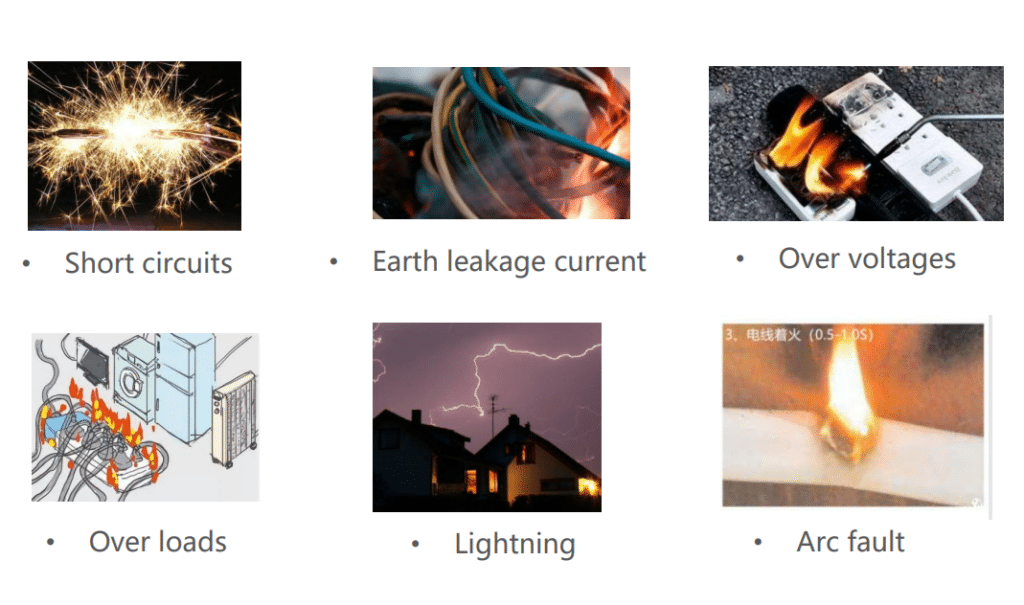
If you have been exposed to different types of electrical circuits, then you may have seen some visible discharges that emerge from the circuit. In most cases, these discharges do occur in circuits with loose connections or when the cable conductor is broken at some point.
They can also occur when parts of the equipment are worn out. These visible discharges, also called arcs, are always caused when an electrical current flowing through a conductor ionizes air when jumping through the gap into another conductor in the circuit.
These Arcs always raise the circuit’s temperature, even beyond 6000 degrees Celsius. This increase in temperatures may be fatal as it can trigger fire, destroying the circuit.
According to statistics, most primary fires in electrical circuits are always associated with faults in the electrical appliances or the electrical current’s transmission. Therefore, to control these arcs, most circuits always install Arc Fault Detection Devices (AFDD) to their circuits.
What is AFDD?
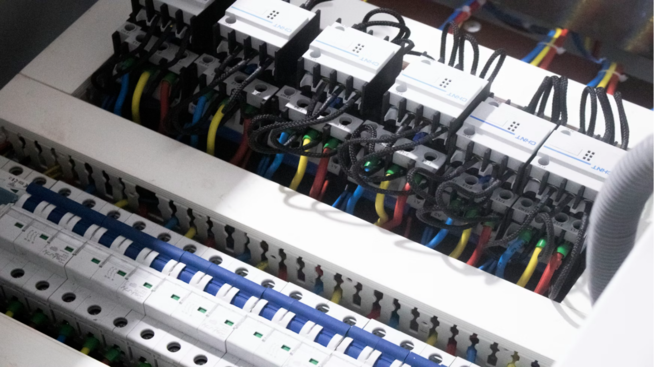
Arc Fault Detection Devices are devices that are, in most cases, installed in electrical consumer units. The installation of these devices in the consumer units helps protect the circuit from the occurrence of arc faults. This ensures the safe distribution of electrical current in the circuit as they apply the microprocessor technology to detect any electrical signals.
In case the signals show signs of the possible occurrence of an arc in the circuit, the devices cut off the flow of electrical power in the circuit. These will help prevent the arcs from causing a fire by a greater percentage. These devices are always highly sensitive in detecting the presence of arcs in a circuit compared to the protective devices used in conventional electrical circuits.
What is Arc Fault?
Arc faults are visible electrical discharges from a circuit’s two or more electric conductors. This electrical discharge produces a lot of heat, resulting in a fire destroying the circuit. In most cases, they occur when there is an electrical jump through a gap between two material conductors.
These arc faults always vary in electrical current, which determines their strength and the duration of time they will take. For instance, an arc fault with a lower amp will be less weak and hence cannot cause more harm to the circuit than one with a higher amp.
Different types of these arc faults occur in different circuits. These arc faults include:
• Earth arc fault
This type of arc fault, also known as a ground fault, always occurs when two or more conductors carry current contact with the ground. This makes the flow path of the fault power flow through the ground. This type of arc fault always occurs when there is damage to the insulation of the cables carrying power.
• Parallel arc fault
This type of arc fault always occurs when two power phases are close. It can also occur between the ground and a phase. In most cases, this type of arc fault always occurs when the insulation material is degraded or when its ids contaminate materials in the circuit. Another cause of parallel arc fault is the presence of loose connections in the circuit or when the busbar has loose screw rivets.
• Series arc fault
This type of arc fault always occurs in series with current load in the circuit caused by loose connections between terminals and the cord. It can also be generated when incomplete cord connections are in the circuit. This results in increased contact resistance that leads to the generation of arcs in the circuit that can be of high temperature if the potential difference across the circuit is high.
Comparison of arc protection of different devices
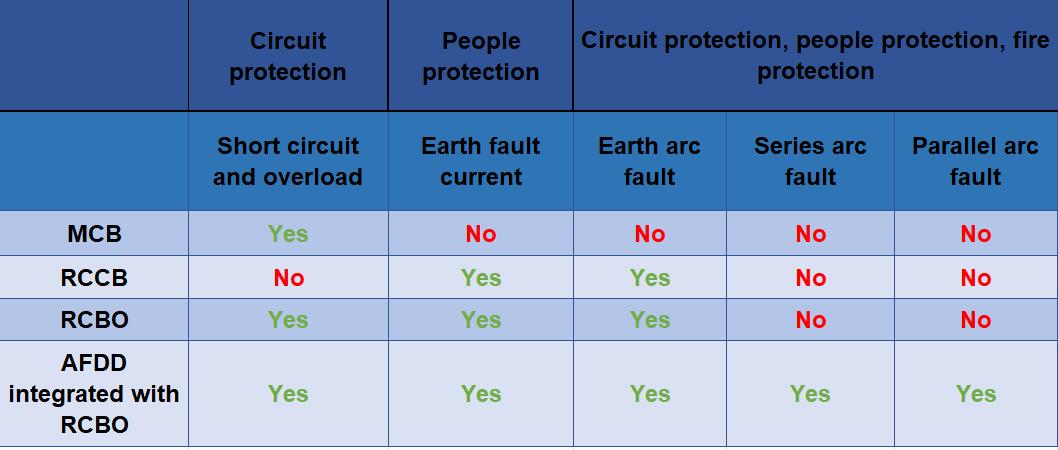
There are many arc protection devices. The most common devices include residual current circuit breaker (RCCB), residual current circuit breaker with integral overcurrent protection (RCBO), and miniature circuit breaker (MCB).
These circuit breakers always have unique features that make them efficient in protecting faults. However, their usage may vary during installation; for instance, RCCB; is always used in circuits in series with MCB. This protects the device from short circuit power when there is an overcurrent in the circuit.
Another similarity about these devices is that they are always found in the consumer unit box, specifically the fuse box. Therefore, none of them can be installed outside the fuse box, so if you want to look at these devices, always visit your consumer unit box or fuse box. Before opening the fuse box, consider precautionary electricity measures as electricity is fatal.
The difference between these AFDDs is that MCB does not protect a circuit against earth fault, while RCCB and RCB can protect the circuit in case of an earth arc fault.
Another important difference between these devices is that MCB does not protect humans against electric chock, which is an important factor to consider when analyzing the safety of these devices. However, RCB protects humans from shock, making it the safer circuit breaker.
In addition, MCB breakers always have the four pole options from single, 2, 3, and 4 poles. On the other hand, RCB does not have the single-pole option; hence only relies on the other three-pole options present. This explains why they are mostly used in serious with MCB in circuits.
The application of these devices also varies; for instance, MCBs are always used in both industries and homes, while RCBs are commonly used in home circuits only.
Therefore, these circuit breakers always have differences you may not know, even though they have the same functionality. Always try to look at the type of circuit breaker you are using to help you consider its features.
Why AFDD?
These Arc Fault Detection Devices are always important in places with a high risk of electric fires. For this reason, they are usually installed in electrical circuits that supply electricity to high-risk premises, especially those meant for sleeping and accommodation.
Such premises that include hotels, hospitals, houses, hostels, or apartments always have high risk as they are used for accommodation and contain people’s personal belongings.
Most of the belongings are combustible and can easily be destroyed by fire. Therefore, these devices are widely applied in the installation systems of these premises. In case you are living in search buildings.
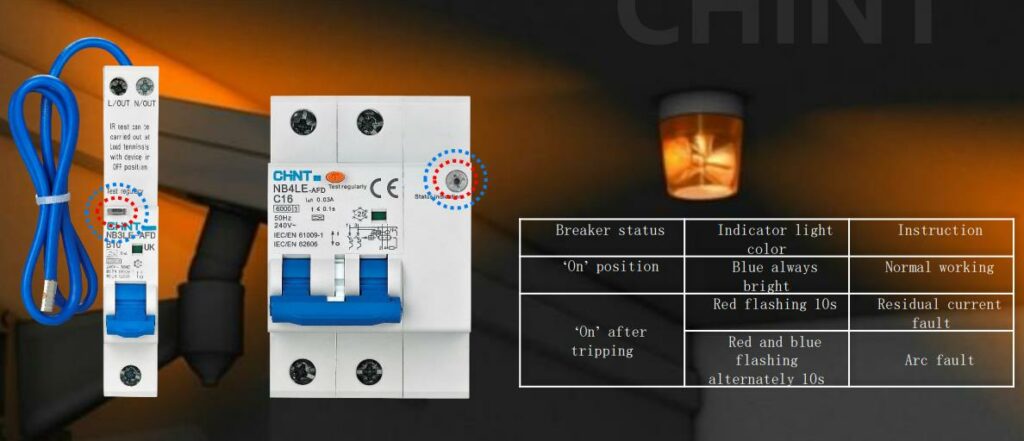
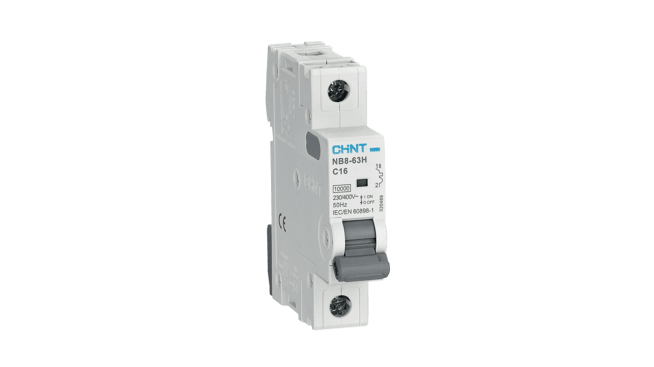
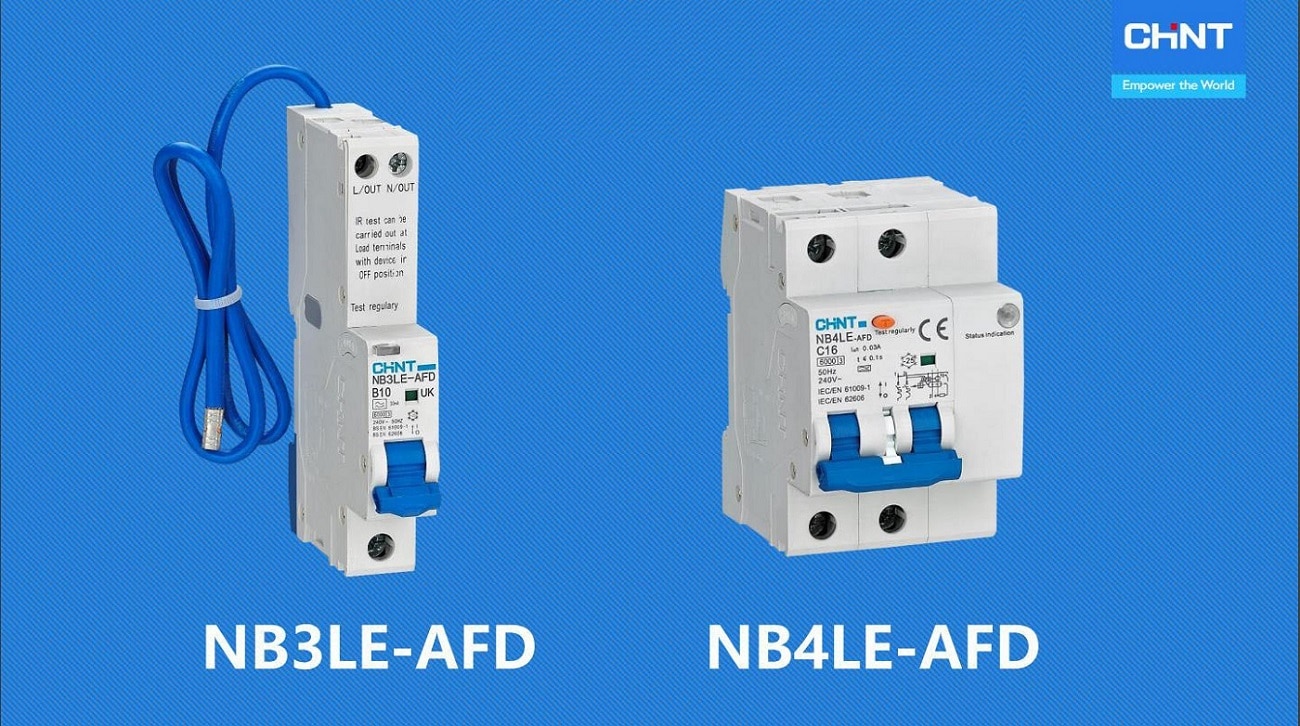
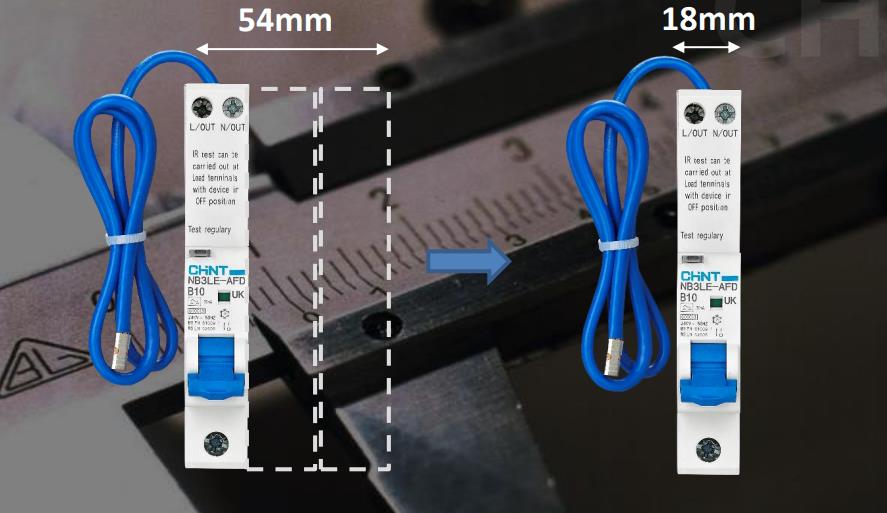
CHINT NB3LE-AFD & NB4LE-AFD arc Fault Detection Circuit Breakers
These circuit breakers have a unique arc fault protection mechanism as they can detect the presence of arc faults in a circuit in a unique way. In case of an arc fault occurrence, these breakers cut off power flow, thereby reducing the chances of the arcs triggering fires into the circuit.
They also offer multiple security guarantees as they are liable for protecting against arcs. Their efficiency in sensing and controlling the arc triggered fires in different circuits makes them offer 100% guaranteed satisfaction in their services. Therefore, you do not have to worry about the occurrence of these ignited fires from the circuit when you install these breakers.
The AFDD circuit breakers have smaller volumes and easily fit many circuits with different electrical strengths. The small volume also makes the efficient in detecting the slow faults and damages developing from insulations that can lead to arcs in the circuit.
These AFD circuit breakers also have intelligent alarm systems that efficiently coordinate the detection devices in the circuit breaker. If the AFDD analyses the electrical signals in the circuit and detects anything unusual, the alarm quickly coordinates, thereby making the AFDD cut off power flow in the circuit in less than a second.
In addition, these two types of AFD circuit breakers are widely used in the installation of consumer units of buildings that provide sleeping accommodations, such as hostels, apartments, hospitals, hotels, and many others.
They are also used to protect these electrically ignited fires in locations with a high risk of electrical fires, especially those that store combustible materials such as warehouses and barns.
Conclusion
Arc Fault Detection Devices have gradually improved the reliability of electrical circuits’ installation. You will no longer worry about occurrences of electrical fires in your house anymore when you install circuit breakers with these protective devices.
They have enabled the circuits to have guaranteed satisfaction to customer needs as it has improved the efficiency of these circuits. This has also impacted the safety of the use of electrical equipment. For instance, CHINT AFDDs always detect arcs and anything unusual in the circuit.
These make them provide better protection against arc faults and any other unusual fault that can trigger fire to the circuit. This makes it the most efficient circuit breaker widely used in many circuits for fire control.



-banner.jpg)