

Introduction
Unplanned plant outages can halt production, increase scrap, raise safety risk, and stretch troubleshooting far longer than expected. In many cases, the root issue starts inside the power distribution layer, not at the utility feed or generation source. Modern manufacturing plants increasingly treat smart switchgear and power distribution as active systems with visibility, alarms, and control, rather than a passive collection of protective devices.

Why Plant Outages Persist In Conventional Power Distribution Systems
Many manufacturing sites still rely on low-voltage distribution that does its job quietly until something goes wrong. Several electrical conditions commonly drive plant downtime.
Load growth can push feeders closer to overload without anyone noticing the trend.
Switchgear can degrade over time due to heat, vibration, dust and frequent switching operations.
Power quality problems such as voltage variation, harmonic distortion, and imbalance can stress drives, motors, and sensitive automation.
Fault location can also be excessively time-consuming when teams must inspect sections manually before they isolate the affected feeder.
In a conventional setup, the biggest delay comes after the trip. Repairing a loose connection or resetting a protective device may take less time than finding the exact feeder, event sequence, and contributing condition. This is why poor operational visibility often extends plant outage duration.
What Makes Smart Switchgear For Industrial Plants Different
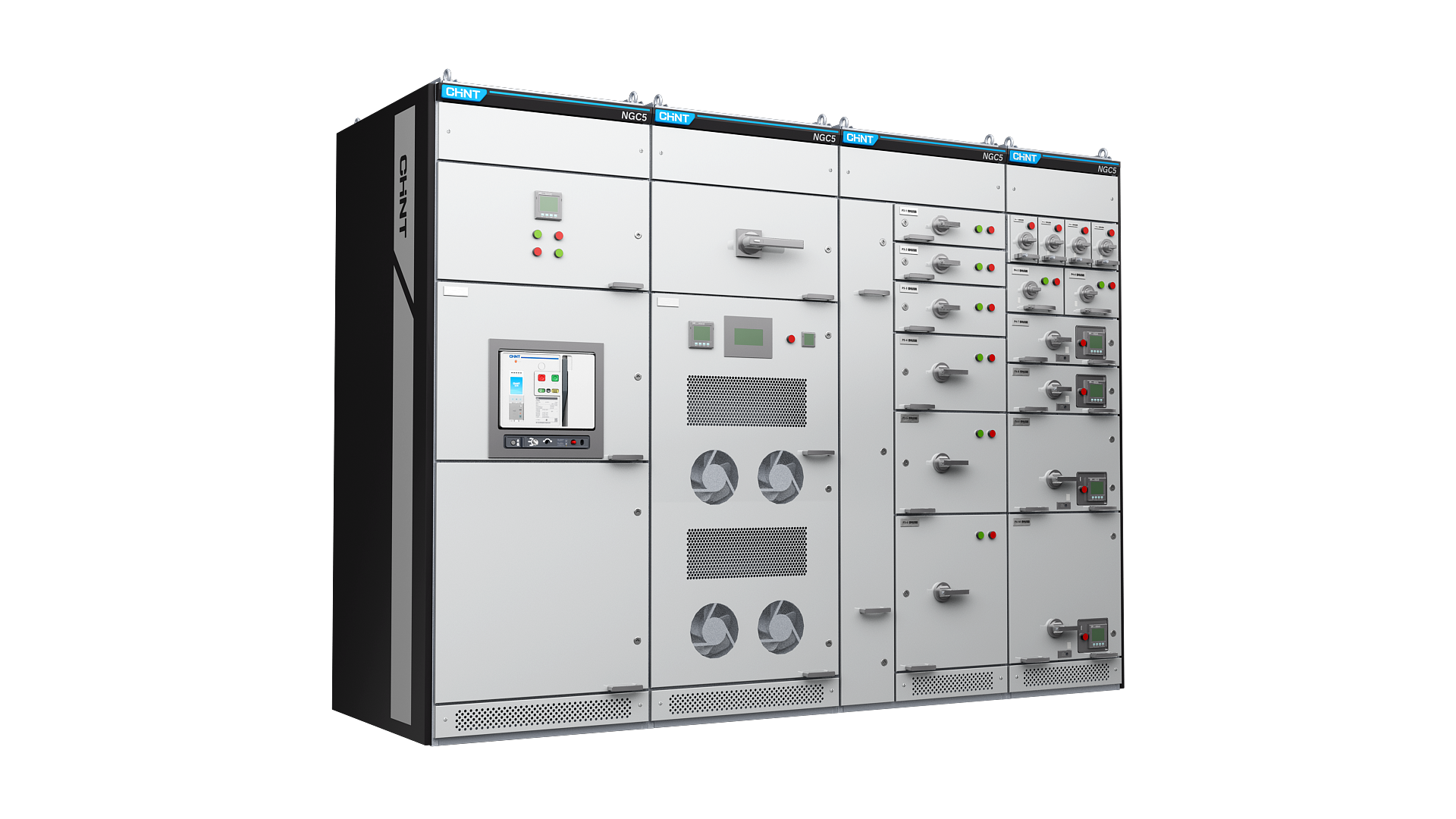
Traditional switchgear protects and distributes power. Smart switchgear does that, then adds a live layer of operating insight. It gives your team a clearer picture of what each feeder is doing, what happened before a trip, and where electrical stress is building.
Embedded Monitoring And Event Awareness
The major difference is built-in sensing. Smart switchgear collects current, voltage, power, frequency, energy, power factor, and other operating values continuously. Some show monitoring setups with branch circuit visibility, alarm settings, harmonic measurement up to the 31st harmonic, THD tracking, and serial communications through Modbus.
This matters because periodic inspection only captures a few moments in time. A monitored system captures behavior as it changes during shift turnover, motor starting, peak production periods, and unusual events. That is the practical value of smart power monitoring in heavy industry. It turns the distribution layer into a source of operating evidence.
Real-Time Status And Faster Fault Isolation
Live status cuts fault-finding time. In many plants, operators know a feeder tripped only after downstream equipment stops. They still have to locate the section, inspect protective devices, and piece together why the trip occurred. With smart switchgear, you move closer to real-time awareness of breaker status, alarm conditions, and circuit measurements.
That changes the quality of response. There is a big difference between knowing that a feeder opened and knowing which feeder opened, when it opened, what the load looked like before the event, whether voltage dipped, and whether temperature or harmonic levels were rising.
From Reactive To Predictive Distribution Behavior
The next step is moving from reactive action to early action. This is exactly how smart power distribution cuts unplanned downtime. becomes clear. Trend alarms, repeated event patterns, rising connection temperatures, and abnormal load behavior all help maintenance teams act sooner.
At the plant level, the same principle holds. When your distribution layer provides earlier signals and better event data, your team can shift work from emergency response to planned intervention.
Intelligent Low Voltage Switchgear For Manufacturing Environments
Manufacturing plants place unusual stress on electrical systems. In that setting, intelligent low voltage switchgear for manufacturing gives operators more than protection. It gives them the visibility needed to protect output, not just equipment.
Continuous processes do not tolerate long interruptions.
Automation lines depend on stable power.
Motor-driven loads, variable speed drives, compressors, pumps, and heating equipment can create changing demand patterns across the day.
The value becomes easier to see when you map common distribution risks to what the switchgear can detect and what your team can do before an outage starts.
Distribution Risk |
What Intelligent LV Switchgear Detects |
Preventive Action Before Outage |
Feeder overload trend |
Rising current over time, peak demand pattern, repeated threshold alarms |
Rebalance loads, stagger starts, add capacity review |
Loose or stressed connection |
Temperature rise at key points, repeated local alarms |
Inspect and tighten joints during planned maintenance |
Harmonic distortion from drives |
THD rise, harmonic content, abnormal heating pattern |
Review filter/compensation needs, check affected feeders |
Voltage instability |
Undervoltage, overvoltage, event history, time stamp sequence |
Trace upstream and downstream causes, protect sensitive lines |
Phase imbalance |
Uneven current across phases, unbalance values |
Reassign loads and check motor supply conditions |
Smart Power Monitoring In Heavy Industry And Its Impact On MTTR
Monitoring has a direct effect on MTTR (Mean Time to Repair) because it improves the speed and quality of decisions during a disturbance. It also supports safer maintenance planning.
If a feeder shows repeated overload peaks at certain times, you can plan inspection and repair during a lower-risk window.
If a circuit shows repeated alarms and rising heat, you can move it up the maintenance list before it fails under full production demand.
After an event, time-stamped records help teams reconstruct what happened and prevent recurrence rather than closing the job after a reset.
CHINT’s meter and monitoring solutions show support for multi-parameter measurement, RS485 and Modbus communication, branch circuit monitoring, and detailed records for current, voltage, power, energy, frequency, and alarm status.
Industry guidance from the National Electrical Manufacturers Association (NEMA) also supports this point. Smart electricity meters can:
Provide automatic power fail and restoration indications
Time-stamp outage events
Improve outage location accuracy
Help verify restoration
For plant operators, the same operating logic applies inside the facility. Better status awareness and event timing reduce guesswork, which helps bring MTTR down.
Power Quality As A Hidden Cause Of Plant Outages
Some of the most disruptive outages start as “mystery trips.” A drive faults or a sensitive line stops. Protective devices operate, yet no one sees obvious damage. Power quality sits behind these events.
Harmonics can heat components and distort waveforms.
Reactive power imbalance can push the system into unstable operating conditions.
Voltage instability can upset automation, control circuits, and motor-driven equipment.
Left alone, these conditions stress assets over time and increase the chance of trips during busy production periods. That is why CHINT’s power quality controls sit inside the outage prevention plan, not off to the side as an afterthought. Monitoring, compensation, and automation tools help plants spot harmful conditions early, reduce hidden stress on equipment, and keep minor electrical disturbances from turning into production losses.
Predictive Power Distribution Systems For Factories
The term predictive power distribution systems for factories sounds more complex than it needs to be. In practice, it means using better information to act earlier.
Step 1. Identify critical feeders and review outage history. Which feeders support continuous processes, automation lines, drives, ovens, compressors, or cooling loads? Which sections have the highest restart cost? Which circuits have shown repeated trips, thermal stress, or unexplained events?
Step 2. Set up the monitoring and data path. That means collecting usable values from the switchgear, branch circuits, and meters, then making those values visible to operators and maintenance teams. Data has to reach the people who can act on it.
Step 3. Define alarm thresholds and escalation rules. Not every warning needs the same response. A brief load spike may only need tracking. Repeated overload alarms, rising temperature at a joint, or worsening THD may need scheduled inspection or immediate action.
Step 4. Use trends to shift maintenance from corrective work to condition-based work. Repeated events matter. Load growth matters. Thermal drift matters. Predictive distribution does not mean forecasting exact failure dates. It means seeing enough change in the distribution layer to step in sooner, with a lower production penalty.
Modern Smart Power Distribution Architecture To Reduce Power Outages
A modern outage-reduction strategy in manufacturing usually depends on three connected layers.
1. Intelligent Low-Voltage Switchgear
Forms the monitoring and control foundation of the distribution system. It helps plants by:
providing feeder status visibility
supporting real-time measurement and alarm awareness
improving fault isolation speed
supporting remote visibility for operations and maintenance teams
supporting predictive maintenance through trend and event data
CHINT’s Temperature Monitoring System is a useful example in this type of architecture because it helps operators track thermal conditions at key points inside the distribution system.
2. Electricity Metering
Metering acts as the main data source for load behavior and power status. It helps plants by:
showing current load conditions across circuits
capturing voltage, current, power, energy, and related values
supporting load profiling for critical feeders
giving operators time-based visibility into abnormal events
helping verify restoration status after a disturbance
CHINT offers several relevant metering and monitoring products that support this type of visibility, including smart meters with multi-parameter measurement and communication capability, plus branch and multi-circuit monitoring solutions that support plant-wide awareness of electrical behavior.
3. Power Quality And Automation Solutions
Help reduce electrical risks that conventional protection alone may not resolve. They help plants by:
identifying harmonic distortion and imbalance
tracking voltage conditions that affect automation and motors
supporting corrective action before nuisance trips become repeated outages
reducing stress on connected equipment
improving distribution stability in demanding operating environments
CHINT’s broader power monitoring and power quality capabilities fit this layer by helping plants track harmonic behavior, voltage conditions, and other electrical factors that can lead to avoidable trips.
Conclusion
Reducing plant outages is no longer only about repairing equipment faster after a trip. It is about improving visibility, acting earlier, and maintaining control inside the power distribution system itself. Smart switchgear and intelligent monitoring help turn outages from urgent, disruptive events into issues that your team can detect, isolate, and manage with far less impact on production.