

Table of Contents |
Transformers are probably the most critical elements in the production of electricity. It establishes a connection between two circuits, which appears to be a straightforward concept. But as the reach and capacity of transformers expand, the idea becomes even more mind-blowing in its implications. For the time being, we shall discuss the two most popular types of transformers: current transformers and voltage transformers.
What is a Voltage Transformer Used For?
Voltage transformers are devices that are used to step down and decrease the voltage of a system to a level that is considered safe. It operates by allowing energy meters to monitor the operation of electrical connections, which may have a higher voltage than usual to function correctly.
Depending on the application, it can be used as a low voltage transformer or as a high voltage transformer. Specifically, voltage transformer can be used as:
- A useful instrument to measure the consumed energy.
- A device to secure and prevent disturbances and faults from happening in the electrical systems.
- Voltage signals are used crucially for synchronizing, event logging, and recording events.
- A computer of the impedance and power of a system in the process of voltage measurement along the direction.
- A determiner of O/F, O/V, U/F, U/V, and some excessively fluxing security through the measurement processes.
What are the Types of Voltage Transformers?
1. Electromagnetic
This model of transformer is comparable to the oil-filled coiled wire transformer because it uses a wire-wound core. The primary voltage will be turned entirely into the secondary voltage in this sort of converter, which the use of electromagnetic would accomplish.
Some applications to electromagnetic voltage transformers lie in their ability to:
- Employ in the field of electrical metering.
- Safeguard electrical instruments.
- Provide protection for the feeder.
- Make generators protected from damage.
- Establish electrification of industries
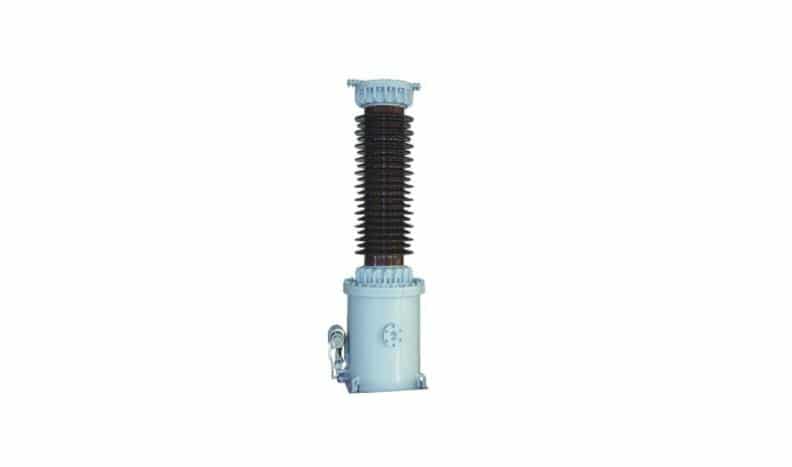
2. Capacitor
This kind of voltage transformer will be equipped with a capacitive potential divider, which will be linked between the main-line phase and the ground. As a mixture of the capacitive voltage divider and a magnetic transformer, this converter can be thought of as a hybrid device of sorts. These transformers are referred to as intermediary converters with a relatively tiny ratio in the industry.
This type of transformer, which is composed of a stack of high-voltage capacitors, can be utilized for voltage metering in addition to being employed as a protection system. As a result, the capacitors may reduce the voltage levels, and a transformer then steps down the lowered voltage to a supplementary voltage level.
3. Optical
Optical voltage transformers are quite a new type of power transformer that can be used for safety and metering applications instead of the usual electric-magnetic converters. Its benefits have been extensively addressed in scientific and technological literature, and its business functions have been highly acknowledged and established in the marketplace.
Many electric plant operators try to steer clear of them because of the high expenses and because the technology is relatively recent. It is not controlled by local professionals, necessitating significant contracts with the manufacturers to operate.
Due to the fact that it’s already been demonstrated that optical innovation has its own set of benefits and drawbacks, the exploration of alternative optical solutions has become the primary goal of high-tech laboratory settings, and it is also the primary goal of the current work.
Difference Between Voltage Transformer and Current Transformer
Definition
The voltage transformer is a style of electrical conductor that is used to convert voltage from an upper to a lower value. The potential transformer’s main remains attached to the line to measure the line voltage.
The outdoor low voltage transformer decreased the high voltage value to a minimal amount that may be easily detected using a voltmeter.
On the other hand, a current transformer is a device that is used to convert the current from a more excellent value to a lesser value compared to the ground potential. It has been used with AC devices to measure high current values.
The current flowing is very high, and measuring it directly is challenging. Thus, a current transformer is employed to convert a high value of the current into a proportional number.
Core
In both constant voltage transformers and outdoor low voltage transformers, the core type of the instrument can be utilized for high and low voltages. Its core is made of quality materials and can operate at a low density to magnetize small currents.
Basically, the stainless steel laminations owned by the core of a current transformer are used to construct the transformer’s core. Meanwhile, the core of a potential functional transformer is built up of a high functioning core that operates at low current concentrations, which allows it to work efficiently.
Primary Winding
Voltage transformers are capable of turning the windings in a large number. However, it only has a thin conductor. Meanwhile, the primary windings of a current transformer are typically in a single turn. It is thick as to how the heaviness of the conductor is capable of tolerating high-type currents.
Secondary Winding
The secondary windings of constant voltage transformers are not the thick kinds of conductor, so it has fewer turns. On the other hand, the current transformer is a thin type of conductor capable of turning in a number of turns. It can also carry a 5A-20A.
Applications
Voltage transformers (may it be low voltage transformer or high voltage transformer) focuses on the power source, measurement, and operating a protective relay. The current transformer, on the other hand, focuses on measuring the power and current. It also monitors the power grid operator for a functional and secured relay.
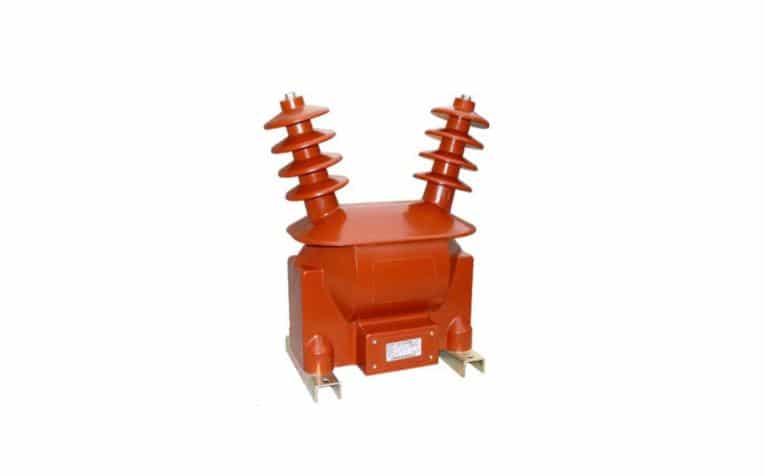
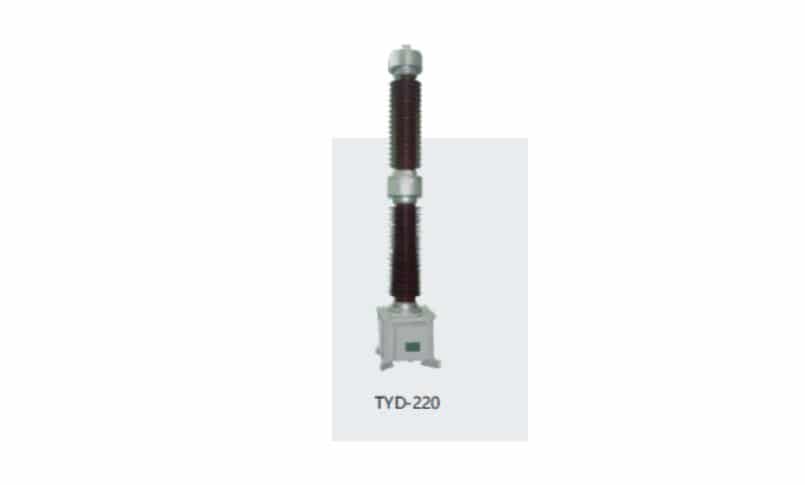
CHINT Voltage Transformer
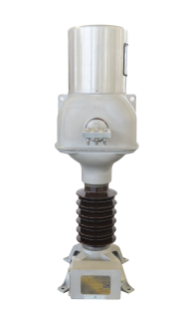
CHINT Voltage Transformer is a new and remarkable device for measuring voltages, power, and relay protection. It has a rate of 35kB and a standard of IEC 60044-2. You can expect a reliable operation and insulation capability. It can also give a high measurement accuracy and reliable seal performance for your industry. What’s more? It’s maintenance-free!
Conclusion
Voltage transformer and current transformer are undeniably equal in terms of significance in electricity. There are also the sub-categories of it: low voltage transformer and high voltage transformer. Aside from that, there are also other labels of constant voltage transformer and outdoor low voltage transformer.
As technology rises in our industry, it is only natural to gain an innovative transformer like CHINT’s. Who wouldn’t like it anyway? Electricity needs upgrades too!
If you have any questions or need further assistance, don't hesitate to reach out to us.