


Unusual humming or buzzing from a contactor often signals a deeper electrical issue that requires immediate attention. In most cases, the noise occurs when the control voltage supplied to the contactor coil falls outside the acceptable range for its rated specification.
This article explains the primary causes of noisy contactors and provides practical guidance on diagnosing and resolving the problem through proper inspection, voltage verification, and maintenance practices.
Why Contactors Make Noise: Common Causes
Most AC-based contactors generate some noise, and this is actually normal. But sudden, loud, or persistent noise (to the point that it becomes unnoticeable and annoying) is a strong indicator of underlying issues that can compromise both the contactors’ performance and safety.
To solve this issue, the first step is to trace the problem’s root cause.
1. Magnetic Coil Vibration
The contactor’s electromagnetic coil heavily relies on a stable voltage and frequency for consistent magnetic field generation. When the coil voltage drops (usually because of poor connections or overloaded circuits), the magnetic field becomes weaker and pulses unevenly. This results in vibrations of around 50 to 60 Hz frequency, which produces a noticeable hum or buzz.
2. Worn or Loose Armature
Over time, the moving parts of a contactor, such as the armature, can gradually wear or become loose due to repeated cycling and insufficient or incorrect maintenance. A worn or poorly aligned armature cannot seat properly against the core, which leads to “chatter” (or the rapid opening and closing) or uneven engagement. This phenomenon generates excessive and recurring noise.
3. Presence of Contaminants Between Pole Faces
The pole faces, which are the contact surfaces between the coil core and armature, must be clean for smooth magnetic coupling. When there is an accumulation of dust and oil, air gaps emerge, which interfere with the magnetic attraction and allow the armature to vibrate. Noise due to contamination is also accompanied by reduced holding force, which usually results in overheating or failure to close.
4. Degraded Shading Coil
The AC contactor’s shading coil is a copper ring that is embedded in the pole face. This is designed to minimize armature vibration by maintaining a small holding force during zero-crossings of the AC waveform.
Once the shading coil is degraded, the armature can resonate at the supply frequency, which amplifies the humming noise. This problem is specific to AC contactors and is a typical cause of sudden increases in operational noise.
How To Diagnose and Correct Contactor Noise?
Here is a systematic approach to troubleshoot and solve contactor noise to ensure system safety and reliability.
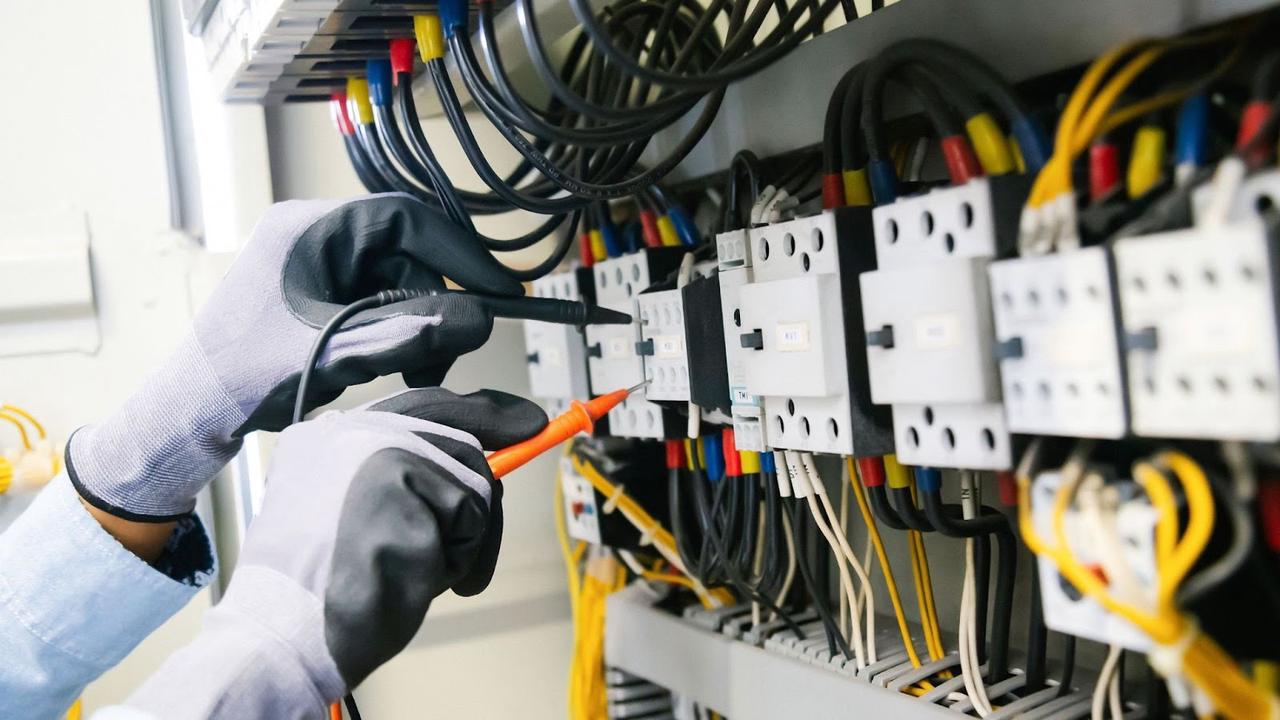
Step 1. Verify Voltage: Measure the coil supply voltage using a calibrated multimeter. Compare the measured voltage to the contactor’s rated value, which is usually found on its nameplate. In case of an undervoltage or phase imbalance, the electromagnetic field becomes weaker. This can force the armature to vibrate or chatter.
Step 2: Perform mechanical inspection. Shut down the control panel and inspect the contactor for worn mechanical parts. Check if the armature and mounting hardware are secure and properly aligned. Any loose or misaligned armature can prevent the contacts from closing smoothly, which can result in chatter.
Inspect also for debris, dust, or oil on the contact surfaces and pole faces, as contaminants can create air gaps and reduce magnetic force.
Step 3. Assess contact and coil condition.
Look over the main contacts for signs of discoloration or uneven wear. Damaged contacts can aggravate resistance and generate abnormal noise or heating. You may also inspect the shading coil (in AC contactors), as a degraded or open-circuited shading coil will cause a buzzing sound because of mechanical resonance.
Another foolproof solution is to consider contactors that are engineered to support low-noise operation. For example, CHINT’s NC2 Series General Purpose AC Contactors can protect circuits from overload when assembled with a thermal overload relay. This device comes with an electrical rating of AC50/60Hz, up to 690V, and up to 800A. The NC2 series contactors offer stable performance under fluctuating electrical conditions and feature robust coils and precision-machined armatures to minimize vibration and sound emission.
Maintenance Tips to Prevent Noisy or Humming Contactors
As the old sage goes, “prevention is better than cure”. Hence, here are some tips to prevent noisy contactors and get rid of that annoying hum.
Clean the control enclosures and the contactor itself regularly. Eliminate all dust, oil, and moisture that can accumulate on the contactor’s pole faces and moving parts. This is to prevent the emergence of air gaps that reduce magnetic force and cause vibration.
You may use non-conductive brushes and cleaning agents to keep components sanitized and contaminant-free. Dry and seal the enclosures to prevent moisture ingress to avoid the acceleration of corrosion and electrical leakage.
Moreover, check and tighten all screws, mounting bolts, and coil connections to manufacturer-suggested torque values. This will reduce the risk of excess and amplified and stable current flow that prevents voltage drops at the coil.
Safe Replacement and Component Selection
Before you acquire and install a contactor, check the electrical requirements of your appliances and circuit. Make sure that your contactor comes with current and voltage ratings that meet these requirements.
Then, verify their insulation class to ensure it can withstand the operating temperatures and electrical stresses present in your environment. Say that the ambient temperature usually exceeds 40°C, select an insulation class that supports a safe operating margin, preferably at least one class higher than the maximum expected temperature.
Also, consider other forms of electrical stresses such as voltage levels and frequency. For example, if your system operates at high voltages or in environments with rapid temperature changes, opt for materials that can handle these conditions without degrading.
For safety purposes, choose contacts that adhere to recognized international standards like IEC 60947 and UL508. These standards outline the requirements for electrical endurance, insulation, clearances, and safety features, which ensure that your installation is compliant and reliable worldwide.
Smart Contactor Troubleshooting and Maintenance with CHINT
You cannot simply shrug off those humming contactor sounds. Leave them unresolved, and you will end up with costly operational downtime. Consistent contactor troubleshooting and maintenance must be a ritual, not only to eliminate that annoying sound, but also to ensure consistent device performance.
CHINT Global is a reliable energy partner that delivers high-performing and robust contactors for industrial applications. Check our wide range of energy solutions here.