

Introduction
Modern data center electrical design has to support tighter deployment schedules, shifting load profiles, and service levels that leave little room for disruption. In that setting, modular switchgear and distributed power blocks give you a practical way to build capacity in stages, contain faults, and maintain service continuity while your facility grows. For teams planning new halls, retrofits, or edge sites, modular electrical distribution has become a serious design choice for speed, resilience, and cleaner long-term operations.
Limitations of Conventional Data Center Electrical Design
Conventional centralized layouts work well at day one, then become restrictive as your data center changes. Large fixed switchboards, long feeder runs, and tightly coupled downstream distribution make expansion slower than it should be. A capacity increase needs electrical system rewiring, planned shutdown , new protection studies, and physical rearrangement across a wide section of the system. That creates friction at the very point where data center programs usually need speed.
When more loads depend on the same centralized sections, the impact of a fault or maintenance event can spread farther. The blast radius is wider. Isolating one area may require more switching steps, more coordination, and more exposure to human error. In live environments, that is rarely a welcome trade.
Traditional layouts also struggle with phased growth. You may know your long-term target load, though you may not want to install every distribution asset on day one. A monolithic architecture pushes you toward early oversizing or painful retrofit work later. That mismatch between infrastructure form and business timing can delay commissioning, complicate procurement, and add outage risk during upgrades.
For facilities chasing shorter deployment cycles, centralized distribution can become a structural constraint rather than a source of control.
Modular Electrical Distribution in Modern Data Center Electrical Design
In a data center, modular electrical distribution means dividing the power path into repeatable, standardized building blocks that you can deploy, expand, isolate, and maintain with less disruption than a single centralized arrangement. It changes data center electrical design from one large fixed layout into a staged architecture that supports growth with fewer structural changes.
Core Principles Of Modular Switchgear Architectures
At the center of modular switchgear architecture is repeatability.
Standardized modules make it easier to plan sections for incoming supply, secondary distribution, and final distribution using known protection schemes and physical layouts.
Distributed protection places interruption and fault control closer to the load, which can improve selectivity and reduce the spread of an incident.
Scalable power blocks let you add capacity by section rather than by redesigning the full backbone.
Plug-and-integrate expansion supports faster installation because teams work from predefined assemblies, cable paths, and interfaces instead of rebuilding the design logic every time.
Modular Switchgear Vs Conventional Switchgear Layouts
For a clearer understanding, the table below compares modern modular and conventional switchgear designs:
Design Aspect |
Conventional Distribution |
Modular Switchgear |
Deployment Speed |
Longer installation and testing cycles |
Faster rollout through repeatable sections |
Scalability |
Expansion often needs redesign or rewiring |
Capacity can be added in planned blocks |
Fault Isolation |
Wider impact across shared sections |
Better sectionalization and containment |
Maintenance |
Service work can affect larger areas |
More localized maintenance options |
Practical Benefits Of Modular Power Distribution In Data Centers
The clearest value is operational flexibility. The data center power distribution modular architecture benefits become visible when you commission capacity in phases, align infrastructure with actual IT demand, and avoid rebuilding the electrical backbone each time a load block is added. Instead of treating growth as a disruptive event, you treat it as a planned extension of the original design.
A modular approach also supports:
faster factory assembly and site installation
reduced downtime exposure during expansion
better fault containment through sectionalized distribution
smoother alignment with Tier III and Tier IV design goals
This matters in edge builds, colocation deployments, and hyperscale programs. You can keep the architecture disciplined while still leaving room for new halls, new tenants, or changing density. That is a stronger operating position than having to reopen the entire distribution strategy each time your program shifts.
High Availability Electrical Distribution For Critical Infrastructure
Modularity is not only a construction preference. It is an availability strategy. When distribution is divided into controlled sections, you gain more options for isolating faults, separating maintenance activity, and preserving service to unaffected loads.
Redundant Power Distribution Design Best Practices
The most reliable modular systems still depend on disciplined topology choices. Redundant power distribution design best practices start with clear separation between normal and redundant paths, then extend into protection coordination and maintainability.
Key priorities include:
N+1 or 2N architectures selected to match business risk and uptime targets
Bus segmentation that limits the effect of upstream or downstream faults
Independent protection paths for alternate sources and critical load groups
Maintenance paths that let you service equipment without disturbing the active distribution route
Modular Switchgear Uptime Optimization Strategies
Good topology still needs good execution. Modular switchgear uptime optimization strategies focus on selective coordination, localized fault isolation, and faster replacement at the module level. When one section is standardized, spare strategy improves. Maintenance teams know what they are dealing with. Replacement steps become more predictable.
That can reduce outage exposure in several ways:
faults can be isolated closer to the affected section
maintenance can stay more localized
module replacement can be faster than field rework
testing and commissioning can follow a repeatable pattern
IEC 61439-1 and IEC 61439-2 matter in this discussion because they define general and product-specific requirements for low-voltage switchgear and controlgear assemblies. For data center teams, that supports a more consistent basis for verified assembly performance.
PDU Selection Criteria For Data Center Reliability
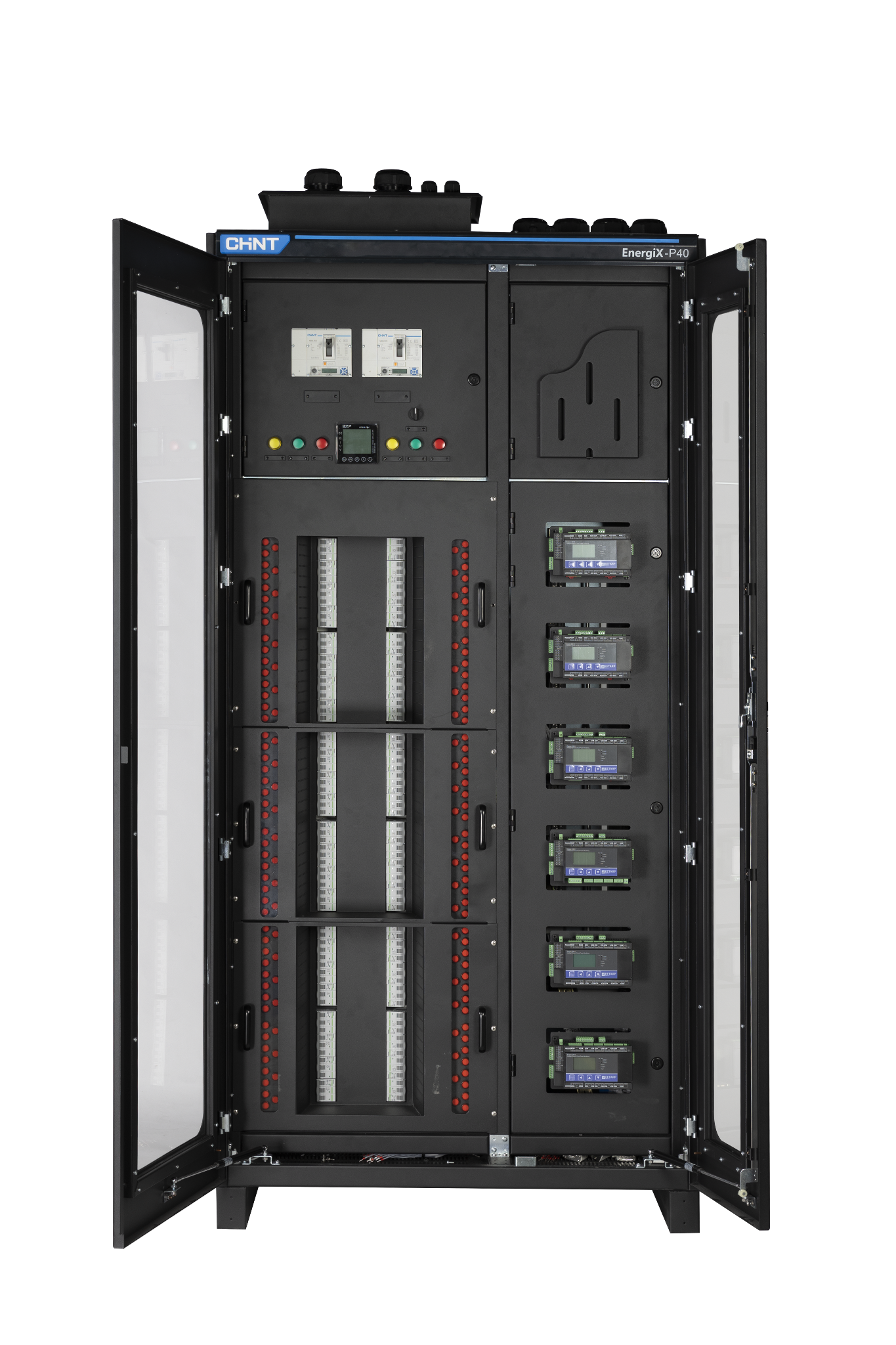
(PDUs) are the working link between upstream distribution and the IT load. In modular systems, PDU selection criteria for data center reliability should go beyond nameplate capacity. You need compatibility with the wider switchgear layout, enough monitoring granularity to support operational decisions, and a replacement approach that does not turn service work into a major event.
Focus on the following:
Does the PDU fit the modular distribution scheme physically and electrically?
Can you meter and monitor at the level your operations team actually needs?
Can you expand or replace sections without major disruption?
Does the PDU align with your redundancy model, whether that is dual-corded IT load support, A/B path separation, or staged growth across halls?
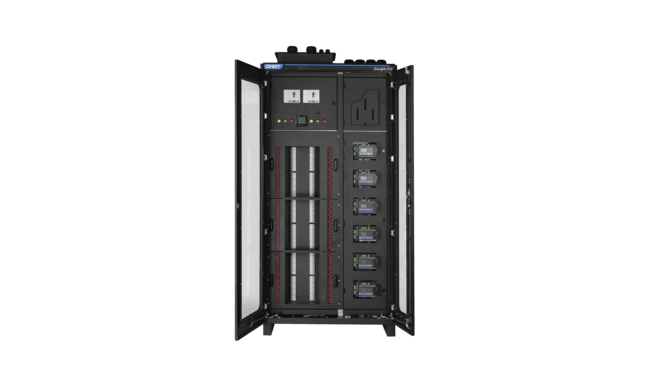
This is where modular PDUs are useful. Data centers can use CHINT’s Energix-P40, for example, as a PDU with modular structure, multiple outgoing circuits, and hot-swappable busbar support. That’s how a modular sub-distribution cabinet can support staged deployment and maintainability inside a broader data center electrical design strategy.
Supporting Modular Architectures With IEC-Compliant Distribution Components
A modular architecture only works when the component stack supports it from sub-distribution through final protection. That usually means standardized cabinets, compact breakers, and final distribution devices that fit repeatable panel designs and coordinated protection schemes.
As mentioned, CHINT’s Energix-P40 Power Distribution Cabinet is relevant at the modular sub-distribution layer. But for secondary distribution and protection, CHINT’s NXM MCCBs (moulded case circuit breakers) fit well into modular feeder sections. NXM supports overload, short-circuit, an under-voltage protection, with fixed and plug-in types and compliance with IEC/EN 60947-2, which is useful in switchgear sections where serviceability and protection consistency matter.
CHINT’s NM1 MCCBs are also relevant where you need flexible feeder protection across modular distribution blocks. NM1 is ideal for low-voltage power distribution and motor circuits, with compact construction, multiple operating modes, and IEC/EN 60947-2 compliance. That makes it suitable for feeder arrangements where layout flexibility and selective protection are part of the design brief.
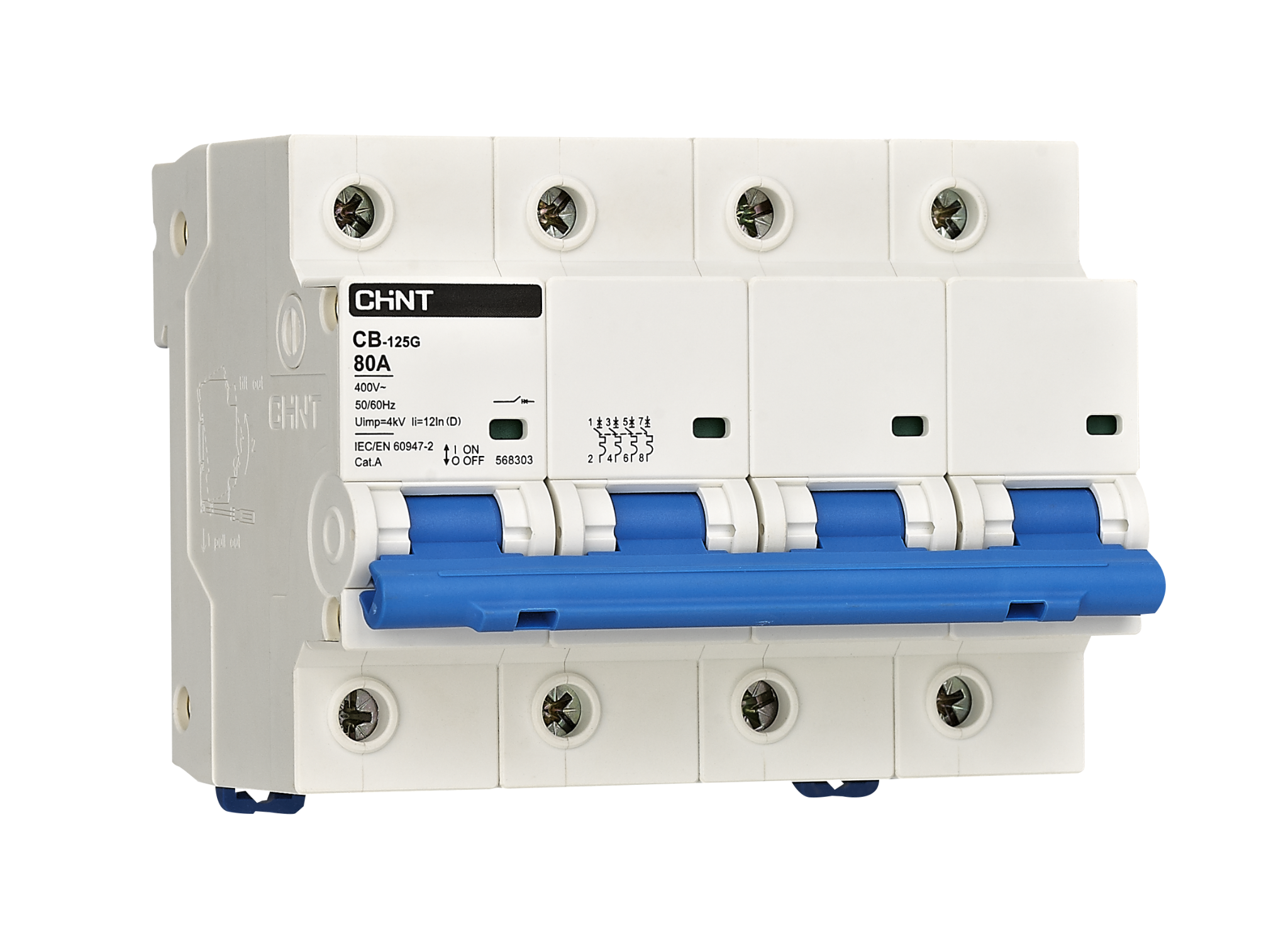
At the final distribution layer, CHINT’s CB-125G provides an example of a compact breaker for downstream applications. It’s compliant with IEC/EN 60947-2 and intended for overload and short-circuit protection in final distribution circuits. In modular data center environments, devices in this class support consistent downstream protection without forcing oversized hardware into the last step of the power chain.
Designing For Rapid Deployment And Long-Term Scalability
The strongest modular designs do two things at once: (1) They help you move quickly now, and (2) they leave you room to grow later without destabilizing the original concept. That makes them well suited to prefabricated data halls, edge facilities, and hyperscale campuses that come online in phases.
From a standards perspective, IEC 61439-1 and 61439-2 provide the assembly framework for low-voltage switchgear. From an availability perspective, it gives you a clear way to think about concurrent maintainability and fault tolerance. IEEE’s planning and application guidance for power distribution in industrial and commercial systems also remains useful when you are selecting apparatus and organizing distribution strategy in a disciplined way.
Frequently Asked Questions
How Does Modular Switchgear Improve Data Center Uptime?
It improves uptime by reducing the operational effect of faults and maintenance. Sectionalized distribution, repeatable protection design, and faster module-level service work can limit disruption and support cleaner recovery.
What Redundancy Strategies Work Best With Modular Electrical Distribution?
N+1 and 2N are the most common starting points. The right choice depends on your business risk, maintenance expectations, and whether you need concurrent maintainability or full fault tolerance.
Is Modular Power Distribution Suitable For Hyperscale Data Centers?
Yes. It fits hyperscale programs well because it supports phased buildout, repeatable deployment, and structured expansion across multiple halls or load blocks.
Conclusion
Modular electrical distribution is no longer a niche option in data center electrical design. It gives you a practical foundation for speed, resilience, and phased growth, while modular switchgear helps you localize faults, simplify maintenance, and support long-term flexibility. In that context, CHINT solutions fit naturally as part of an IEC-aligned modular distribution approach.