

With energy costs consistently on the rise and with continuing concerns about the environment, homeowners are seeking new energy solutions. Off-grid photovoltaic systems were initially used in remote villages, farming areas, sea islands, and other remote areas, to generate power for basic daily needs, such as lighting, TV, and radio.
When off-grid PV systems first hit the homeowner market, the initial investment was slightly intimidating. Nowadays, with the reduced costs of the components required, an off-grid photovoltaic system is a viable alternative, providing homeowners with a sustainable, long-term savings plan and clean energy.
An off-grid photovoltaic system can meet the power needs of any mid-to large-size home. This is an appealing alternative to the traditional on-grid systems because you are self-sustaining your energy use 100%. The long-term savings of an off-grid photovoltaic system make it a financially sound choice. With an off-grid photovoltaic system, a homeowner need never to pay an energy bill again.
What Is an Off-Grid PV System?
There are three types of photovoltaic systems:
- On-Grid:
- Off-Grid
- Hybrid
An on-grid system is tied to your local utility’s grid. In this instance, whether your solar system under or over-produces, your utility providers’ system will act as battery space.
An off-grid PV system refers to an installation that is not connected to the electricity grid. This means that all the energy produced is stored and used on site. Essentially, off-grid photovoltaic systems operate from the energy stored in a battery bank.
The term hybrid traditionally referred to two separate sources of energy, such as wind and solar combined. However, in the solar energy world, the term ‘hybrid’ refers to a combination of solar and energy storage, which is connected to the electricity grid.
What Does an OFF-Grid Solar Power System Consists of?
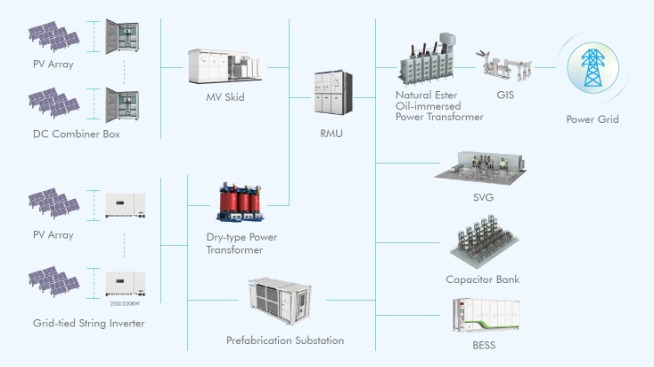
To design and install an off-grid solar photovoltaic system, you will need to understand exactly what goes into a PV system. Each component has its own unique and important role in the PV system. It helps to understand these components’ purpose, and how they fit together as a whole. An off-grid photovoltaic system consists of the following components:
PV Modules
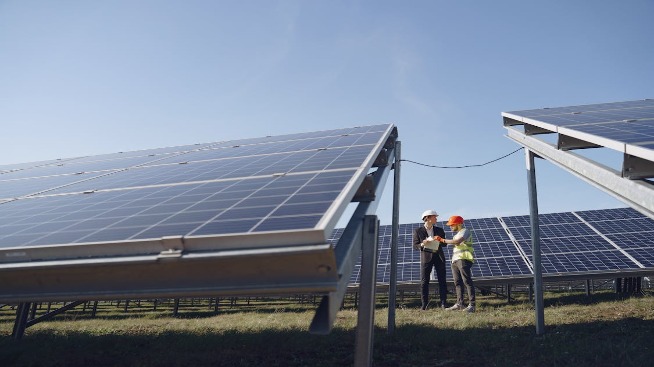
Modern PV modules , also known as solar panels, are constructed from many silicon-based photovoltaic cells also known as PV cells. PV Modules are the source of power in a photovoltaic system. Simply put these modules produce DC electricity, which gets stored in battery banks, but needs to become AC power via an inverter for it to be used in homes. You can choose between monocrystalline, polycrystalline, and black PV modules, with an output of 275 to 370Wp.
Controller
The controller delivers power from the PV to the battery bank. When the battery bank is almost full, the controller will taper off the charging current to maintain the required voltage needed to fully charge the battery and always keep it topped off. Top-of-the-line controllers use MPPT technology to maximize the utilization of solar panels, these are made with advanced circuit design and deliver ultra-high power conversion efficiency.
Off-grid Inverter
The off-grid inverter is specifically designed for high-efficiency off-grid power systems. It draws power from the battery, so it can convert it from DC to AC.
Solar Controller and Inverter
Solar panels generate DC electricity which must then be converted to alternating current (AC) for use in our homes and businesses. This is the primary role of a solar inverter.
Batteries
Off-grid solar systems need specialized off-grid inverters and battery systems that are large to store enough energy for 2 or more days. Hybrid grid-connected systems use lower-cost hybrid batteries, and only require a battery that is large enough to supply energy for 5 to 10 hours depending on the use.
Applications of Off-Grid Photovoltaic Systems
Off-grid photovoltaic systems have numerous applications:
- Bringing electrical power to rural and remote areas
- Emergency power supply during natural disasters
- Mobile solar systems are used for sea and land expeditions as well as camping, and hiking
- Used as power backup for areas facing frequent power cuts
- To run solar water pump systems for the supply of water for feedstock, irrigation, and drinking
Innovative uses of off-grid PV systems are also seen in applications such as solar scooters, solar boats, solar bikes, and solar drones.
Off-Grid Photovoltaic Systems Commercial Use
The commercial use for off-grid PV systems is mainly for communication applications such as relay of satellite for broadcast TV, solar pumping systems, navigation marks, anode protection of oil pipelines, and weather stations.
Off-Grid Photovoltaic Systems Home Use
When properly designed, an off-grid PV system will generate enough power all year-round, with enough battery capacity to meet your home’s requirements, even in the heart of winter, when the days are short and there is a lot less sunlight.
Off-grid solar systems will produce extra electricity during the day. This extra electricity is sent to the batteries for storage. The energy stored in the batteries can then be accessed at night or during cloudy days when the system is not producing energy. Off-grid systems can be sized to produce the excess electricity that you need to cover your energy usage 24 hours a day.
Advantages of an Off-Grid Photovoltaic System
Having an off-grid photovoltaic system means you’re entirely disconnected from the power grid, or putting it in other terms, you will no longer be receiving a monthly bill from your local utility company. An off-grid solar PV system can eliminate your power bill forever.
If your dream is to live off the grid, in a remote area, then an off-grid solar photovoltaic system will make it possible. It will give you the freedom of living anywhere you like because with an off-grid PV system you are 100% autonomous for all your energy requirements.
Choosing an off-grid PV system is choosing clean energy and supporting the environment, at a time when global warming is on the rise. An off-grid PV system means being autonomous, with the freedom to live anywhere your heart desires. An off-grid photovoltaic system is a wise choice, at a time when fossil fuels are increasingly scarcer, with costs increasingly on the rise.
Conclusion
Whether or not you want to live off the grid, an off-grid PV system can be useful in a variety of settings and applications. With off-grid PV systems, you do not consume any water, emit no pollution, and have no monthly electrical bills to pay.