

Table of Contents |
Almost everyone has seen a circuit breaker in their homes or offices. And almost everyone knows how essential they are to protect against overloads, ground faults, and short circuits. But not everyone can tell whether it is a vacuum circuit breaker or an air circuit breaker. Yes, they are two different technologies!
If you, too, don’t know how to tell the two apart, this article has covered you covered! This post highlights the difference between vacuum circuit breakers (VCB) and air circuit breakers (ACB). Stay with us till the end, and you may also find our recommendations on the best VCBs and ACBs in the market. So, let’s get started, shall we?
What is a Vacuum Circuit Breaker?
As the name suggests, a vacuum circuit breaker is the type of circuit breaker that accomplishes arc quenching using a vacuum. The vacuum chamber, also known as the vacuum interrupter, is responsible for opening and closing current-carrying contacts.
Vacuum circuit breakers have a steel arch chamber located in the center. They are symmetrically built and stacked in ceramic insulators. The vacuum interrupter maintains a vacuum pressure between 10 to 6 bar.
The material used in the current that transports contacts can greatly impact how well the vacuum circuit breaker works. Top brands regard Cr/Cr as the ideal material employed in manufacturing vacuum circuit breakers.
The superior arc provides excellent insulating strength, making them ideal for medium and relatively high-voltage applications. However, they are not the finest choice for commercial purposes.
This is why VCBs are typically branded as high voltage indoor vacuum circuit breakers. Vacuum circuit breakers are ideal for systems requiring a voltage of 11 to 33 kV due to their low maintenance requirements.
What is the Working Principle of VCB?
The arc in a vacuum circuit breaker forms when metal oils ionize in the contact. These contacts are separated when unexpected conditions occur or the arc becomes jammed in them.
The arc interruption that occurs inside vacuum breakers is different from the arc interruption that occurs inside other types of circuit breakers. The contacts release a vapor when they divide. These vapors comprise positive ions that are withdrawn from the contact’s surface.
The vapor will not stay if the current is reduced. This implies that the vapor density is determined by the current present in the arc. When the current reaches zero, the vapor density decreases, and the medium recovers its dielectric strength.
The arc will also have several parallel routes if the interfering current is minimal. The whole current will be split up into several parallel arcs. Furthermore, they will reject each other, causing them to expand across the contact surface. Vapors can release quickly if a high current value is established on the contact surface.
An essential property of a vacuum is that once an arc is produced inside it, it may be quickly extinguished due to the vacuum’s dielectric strength rapidly improving.
Why Do We Use Vacuum Circuit Breakers?
People use vacuum circuit breakers to regulate high voltage currents. They are ideal for demonstrating out-of-phase current dropouts and double-earth faults.
Vacuum circuit breakers are perfect for use in power stations and generators. People also use vacuum circuit breakers in railway applications because of their ability to switch traction current and electrical supply.
Moreover, these circuit breakers are found in circuit breakers with porcelain housing. Additionally, metal-clad switchgear also uses VCBs.
Difference Between Vacuum Circuit Breaker (VCB) and Air Circuit Breaker (ACB)
Both vacuum circuit breakers (VCB) and air circuit breakers (ACB) have valuable functions. However, they have numerous distinctions, listed below as follows:
1- Voltage Applications
Air circuit breakers are only used in applications where the voltage is less than 690 volts. These are commonly referred to as LT (low tension) applications. On the other hand, vacuum circuit breakers are ideal for medium voltage levels with voltages less than 33 kV.
2- Working Principle
The moving and stationary contacts are kept open air in a sealed package in an air circuit breaker. Thus, the arc is quenched by air every time the circuit breaker opens. Air circuit breakers are easily ionized because it contains less air, and air acts as the dielectric medium.
However, vacuum acts as the arc quenching medium in a VCB. The ability of a vacuum circuit breaker to break short circuits is pretty impressive since free electrons cannot exist in the presence of a vacuum.
3- Medium Pressure
Open-air pressure is sufficient to quench the arc in air circuit breakers. On the other hand, VCBs must maintain a vacuum pressure ranging from 10-2 to 10-6 torr.
4- Refilling
Because outside air is free of charge, ACB does not require manual refilling. On the other hand, there is no way to replenish the vacuum in a VCB automatically. You must replace the vacuum container if it stops functioning.
5- Application
Air circuit breakers are frequently utilized in the LT MCC, the secondary feeder circuit of the power transformer, and the LT PCC. They are ideal for indoor use; you cannot use them outside.
On the other hand, Vacuum circuit breakers are used to start motors with higher horsepower.
6- Arc Chute and Arc Development
In air circuit breakers, arc chutes are used to prevent arc formation. It divides the arc into smaller sections. Without an arc chute, ACB cannot function. Arc development is high in ACBs.
Conversely, arc chutes are not required by VCB. Additionally, vacuum circuit breakers have less arc development because there is nothing to ionize other than contact substance.
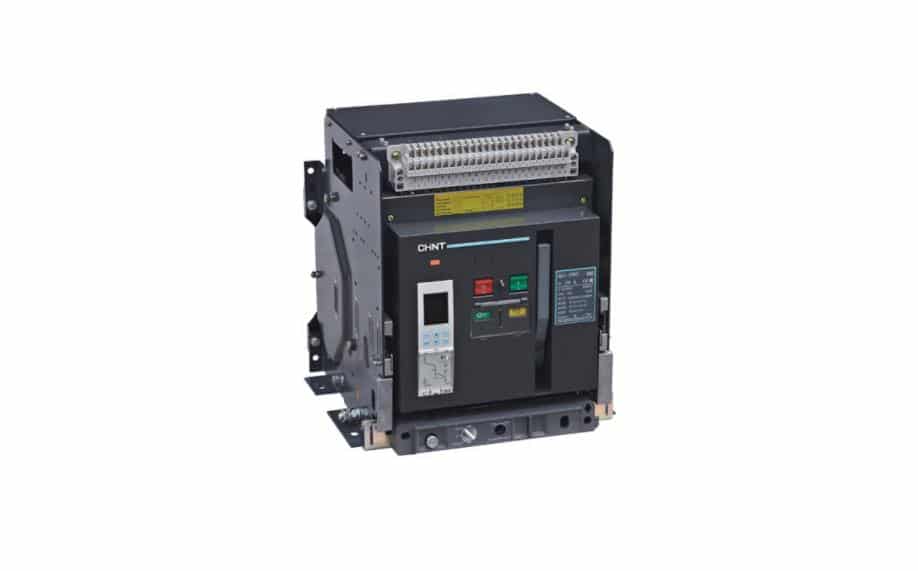
CHINT Circuit Breakers
As promised, here is our top recommendation on the best circuit breakers in the market:
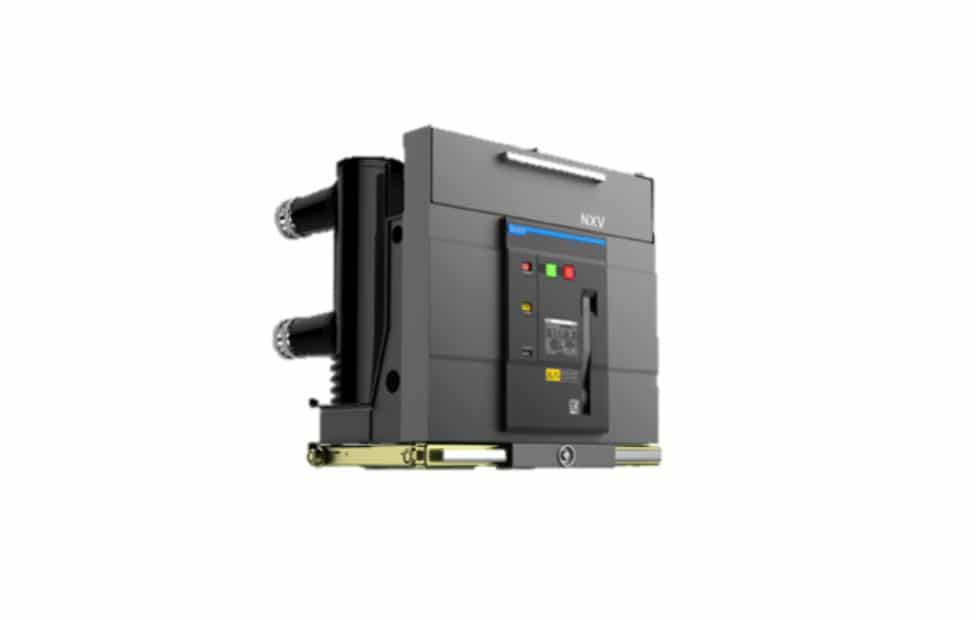
1- NXV-12 Indoor AC High Voltage Vacuum Circuit Breaker
The NXV-12 Indoor AC High Voltage Vacuum Circuit Breaker fulfills the needs of both electric and manual operation. It is fitted with a low-power modular spring operating mechanism.
The closing operation is completed after getting the closing signal or pushing the closing button by hand; when the closing action is done, the opening operation is performed after receiving the opening signal or pressing the opening button by hand.
Features:
- Durable and reliable
- Use environmental protection electrical plastic
- Easily recyclable
- Perfect for industries, mining sector, power stations, and buildings
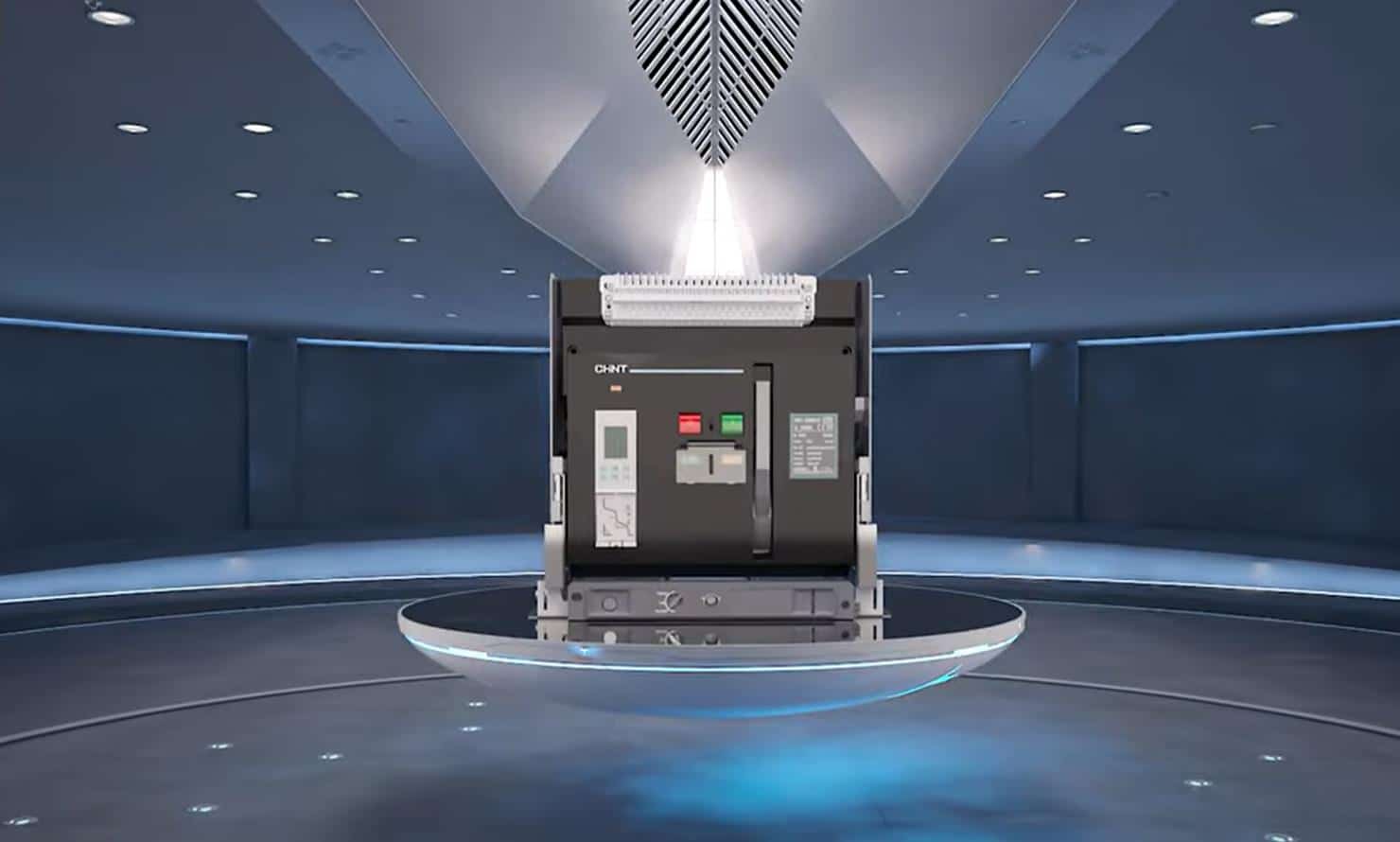
2- NA1 Air Circuit Breaker
The NA1 air circuit breaker is designed for AC 50Hz/60Hz circuits with rated service voltages of 400V and 690V and rated service currents of up to 6300A. Its primary function is to transmit electric energy and safeguard circuits and electric devices against over-load, under-voltage, short-circuit, and single-phase earthing faults.
Features:
- Reliable power supply
- Selective protective functions
- Suitable for power stations, factories, mines, and high-rise structures
The Bottom Line
Selecting the right circuit breaker gets easy once you know the proper details. After that, you just need to select a brand and order your VCB or ACB. For those hesitant to choose a brand for their vacuum circuit breaker or air circuit breaker, we suggest CHINT. The company guarantees high-quality products at competitive rates and offers fast delivery!