

-20240329-1.jpeg "The Basics of Gas Insulated Switchgear (GIS)-20240329-1")
Table of Contents |
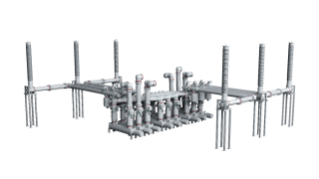
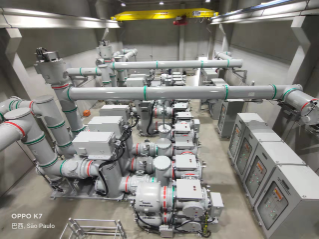
Gas insulated switchgear (GIS) is a type of high-voltage switchgear in which the major components like circuit breakers and disconnectors are enclosed in a metal housing. It contains a specific dielectric gas called sulfur hexafluoride (SF6) to provide electrical insulation within a phase and between phases. GIS offers a compact solution for substations. Read on to learn more about this high-voltage switchgear.
What Are the Components of GIS?
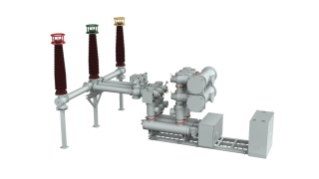
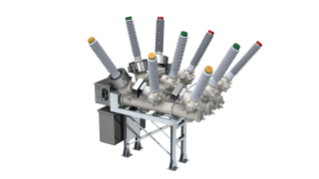
Gas insulated switchgear utilizes key components to facilitate the control and protection of power systems. Sealed within the enclosed compartments are the vital parts that make the GIS substation fully functional:
1. Circuit Breaker (CB)
As the primary switching and protection device, the CB instantly monitors faults and interrupts currents to isolate problematic sections. Trip coils within CBs respond precisely to control commands and isolate faulty circuits using an internal mechanism.
2. Earthing Switch (ES)
The ES safely connects the busbars to the grounding grid whenever sections are de-energized for maintenance work. It limits voltage stresses on equipment under earth faults.
3. Filter Earthing Switch (FES)
The FES is an enhanced ES that filters and limits transient recovery voltages to lower over-voltages during automatic grounding and ground release operations.
4. Disconnecting Switch/Disconnector (DS)
The DS isolates the main energized busbars from individual feeders, transformers, and circuit breakers under maintenance.
5. Current Transformer (CT)
CTs step down high currents to lower, easily measured values. They enable current monitoring, metering, and initiation of protective relaying.
6. Potential Transformer (PT)
PTs lower system voltages to standardized nominal voltages that can be measured by instruments. They are used for voltage monitoring, relaying, and metering of power parameters.
-20240329-2.jpeg "The Basics of Gas Insulated Switchgear (GIS)-20240329-2")
Significant Features of GIS
Gas insulated switchgear provides utilities with distinct operational advantages compared to traditional air-insulated technologies. The top features of this HV switchgear include:
1. Compact Size
Gas insulated switchgear allows for more compact installation footprints without compromising performance. As components are sealed within its metal housing, there is no requirement for outdoor insulation and extensive civil works either.
2. Enclosed Design
Being fully encapsulated shields live equipment against environmental stresses. Unwanted impacts like humidity, dust, corrosion, and radio interference are completely prevented from disrupting service continuity or accelerating aging.
3. High Reliability
Gas insulated switchgear maintains consistent dielectric strength of SF6 gas through regulated pressure and temperature. This stable insulating medium results in impressive annual reliability by resisting faults even under severe climatic swings and system disturbances.
4. Long Lifespan
SF6 completely shuts out oxygen and moisture to prevent tank corrosion or part degradation for decades. Minimal maintenance translates to longer usable lives of many years without refurbishment costs.
5. No Fire Hazard
Unlike air, SF6 will not burn or support combustion. This ensures gas insulated switchgear substations have practically zero fire risk, avoiding costly damage and outages from arc flash incidents. Near-zero maintenance requirements further enhance safety for onsite personnel.
Common Applications of GIS
GIS is suitable for many applications due to its compactness, reliability, and low maintenance requirements.
Industrial Townships: GIS is extensively utilized in heavy industries like petrochemical plants where uninterrupted power is critical and space is at a premium.
Hydro Stations: GIS enables optimized substation layouts in hydroelectric power stations located high in the mountains alongside reservoirs and dams.
Underground Substations: Within densely populated city centers, GIS allows for minimal-footprint substations to be installed underground beneath roadways and buildings.
City Building Extensions: As cities expand vertically with new high-rises, GIS supports reliable distribution through elevated ring main units occupying minimal footprints.
Conclusion
In summary, gas insulated switchgear offers considerable advantages over traditional air-insulated technologies. As a compact solution with components sealed within an SF6 gas enclosure, GIS eliminates disadvantages like outdoor insulation needs and exposure to environmental stresses. CHINT is a global leader in GIS manufacturing with years of expertise. CHINT GIS systems are suitable for indoor substation installation as well as tougher outdoor and offshore environments while ensuring high reliability under temperatures from -40°C to +55°C, good protection, and seismic with standability up to 9 degrees. Those seeking a reliable GIS partner can access our extensive catalog featuring optimized solutions for renewable, transmission, and distribution applications on the website.
If you have any questions or need further assistance, don't hesitate to reach out to us.