Please enter keywords to search

Global |EN

Choose your country & Language

Asia Pacific

Australia & New Zealand
India
Indonesia
Korea
Malaysia
Philippines
Singapore
Singapore (Sunlight)
Vietnam

Middle East & Africa

CHINT-EGEMAC
Saudi Arabia
South Africa
UAE
CHINT AJLAN
Egypt
Kenya

Europe

France
Kazakhstan
Italy
Netherlands
Spain
Turkey
United Kingdom

North America

Mexico

Latin America

Brazil
Colombia
Ecuador
Peru
Choose your country & Language

Australia & New Zealand
India
Indonesia
Korea
Malaysia
Philippines
Singapore
Singapore (Sunlight)
Vietnam
CHINT-EGEMAC
Saudi Arabia
South Africa
UAE
CHINT AJLAN
Egypt
Kenya
France
Kazakhstan
Italy
Netherlands
Spain
Turkey
United Kingdom
Mexico
Brazil
Colombia
Ecuador
Peru
Please enter keywords to search

Your search term contains restricted words. Please use different keywords.
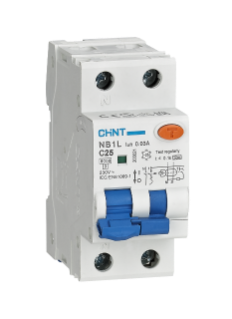
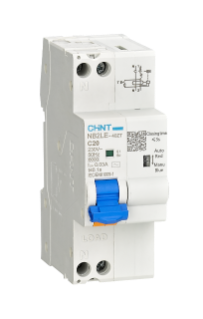
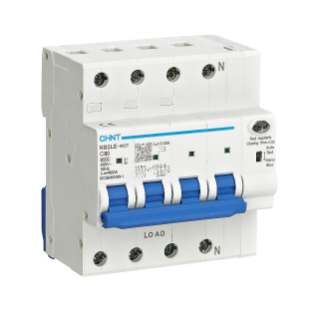
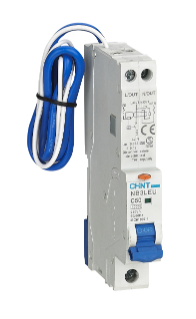
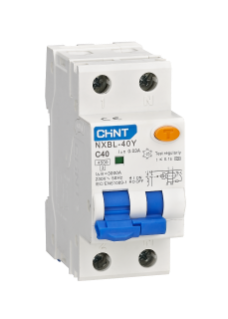
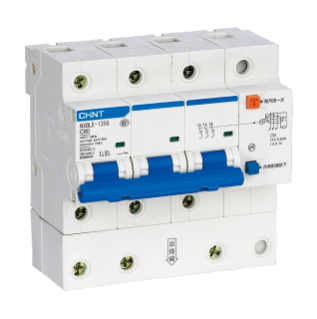
NB3LEU Residual Current Operated Circuit Breaker with Over-current Protection(Electronic)

NB3LEU Residual Current Operated Circuit Breaker with Over-current Protection(Electronic)

The CHINT NB3LEU RCBO is a high-performance protective device that combines residual current and over-current protection in one compact unit. Designed for AC 50/60 Hz, 240 V circuits, it provides reliable protection against overloads, short-circuits, and electric leakage, ensuring safety for personnel and equipment. Featuring electronic tripping, Type AC/A leakage sensitivity, and B/C tripping curves, it is ideal for residential, commercial, and light industrial installations requiring enhanced electrical safety and stability.

Product Information

Recommend Blogs
APRIL 22, 2025 What is a New Energy Air Switch Disconnector: Facts You Need to Know

Discover how the new energy air switch disconnector (solar disconnector switch) plays a crucial role in ensuring safety and reliability in utility-scale solar and battery energy storage systems (BESS).

APRIL 15, 2025 What is a New Energy Air Switch Disconnector: Facts You Need to Know

Discover how the new energy air switch disconnector (solar disconnector switch) plays a crucial role in ensuring safety and reliability in utility-scale solar and battery energy storage systems (BESS).

APRIL 2, 2025 Experience Smooth Motor Starting with CHINT’s NJRP5-D Soft Starter

This article explains the differences between single phase voltage regulators and three phase voltage regulators.

MARCH 26, 2025 Single Phase vs Three Phase Voltage Regulator

This article explains the differences between single phase voltage regulators and three phase voltage regulators.

MARCH 21, 2025 MCCB vs ACB: What Are the Differences?

Circuit breakers differ depending on intended use and load capacities. This article explores the key differences between MCCB vs ACB.

MARCH 18, 2025 IEC vs. UL: Understanding Air Circuit Breaker Certification Standards

Compare IEC vs UL certification for air circuit breakers: regional standards, safety compliance, and CHINT's globally certified solutions for reliable electrical protection.

MARCH 17, 2025 IEC vs. UL: Understanding Air Circuit Breaker Certification Standards

NVF2L Compact Micro Drive is designed to meet the growing demand for efficient, space-saving solutions in various industrial applications. Explore CHINT's industrial drive technology solutions.

MARCH 5, 2025 The Basics of NVF2L Compact Micro Drive

NVF2L Compact Micro Drive is designed to meet the growing demand for efficient, space-saving solutions in various industrial applications. Explore CHINT's industrial drive technology solutions.

FEBRUARY 26, 2025 Key Differences Between Air Insulated Substations and Gas Insulated Substations

Common types of switchgear used in substations are AIS and GIS. This article will assess the primary difference between AIS and GIS substations for five critical aspects.

FEBRUARY 21, 2025 Key Differences Between Air Insulated Substations and Gas Insulated Substations

Common types of switchgear used in substations are AIS and GIS. This article will assess the primary difference between AIS and GIS substations for six critical aspects.

Need Support From Us?

Blog
Blog

Find expert perspectives on the trends and technologies driving your business.

View Now
Download Center
Download Center

Download new and previously released documents including product document, solutions, cases, coporate report.

View Now
Contact Us
Contact Us

Reach out to us to receive more information, technical support, assistance with complaints and more.

Get Support
Collapsed
Expand

FAQs


What makes the NB3LEU RCBO different from traditional breakers?

It combines leakage, overload, and short-circuit protection in one compact device using electronic tripping, offering faster response and improved reliability over purely thermal types.


What are Type A and Type AC sensitivities?

Type A: Detects both AC and pulsating DC leakage currents.

Type AC: Detects only sinusoidal AC leakage currents.

This ensures compatibility with various load types and system conditions.


Can this breaker handle high fault currents?

Yes. The NB3LEU offers a 10 kA short-circuit capacity, making it suitable for robust protection in both residential and commercial environments.


What installation options are available?

It can be mounted on a 35 mm DIN rail and connected via cable, U-type, or pin-type busbars, supporting flexible panel configurations.


Does temperature affect performance?

Performance is rated at 30 °C, but derating applies above that (e.g., 0.9 at 50 °C, 0.85 at 60 °C) to ensure safe operation in warmer environments.