

Table of Contents |
Circuit breakers serve a crucial function. They rapidly stop faulty electric currents to prevent costly damage to equipment. Their designs differ depending on intended use and load capacities. Two common categories are Molded Case Circuit Breakers and Air Circuit Breakers. Though each disconnects power during problems, they have unique attributes. These make one better than the other for a given installation or application. Therefore, it’s useful for installers to know the main MCCB vs ACB contrasts to pick the right solution.
Molded Case Circuit Breaker: Overview
An MCCB is a low-voltage circuit breaker. It’s used to protect wiring and electrical equipment. It interrupts electric circuits automatically when excess current is detected. In this way, it prevents equipment damage from overloads or short circuits.
Components
Key components of an MCCB include terminals that connect wires, an operating mechanism, and trip units that sense overloads. The operating mechanism uses a bimetal strip. It bends when it heats up from excess current. This trips the contacts open to stop power flow.
Working Principle
When a trip unit of a molded case circuit breaker detects a sustained overload or short circuit downline, it activates the internal operating mechanism. This causes the separable contacts inside the MCCB to rapidly separate. It occurs in less than one second, interrupting the electric current passing through. This fast interruption prevents prolonged overloading from causing permanent damage to wiring or devices on the protected circuit.
Air Circuit Breaker: Overview
An ACB is a type of circuit breaker used for protecting higher-voltage systems. It typically employs pressurized air or insulating gases to instantly interrupt tripping circuits within milliseconds.
Components
Key components of an air circuit breaker include a set of high-speed separable contacts. These are enclosed in a dielectric chamber. The contacts are pneumatically operated by a mechanism. The mechanism controls compressed air which is usually kept in an insulated vessel.
Working Principle
When an electrical fault is detected, the trip unit of the ACB instantly triggers the operating mechanism. This prompts the controlled release of stored compressed gas. The blast of gas forces the separable contacts apart. It breaks the current flow through the ACB. Disconnection happens exceedingly fast due to the swift discharge of gas, within milliseconds.
MCCB vs ACB: Key Differences
MCCBs and ACBs serve important functions but have some key distinguishing characteristics in their design and application. Key attributes that highlight the differences include:
1. Ratings
ACBs typically have higher ampere ratings. They can go up to 6,300A and are suitable for larger loads in industrial settings. MCCBs are rated for relatively lower amps generally up to 3,200A. They are used in residential and commercial sites for distribution panels and secondary circuit protection.
2. Size
Size is another major MCCB vs ACB distinction. Due to their higher ratings, ACBs have larger sizes and dimensions. This is to ensure they safely handle heavier electrical loads over long periods. MCCBs are more compactly designed and smaller to conveniently fit in residential and smaller commercial electrical panels.
3. Application
MCCBs are generally used in distribution panels located in homes, small offices, and retail buildings to protect branch circuits. ACBs are usually found in large industrial facilities. This includes factories and manufacturing plants, utility substations, and other high-current applications requiring primary protection.
4. Cost
Cost is another major MCCB vs ACB difference. ACBs tend to cost more than comparably rated MCCBs. This is due to their more intricate and complex construction. Their higher ampere ratings also contribute to increased prices in industrial and utility-grade equipment.
5. Maintenance
ACB maintenance requires periodic servicing of gas tanks, seals, and pneumatic components. This is more labor-intensive. MCCB maintenance is simpler as it operates mechanically without gases. So, these circuit breakers require only basic inspections and switch replacement if faulty.
The following table summarizes the main MCCB vs ACB differences:
Attribute |
MCCB |
ACB |
Ratings |
Lower amps |
Higher amps for industrial loads |
Size |
More compact |
Larger to handle heavier loads |
Application |
Commercial and residential buildings |
Industrial plants and substations |
Cost |
Lower cost |
Higher cost due to complex design |
Maintenance |
Simple, mechanical |
May require gas servicing |
Conclusion
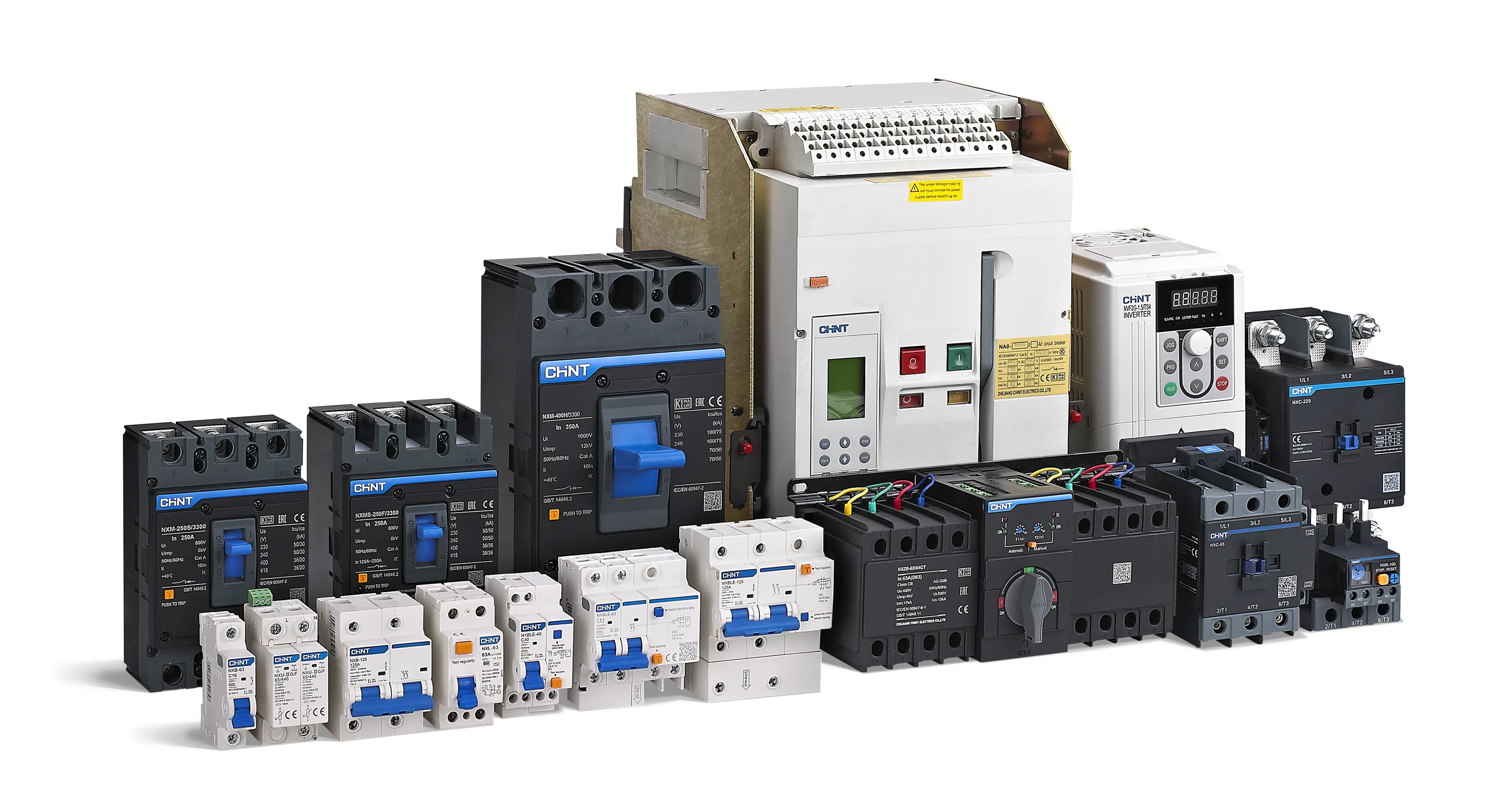
Both MCCBs and ACBs serve crucial roles in electrical protection. MCCBs are suitable for distribution and circuit protection in commercial/residential applications. ACBs are designed for heavy-load industrial applications handling higher voltages and currents. At CHINT, we manufacture reliable MCCBs and ACBs through rigorous testing. Our products boast advanced features and components to effectively protect infrastructure from faults. We aim to simplify power protection through our diverse product portfolio.