

Table of Contents |
In recent years, the global energy transformation is accompanied by its shortage. Countries around the world are trying to coordinate the development of green and low-carbon energy and the security of energy supply. In this article, we will review the important strategy and policy trends of European countries related to energy in the past year.
Strategies, Measures, and Actions To Address Climate Change
1. Carbon Neutrality Action Plans
In 2021, countries have successively introduced carbon peaking and carbon neutrality action plans.
European National Carbon Neutrality Action Plans
[table id=1 /]
2. Setting Net Zero Emissions Targets
The EU has adopted the European Climate Law, which commits member states to achieving carbon neutrality by 2050. Recently, several countries have also planned to advance their carbon neutrality target. At present, Germany, Italy, and Poland are the three countries with the highest CO2 emissions in the EU.
Recent Energy Climate Strategy Targets of Major Countries/Regions
[table id=2 /]
3. Upward Adjustment of Renewable Energy Development Target
Vigorously developing renewable energy is an important path to achieving a clean and low-carbon energy transition, which is also the consensus of countries around the world. To achieve higher emission reduction targets, many European countries have recently raised their renewable energy development targets.
Recent European Countries/Regions Renewable Energy Development Targets
[table id=3 /]
4. Introducing Carbon Market, Carbon Tariffs, and Other Policies
Carbon Market
In early 2021, Germany launched a national carbon market covering heating and transportation sectors, and the UK launched a carbon emissions trading system. In July, the European Commission proposed further tightening of the carbon trading market and reducing the total amount of carbon allowances on carbon market reform.
Carbon Tariffs
In July 2021, the European Commission proposed a Carbon Border Adjustment Mechanism (CBAM) collection plan in its “Fit for 55” proposal. The EU’s CBAM is designed to prevent carbon leakage, which is a tariff imposed on imports of high-emission manufacturing products.
In May this year, EU Parliament’s ENVI Committee adopted its report on revision of the CBAM. The latest report is more radical, calling for a broader scope and faster implementation of the CBAM. The new proposal will impose carbon tariffs on imports of organic basic chemicals, polymers, hydrogen and ammonia, in addition to cement, electricity, fertilizers, steel and aluminium.
The levy boundary of carbon tariffs will expand as well. Both direct carbon emissions and indirect emissions will be covered. The transition period will be shortened to 2 years. The EU plans to start the transition period from January 1, 2023, with the official launch of CBAM in 2025.
5. Promoting Energy-Saving Renovation of Buildings
Energy efficiency in buildings is an important way to save energy and reduce emissions. In 2021, the EU announced legislative proposals to rewrite the Energy Performance of Buildings Directive (EPBD II), a new version of which emphasizes accelerating the decarbonization of existing buildings through the installation of photovoltaic power modules and energy storage facilities.
The proposal will facilitate the renovation of homes, schools, hospitals, offices, and other buildings across Europe. By 2030, all new buildings in the EU must be zero-emissions. According to the Solar Power Europe, buildings account for 40% of the EU’s energy consumption and 36% of greenhouse gas emissions, and by using renewable energy sources such as solar power and energy-efficient building design, in addition to lowering emissions, energy costs can also be reduced.

Prospect and Inspiration
In recent years, the frequent occurrence of extreme weather has led to an energy crisis in many countries. The stability of new energy sources on the grid is not yet effectively guaranteed, and key breakthroughs in energy storage technology have not yet been achieved. On the other hand, COP26 explicitly mentioned fossil fuels for the first time, calling on countries to gradually reduce the use of coal.
Despite the huge challenges, major countries around the world are still working toward the goal of carbon neutrality. Some analysts believe that the key path to controlling greenhouse gas emissions lies in the adjustment of energy structure and the improving of energy efficiency. In the short term, traditional energy sources such as fossil energy and nuclear energy will continue to play a fundamental role in safeguarding.
With more and more countries and regions setting up carbon trading markets and carbon tax systems, especially when the EU and the United States will probably implement carbon tariffs, global enterprises are in urgent need of carbon management and energy efficiency improvement for their production and operation. Various industries need to achieve energy saving and energy efficiency improvement through electrical energy substitution and electrification, transforming to renewable energy and improving the energy utilization efficiency.
Carbon Neutrality, CHINT in Action
As the first year of the 14th Five-Year Plan, 2021 is also a key year to promote carbon peaking and carbon neutrality. In the same year, CHINT officially joined the United Nations Global Compact (UNGC), actively responding to the UNGC‘s call to make efforts for the low-carbon energy transition in its development field and promote global sustainable development.
Under the guidance of the national “Double Carbon” policy and UN Sustainable Development Goals (SGDs), CHINT focuses on “clean energy (SDG7), industry and infrastructure innovation (SDG9), and responsible consumption and production (SDG12)”, and promotes the achievement of national “Double Carbon” goal by joining hands with upstream and downstream partners in the industry chain, and has made remarkable achievements.
SDGs7: Affordable and Clean Energy - Photovoltaic Industry, Helping Green Sustainable Development
Since 2009, its brand Astronergy has been gradually promoting solar power plant development as a strategic business, devoting itself to the production and sales of photovoltaic modules, investment and construction of integrated energy such as photovoltaic power plants, energy storage, power distribution, and sales, microgrids and multi-energy complementation.
Up to now, the company has established more than 600 photovoltaic power plants at home and abroad with a cumulative installed capacity of 8GW. It is deeply integrated into the global new energy industry chain and provides the world with safer, greener, more convenient, efficient, and intelligent energy solutions.
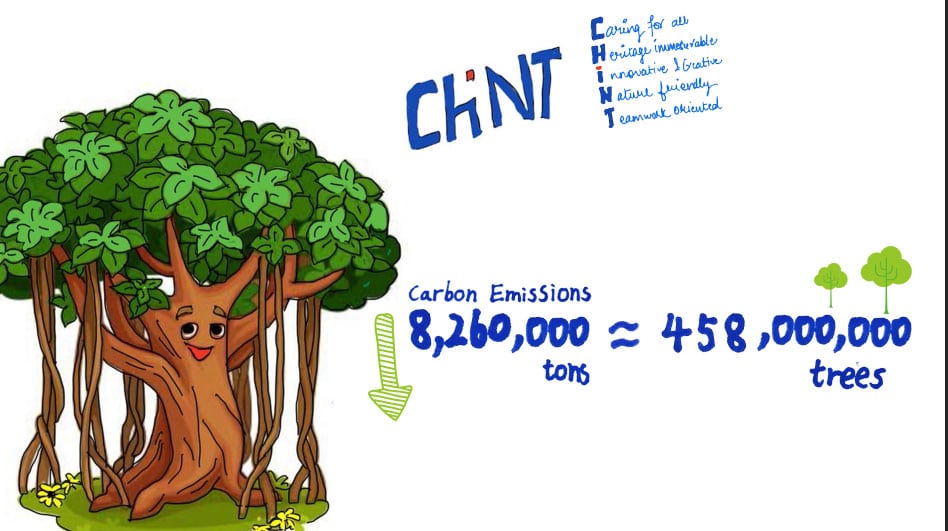
Its sub-brand, CHINT Anneng, is customer-centric and has been cultivating the household photovoltaic market, with footprints in more than 500 counties in 12 provinces and a cumulative installation scale of more than 500,000 households nationwide. It is expected to generate about 8.3 billion kWh of green electricity annually and reduce CO2 emissions by about 8.26 million tons, making a positive contribution to promoting carbon peaking and achieving carbon neutrality.
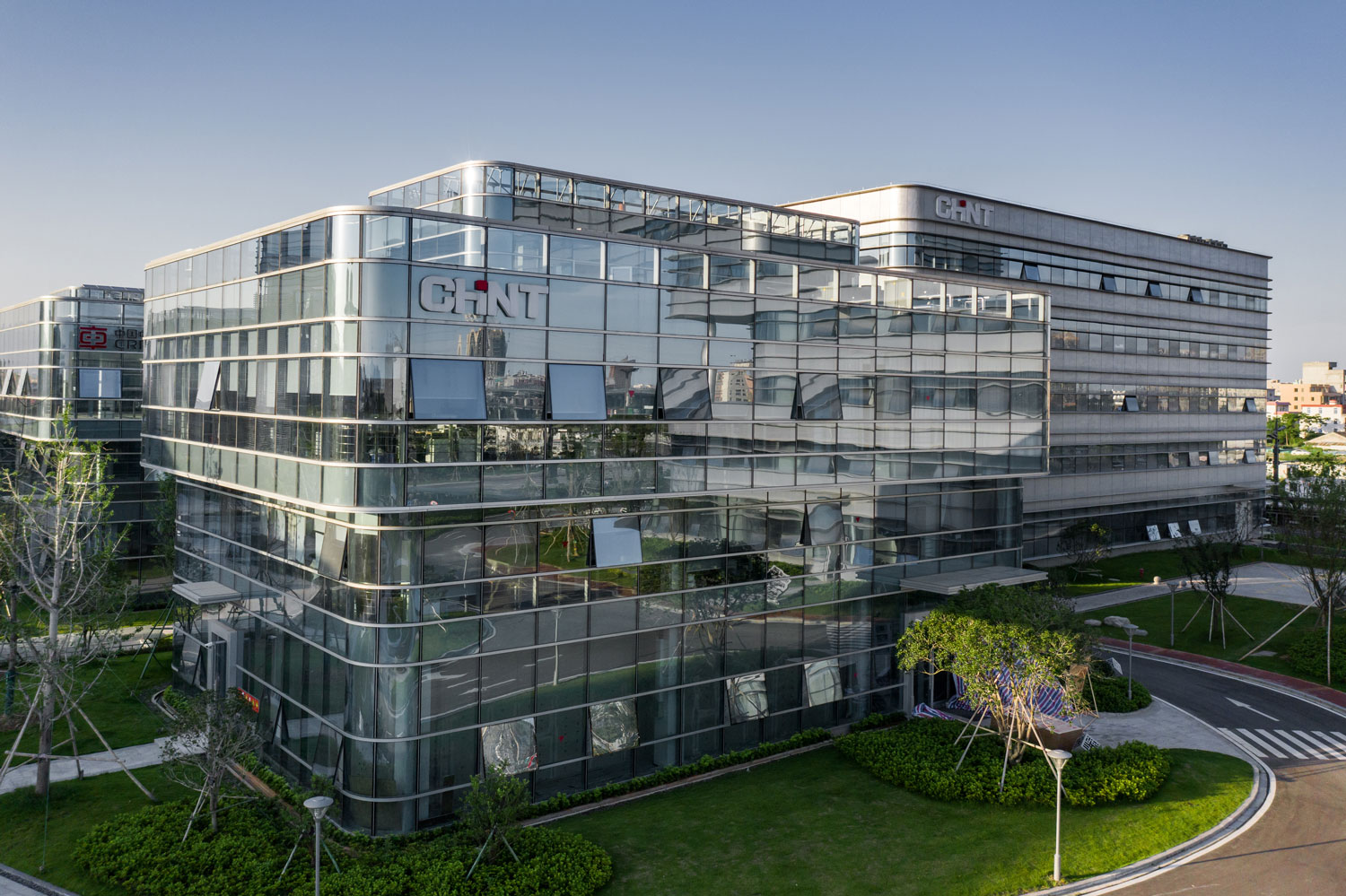
SDGs9: Industry, Innovation, and Infrastructure - CHINT Yueqing Intelligent IoT Sensing Industrial Park
CHINT IoT Sensing Industrial Park is located in the core area of Liu Bai New District, Yueqing City, Zhejiang Province. To strengthen the sensor industry ecosystem, the park has formed an industrial development pattern with IoT sensing technology application and industrial automation equipment manufacturing as the main body and related automation parts as the support, based on electrical intelligence and frontier technologies such as 5G and IoT.

CHINT (Yueqing) IoT Sensing Industrial Park
Solar panels have been installed on all rooftops in the park, which, together with photovoltaic carports, photovoltaic streetlights, and vertical wind turbines in the park, constitute a source of green electricity for the entire park, capable of generating nearly 40,000 kWh per month.
This green power is supplied to loads of the park, such as air conditioning, charging piles, and lighting, through the park’s power grid on a priority basis. At the same time, the energy storage room in the park will prioritize the storage of surplus power to guarantee the optimal supply of power.
In 2021, a carbon emission reduction of about 270,000 kgs has been achieved through the source network and load storage. In addition, after the completion of all the energy stations in the park, the annual savings in electricity costs for cooling will be 5 million yuan and the annual carbon emissions will be reduced by 8,000 tons.
SDGs12: Responsible Consumption and Production - Green Transformation, Energy Saving, and Emission Reduction
In the past few years, the company has continued to increase investment in environmental protection governance to ensure that the emission indicators of wastewater and waste gas are far better than the national emission standards.
In 2020, for example, the performance of industrial electricity consumption, coal combustion, energy-saving, and consumption reduction:
- In 2020, industrial consumption of electricity will be 54.63 million kWh, that is, more than 6,700 tons of standard coal, and energy consumption per unit of output value will reach 0.004142 kWh per yuan.
- In 2020, we will continue to promote the construction of energy management systems and platforms to achieve precise and transparent energy utilization. We will continue to carry out proposal improvement for 115 pieces and energy-saving renovation by 10 projects throughout the year and save 3 million kWh of electricity.
- Build and put into use self-built rooftop distributed solar power generation facilities in CHINT High-tech Industrial Park, Intelligent Industrial Control Park, and Coastal Distribution Industrial Park, and generate about 2.034 million kWh of electricity throughout the year.
- Vigorously develop photovoltaic green power generation business, and generate a total of 5.546 million MW of photovoltaic power in 2020, which is equivalent to reducing the use of coal by 1.819 million tons, reducing the emission of carbon dust by 1.5 million tons, carbon dioxide 5.53 million tons, sulfur dioxide 166,000 tons, and nitrogen oxides more than 80,000 tons.
In addition, CHINT has been actively exploring and practicing various carbon neutral solutions.
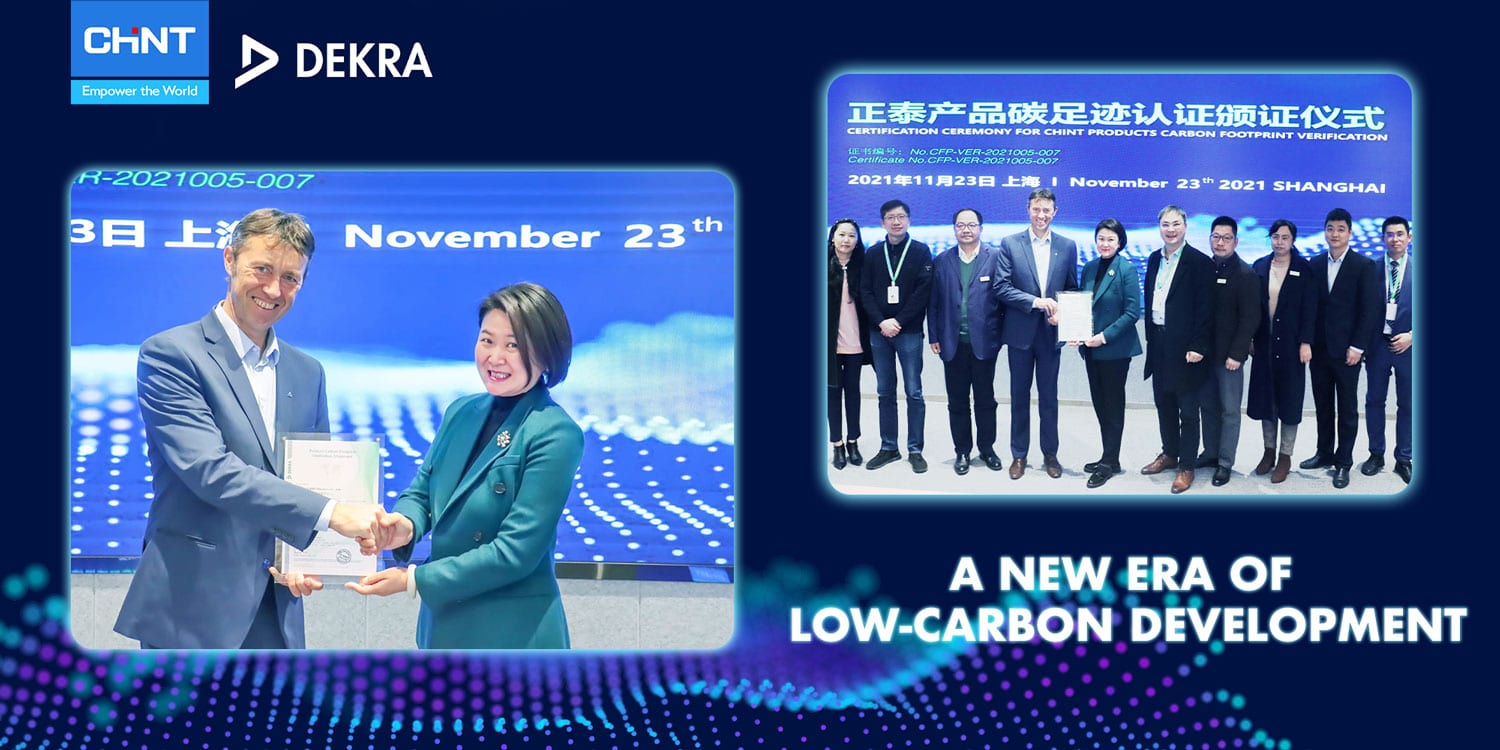
In October 2021, Astronergy and Vodafone reached 42,820 international green certificate transactions in Turkey; and in November, CHINT received DEKRA‘s first carbon footprint certification for low-voltage appliances in China.
CHINT Group is a world-renowned provider of smart energy solutions. Under the leadership of the development strategy of “One Cloud, Two Networks”, CHINT is helping to achieve the “Double Carbon” goal through “energy transformation”, strengthening its construction, and leading the development of the industry.
CHINT Group anchors on “carbon neutrality”, focuses on “green source, smart network, load reduction and new storage” carbon neutrality solutions, and builds a new power system with new energy as the main body.
References:
- Qiu, L. (2022). Energy Development Strategies and Policy Trends of Major Countries in the World (2022). Retrieved 14 April 2022, from: https://www.chinca.org/CICA/info/22041410364911z
- Zhang, S. (2022). Poland, the only country in the EU not currently committed to achieving carbon neutrality by 2050, will likely achieve that goal by 2056. Retrieved 7 September 2020, from https://km.twenergy.org.tw/Data/db_more?id=3788
- Climate Summit COP26: What are the big emitters like China, the US, India, Russia and the EU doing to reduce emissions?. (2022). Retrieved 1 November 2021, from https://www.bbc.com/zhongwen/simp/science-59119218