


Table of Contents |
Reactive power compensation technology is a crucial aspect of modern electrical systems. It helps maintain power quality and system efficiency. This technology manages the flow of reactive power in electrical networks. It reduces energy losses and improves voltage stability. The significance of this technology extends beyond technical benefits. It leads to cost savings, better equipment performance, and increased system reliability.
Reactive Power and Power Factor
 Reactive Power and Power Factor
Reactive power arises in AC systems due to inductive and capacitive loads causing a phase shift between voltage and current. It results from the phase difference between voltage and current. It does not contribute to real power transfer but is essential for maintaining the magnetic and electric fields in AC equipment. It oscillates between the source and the load instead. The power factor is a critical indicator of how efficiently electrical power is being utilized. It measures how effectively electrical power is being used. A low power factor indicates inefficient power usage. It leads to higher electricity bills and reduced system capacity.
Understanding these concepts is essential for power system optimization. Poor power factor causes increased current flow. This results in higher losses and voltage drops. Reactive power compensation helps address these issues. It improves system efficiency and reduces operating costs.
Principle of Reactive Power Compensation
Reactive power compensation systems function by providing or absorbing reactive power as needed. They inject capacitive or inductive reactive power into the system. This balances the reactive power demand of the loads. These compensating devices are typically installed in parallel with the load. They automatically adjust their output based on system requirements. This process improves the power factor. It also reduces current flow in the system. The overall result is better voltage regulation, high system efficiency, and reduced power losses.
Types and Implementation of Reactive Power Compensators
Several types of synchronous compensator devices serve different applications. Each has unique characteristics and benefits. The key types of compensators include:
1. Static Compensators
Static compensators use advanced power electronics for reactive power control. They offer instant response to system changes, ideal for fluctuating loads. These devices provide smooth, step-less compensation through sophisticated control. While offering excellent dynamic response, this type of compensator generally involves higher investment and maintenance requirements. Its superior performance makes it valuable for critical applications.
2. Capacitor Banks
Capacitor banks are traditional reactive power compensation devices. Capacitor banks offer cost-effective solutions for power factor improvement. These systems come in fixed or switched configurations for varying loads. The simple design of this compensator in power system ensures reliability and minimal maintenance. While lacking dynamic response, they excel in stable load applications and remain popular in industrial settings.
3. SVCs (Static VAR Compensation Systems)
SVCs combine static compensator and traditional method benefits. They provide rapid response and continuous regulation for optimal control. VAR compensation systems offer high reliability in demanding environments. They excel in large industrial applications needing precise control. Despite their higher cost, their advanced features and performance often justify the investment.
Applications of Reactive Power Compensation
Reactive power compensation finds use across various sectors. Each application requires specific compensation strategies.
1. Industrial Applications
The industrial sector depends heavily on reactive power compensation. Large motors, arc furnaces, and welding equipment create significant reactive power demands. These facilities use comprehensive compensator in power system solutions for power quality control.
2. Commercial Buildings
Commercial buildings face unique power factor challenges. HVAC systems, lighting, and office equipment create varying power demands. Modern synchronous compensator systems maintain stable power quality across these loads. This ensures smooth operation while reducing energy costs.
3. Power Distribution
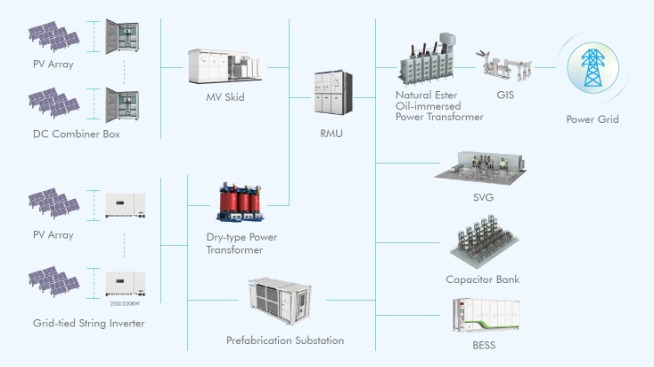
Power distribution networks rely on reactive power compensation. Substations use VAR compensation systems and other types for voltage stability and loss reduction. The technology helps manage increasing demands from renewable energy sources. This ensures grid stability and improved power quality throughout the network.
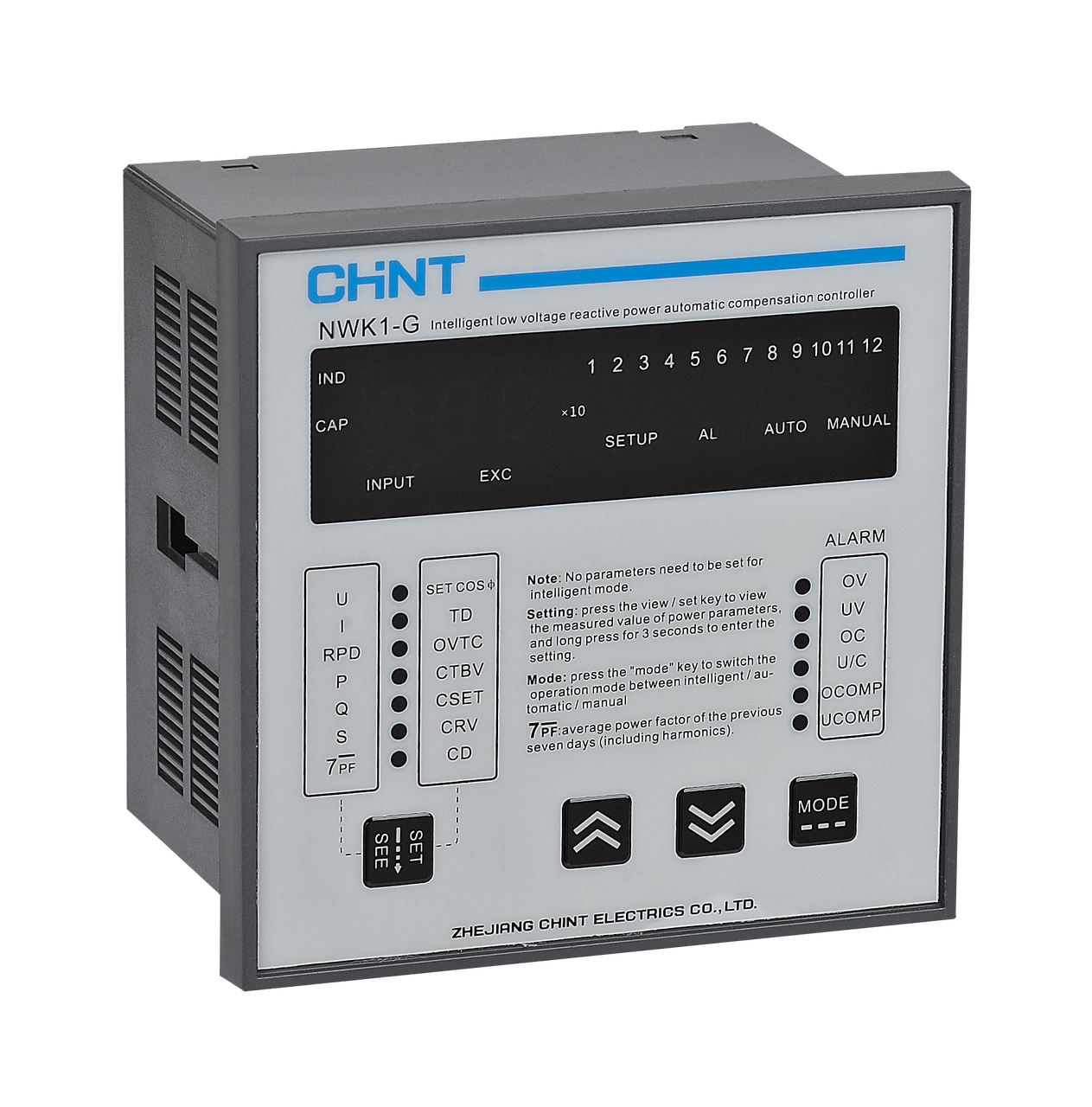
NWK1-GR: Reactive Power Compensation Solution by CHINT
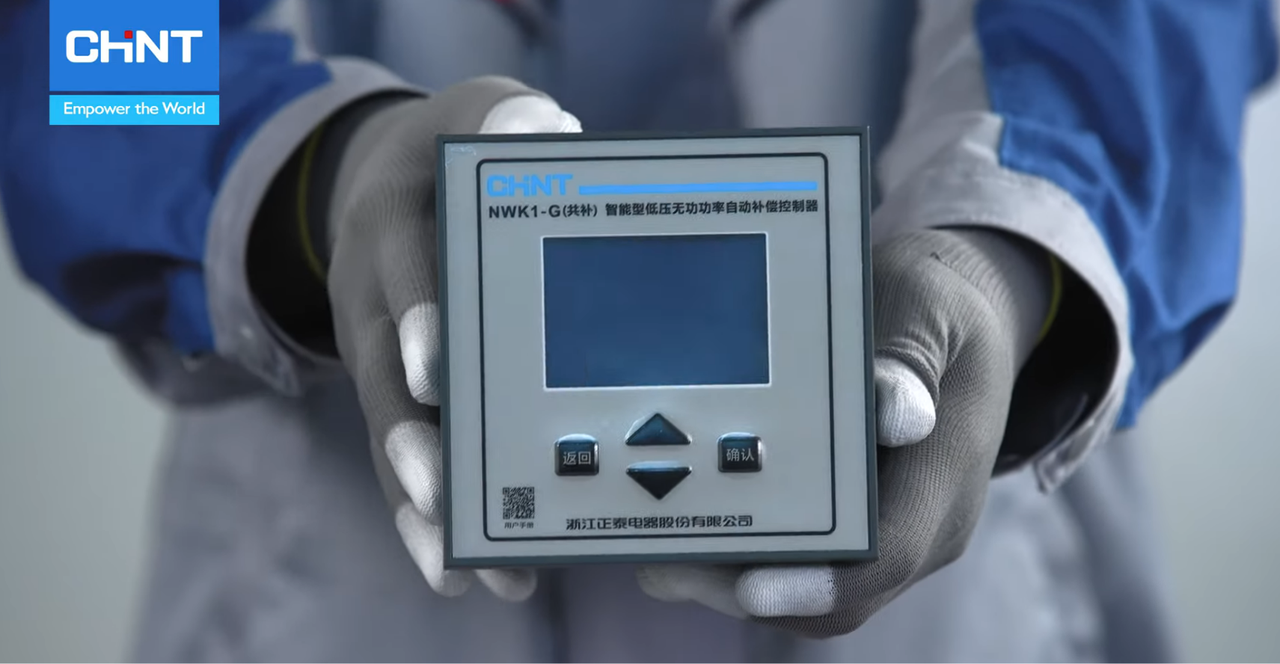
With decades of industry experience, CHINT is a recognized global leader in smart energy solutions. Our NWK1-GR series boasts advanced reactive power compensation technology. This controller offers comprehensive power quality management and reactive power compensation capabilities. Its top characteristics include:
- Large-scale LCD interface provides intuitive operation and clear visual feedback for easy monitoring and control
- Flexible voltage range compatibility enables worldwide deployment across different power systems and regions
- Advanced FFT analysis technology ensures precise compensation calculations even in complex power environments
- Versatile operation modes support both three-phase and single-phase systems for various application needs
- Comprehensive power quality monitoring system for real-time analysis and system optimization
- Enhanced measurement accuracy system specially designed for environments with high harmonic content
- User-friendly interface with multiple language support for improved operational accessibility worldwide
- Industrial-standard RS485 communication interface. It enables seamless integration with existing control systems
For detailed installation guide, please read How to Install NWK1-G Reactive Power Compensation Controller.
Conclusion
Reactive power compensation technology is vital for modern electrical systems. It offers significant benefits in efficiency, cost savings, and system reliability. The various compensation methods serve different applications effectively. At CHINT, we continue to innovate in this field. Our solutions, including the NWK1-GR series, demonstrate our commitment to excellence. Visit our website to explore our complete range of power solutions.