

Table of Contents |
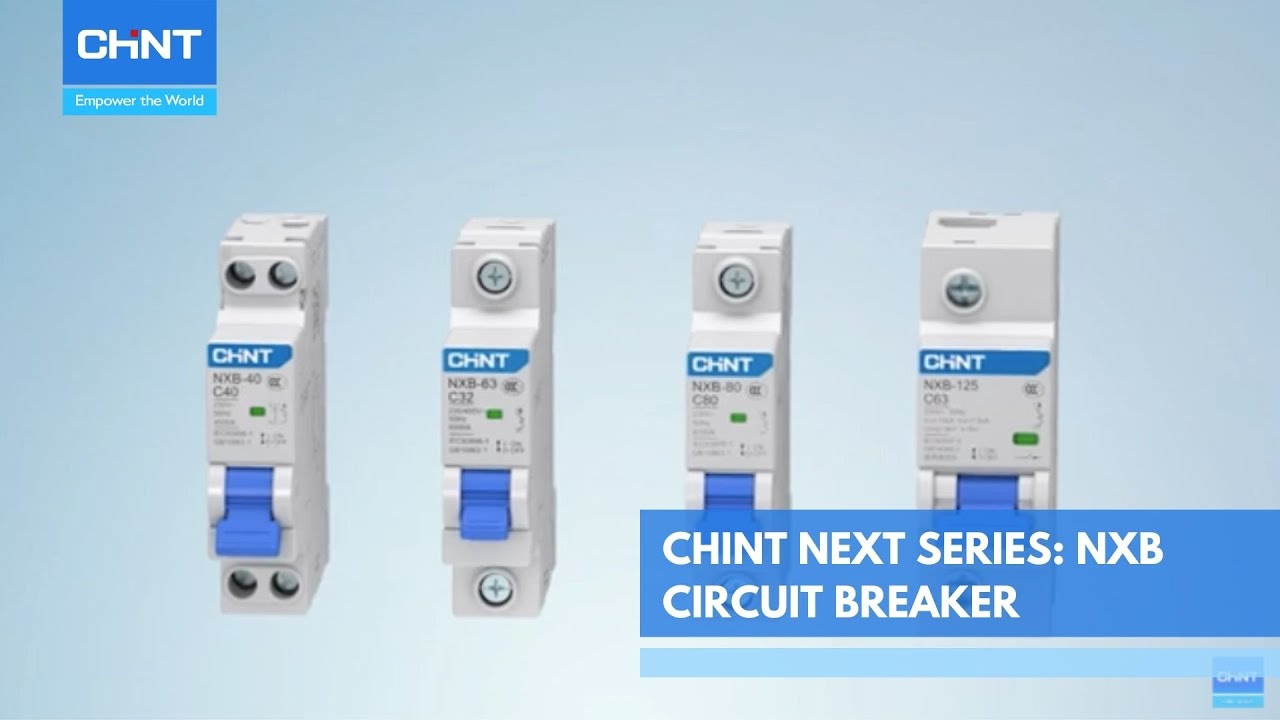
Every year, there are about 24,000 home electrical fires in the United States. That’s one for every 14,000 people, roughly. In a town of 50,000 people, there will be four electrical fires. Mini breakers protect the circuits and outlets to which they are attached, tripping when they detect a short or surge.
How Does a Miniature Circuit Breaker Work?
Inside the breaker, there is a metallic strip. If there is a surge in the current, the strip heats up from the flow of electrons. When it reaches a critical level, the strip bends, and breaks. That breakage releases a latch, and the current stops flowing.
In the case of a short circuit, the surge is both immediate and strong instead of gradual. There’s no real-time for the metallic strip to heat up. The short will displace part of the solenoid, and that part will depress the lever that releases the same latch.
What are Poles in Circuit Breakers?
Basically, the difference between the three kinds of breakers is in the current they can handle before tripping. A single-pole breaker can handle 120 volts and between 15 and 20 amperes. They have one metallic strip and one neutral wire.
A double-pole breaker can handle 240 volts and between 20 and 60 amperes. The two poles share a single neutral wire, and each has its own metallic strip. Three-pole breakers generally support the same amperage as double-pole breakers, but the voltage they can handle is up to about 500, making them good for commercial use.
Main Parameters of an MCB Breaker
These breakers all have similar characteristics and are rated at certain levels of voltage and current.
- Rated voltage: As stated above, the rated voltage indicates what kind of circuits for which the breaker will be useful.
- Rated current: This is the number of amperes the breaker can handle before tripping.
- Shell rating current: This is the amount of current that the breaker can handle in totality. If there are multiple short circuit breakers within the shell, then each will have a rating less than the shell. The smaller breakers cannot total more than the shell rating current.
- Rated breaking capacity and ultimate rating capacity: The rated capacity is assigned by the manufacturer and is based on the current and voltage for which the breaker is rated. The ultimate breaking capacity is the highest amount of current that the breaker can stand and still be operational after breaking three times.
- Tripping capacity of breakers: These appear on a curve that shows how quickly a circuit breaker will trip when subjected to certain sudden increases in current. Usually, the rating is for double-pole and three-pole breakers, and the starting point for the trip is from the cold state.
How to Select a Miniature Circuit Breaker?
The first things you need to consider are the current and voltage of the circuit. The breaker you choose must be rated at or more than the capacity of the line. Secondly, you need to consider the space into which the breaker will fit.
If you cannot find a breaker that qualifies that will fit into the available space, then you need to change the space to accommodate the breaker you need. You also must determine how many lines need protection. The number of lines must be the same as the number of poles on the breaker.
General Selection Rule
Aside from matching the circuits to the number of poles, you must ensure that the short-circuit breaking capacity is equal to or greater than the capacity of the line. Additionally, the setting current of the MCB must be less than 80% of the short-circuit current at the terminus.
A breaker with multiple poles must also be able to coordinate the breaking of one or more circuits contained within its shell. The breaker should also have an amperage rating that is higher than the device connected to the line and the maximum amperage rating of the line itself.
How to Select a Small Circuit Breaker for Conductor Protection
The load current must be more than the long-delay current. The amount of current that trips instantaneous action must be less than six to 20 times the load current, depending on the circuit.
How to Select a Small Circuit Breaker for Motor Protection
The long-delay current must be equivalent to the motor’s rated current that needs protection. The point of instantaneous reaction must be no more than eight to 15 times that of the motor’s rating for current.
How to Choose the Right MCB Breaker Current Rating?
When considering an MCB, there are six basic types: Z, K, D, C, B, and A. Z-rated breakers are the hardest to trip and require the surge to be almost 20 times the rated current of the line. Conversely, A-rated breakers will trip when the surge is only two or three times the rated current of the line. Normally, the first thing you should do is to check if the line is AC or DC. Check the safety protocols for the circuit in question too.
Determine the number of watts the breaker can withstand. Watts = amperage x voltage, or W = I x E. Figure out the demand factor, which is maximum demand load divided by the total connected load. For example, if a home has appliances that generate 10,000 watts when they’re all turned on, but the circuit has a demand maximum of 3,300 watts, then the demand factor is 33%.
The voltage rating of the breaker, or the shell that contains other breakers, will be the final determining factor when choosing a breaker. You certainly don’t want the breaker tripping too often or not enough. Too often will wind up being annoying, while not often enough might wind up being lethal.
Conclusion
At Chint Global, we’ll be able to advise you on the best breakers to use for the circuits you wish to protect. It’s crucial for the safety of your home or small business to have breakers that are not only correct but also up-to-code. Contact us at your earliest convenience, and let us help you.