

Table of Contents |
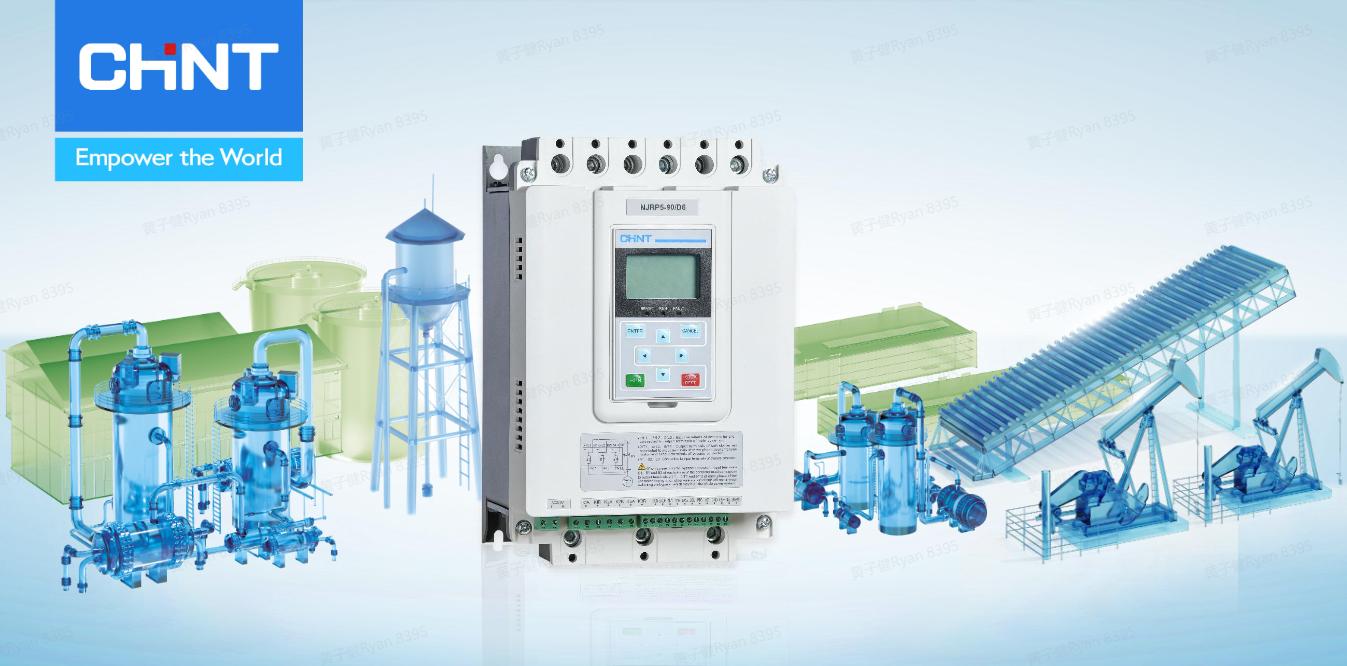
Starting a motor typically generates a high inrush current. It can place stress on the motor and lead to long-term damage. A soft starter is an electrical device designed to reduce this inrush current by gradually supplying controlled electrical power to the motor during startup. This is achieved using silicon-controlled rectifiers (SCRs). This article focuses on CHINT’s NJRP5-D Soft Starter and explores its functionality and advantages.
NJRP5-D Soft Starter: Features, Advantages, and Benefits
The NJRP5-D is an external bypass soft starter. It is designed based on power electronics technology, microprocessor technology, and modern control theory. The key features of this soft starter include:
Compatibility
The NJRP5-D soft starter supports a broad input voltage range of AC 200V~415V or AC 200V~690V. This ensures adaptability to varying power supply environments. Its frequency range of 35Hz~60Hz is also compatible with various national power grid frequencies.
Additionally, this AC soft starter supports RTU and ASCII data format and enables seamless integration with industrial automation systems. These features help simplify stock management for distributors and panel builders alike.
Diversity
This three-phase AC soft starter offers 7 starting modes to meet the needs of different loads. Its strong starting capability allows heavy-load motors to start smoothly. This helps reduce mechanical stress on gears, belts, and couplings. For transmission equipments, the NJRP5-D soft starter prevents abrupt torque spikes and ensures reliable operation in demanding conditions.
Bypass
The NJRP5-D’s external bypass design means the current is rerouted away from SCRs once the motor reaches full speed. This design is particularly advantageous in heavy-load or frequent-start scenarios, such as crushers or mixers, where mechanical jams or sudden current surges are common. By bypassing the soft starter during continuous operation, the starter largely reduces heat generation. This extends the lifespan of both the motor and the starter itself.

Applications of NJRP5-D Soft Starter
The NJRP5-D soft starter can be used in various industries and scenarios. These include:
- Metallurgy: The NJRP5-D is used for large fans and blowers to prevent sudden torque spikes during startup, which could damage bearings and windings in high-temperature environments.
- Petroleum: In oil pumps and compressors, this AC soft starter gradually ramps up speed to avoid water hammer effects in pipelines while reducing power grid disturbances.
- Mining: Crushers and conveyors benefit from controlled acceleration, preventing belt slippage and reducing mechanical shock that could damage heavy-load equipment.
- Water Supply: For sludge pumps, the soft starter eliminates pressure surges in pipe systems while protecting pump impellers from sudden jolts during frequent start-stop cycles.
- Municipal Administration: Water supply pumps use this bypass soft starter to maintain constant pressure in distribution networks while preventing electrical and mechanical stress during daily operations.
- Cement: Concrete mixers require smooth starting to avoid material segregation, while the soft starter’s torque control protects the gearbox from shock loads.
- Petrochemical: Mixing tanks utilize the NJRP5-D soft starter to ensure homogeneous blending from startup while protecting sensitive agitator mechanisms from abrupt torque changes.
- Pharmaceutical: Precise speed control maintains sterile mixing conditions while preventing fluid splash and protecting motor windings in critical batch processes.
Conclusion
Overall, CHINT’s NJRP5-D Soft Starter features high compatibility, diversity, and an external bypass design. It ensures smooth operation in mining, water supply, pharmaceuticals, and other heavy-load scenarios. It helps reduce equipment wear and extend lifespan. This soft starter is a versatile and reliable solution to enhance efficiency in demanding industrial environments. At CHINT, we provide a complete range of trusted electrical solutions. Browse our website to learn more about CHINT products.