

Introduction
Modular circuit breaker platforms are becoming the go-to solution for OEMs facing mounting engineering pressure. Shorter delivery windows, tighter budgets, and rising customization demands have exposed the limits of traditional breaker configurations. These older approaches often slow project timelines when specifications change mid-cycle. Modular systems offer a different path forward. They let engineers build predictable, scalable protection architectures from standardized components that work together across entire product families.
Why Modular Circuit Breakers Matter for Today’s OEMs
OEMs are gravitating toward modular circuit breaker systems as project complexity grows across machinery, panels, and distributed equipment. The engineer-to-order workflow common in industrial automation demands rapid response to customer specifications. Traditional approaches force engineers to select from hundreds of pre-configured breaker variants. This creates procurement delays and inventory management headaches.
Modular platforms change this dynamic by providing consistent building blocks. A core breaker frame accepts standardized accessories through uniform interfaces. Engineers select protection ratings, then add auxiliary contacts, releases, or motor operators based on application needs. The same design logic applies whether specifying a 125A frame or a 1600A unit.
This consistency reduces decision fatigue during the specification phase. Wiring patterns remain predictable across projects. Panel layouts transfer from one application to another without complete redesigns. When every breaker follows the same footprint and accessory logic, project timelines compress significantly.
How much faster would your project move if every breaker followed the same footprint and accessory logic? For OEMs competing on delivery speed, the answer determines market position.
Modularity Improves Design Flexibility Across Industrial Applications
Design flexibility stands as the primary advantage of modular breaker platforms. OEMs can reuse panel layouts, spacing assumptions, and accessory interfaces even when current ratings or fault requirements change between projects. A motor control center designed for one facility becomes a template for the next. Only the protection ratings and specific accessories need adjustment.
This flexibility supports high-variability manufacturing sectors particularly well. Machine tool builders, packaging equipment manufacturers, and process equipment OEMs face unique specifications on nearly every order. Modular platforms let these manufacturers maintain standard enclosure designs while accommodating electrical variations through component selection rather than structural changes.
Traditional circuit breakers lock engineers into fixed configurations. Changing from a basic breaker to one with remote trip capability might require a completely different unit with different mounting dimensions. Modular systems avoid this constraint. The base breaker remains identical. Accessories snap into place through standardized connection points.
Standardized interfaces reduce redesign cycles and integration time. Panel cutouts stay consistent. Wiring terminal positions match across the product family. Control logic developed for one configuration applies to others without modification.
Role of Modular Accessories in Reducing Engineering Complexity
Modular accessories form the heart of platform-based breaker design. Interchangeable auxiliary contacts provide status indication for building management systems. Shunt trips enable remote disconnection through fire alarm interfaces or emergency stop circuits. Alarm contacts signal fault conditions for maintenance tracking. Undervoltage releases protect equipment during power quality events.
Accessory uniformity reduces engineering revisions across projects. The same auxiliary contact module works with 125A frames through 630A frames. Spare-part inventory shrinks because fewer unique components cover more applications. Training demands decrease when technicians learn one accessory installation method that applies throughout the product range.
OEMs configure breakers quickly without redesigning control logic or mechanical interfaces. Adding remote monitoring capability to a standard breaker becomes a five-minute accessory installation rather than a specification change requiring new equipment orders.
How Modular Circuit Breakers Reduce Installation Time
Shared mounting patterns cut installation hours significantly. Panel builders drill identical cutouts regardless of the breaker rating selected. Consistent wiring terminals eliminate confusion during connection. Tool-free accessory installation means technicians add shunt releases or auxiliary contacts without special equipment.
Cable routing benefits from dimensional consistency. Wire lengths calculated for one panel configuration apply to similar panels using different breaker ratings. Commissioning tasks proceed faster when test procedures remain identical across the breaker family.
Manufacturing flow improves through standardization. Assembly technicians develop muscle memory for installation sequences that repeat across projects. Quality control checkpoints apply uniformly. Error rates drop as familiarity builds.
Modularity Improves ROI for Industrial Electrical Systems
Consistent breaker platforms reduce redesign time on every project. Engineering hours drop when specifications reuse proven configurations. Project delays decrease because component availability improves with standardized inventory.
Challenge |
Traditional Breakers |
Modular Breaker Platform |
Varying load requirements |
Requires ordering different pre-configured units for each rating |
Same frame accepts multiple ratings; swap trip units as needed |
Accessory changes |
Often requires replacing entire breaker unit |
Add or remove accessories without changing base breaker |
Lower spare-part diversity delivers ongoing savings. Facilities stock fewer unique items while maintaining coverage for most failure scenarios. Procurement teams negotiate better pricing on higher-volume standardized components.
The ROI benefits extend beyond capital expenditure advantages. Lifecycle efficiency gains accumulate through smoother upgrades, fewer wiring errors, faster troubleshooting, and predictable maintenance intervals. When breakers share common architectures, technicians transfer knowledge between systems without retraining.
Where Modular MCCB Design Fits in Industrial Environments
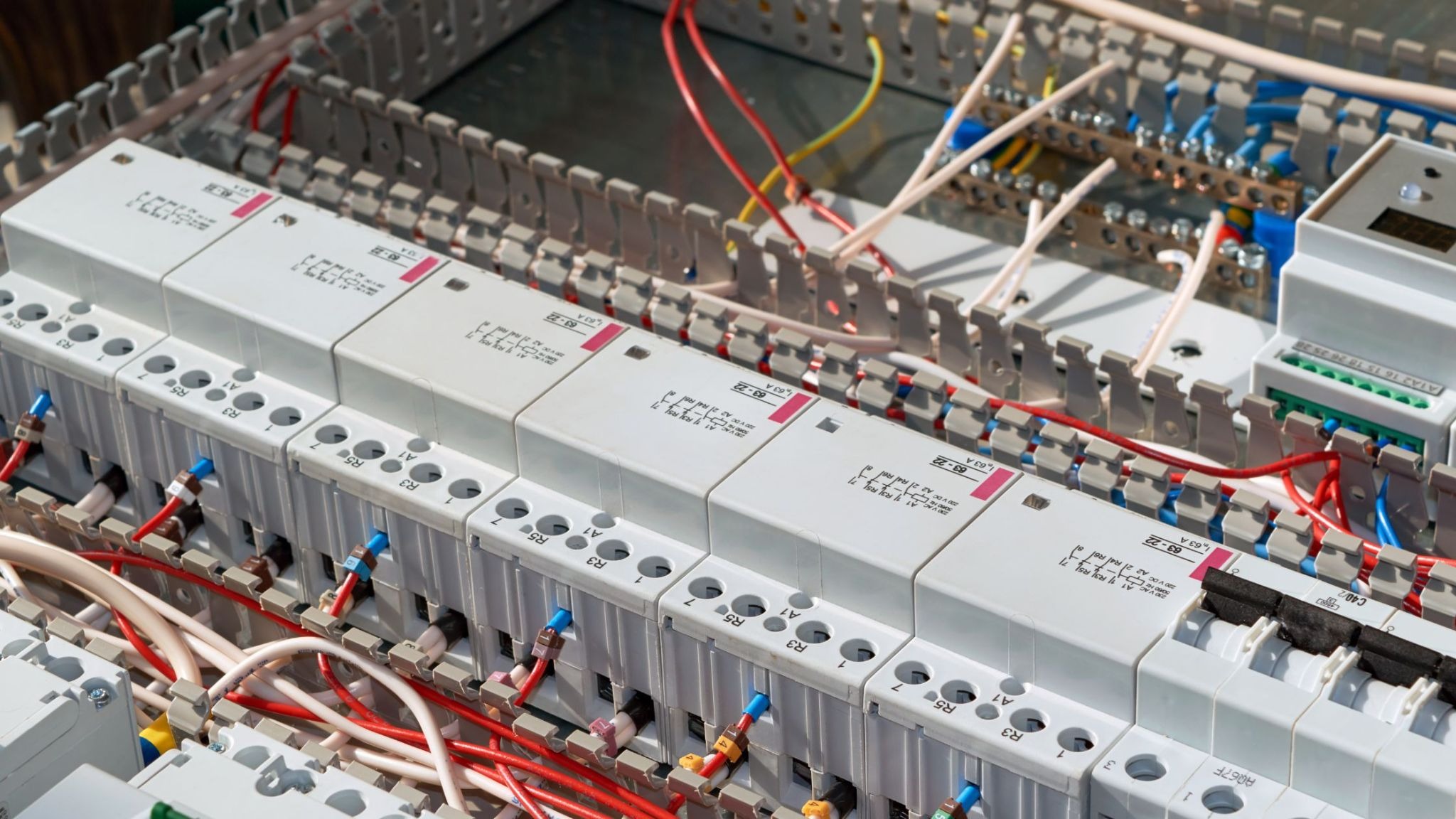
Modular MCCB platforms serve demanding industrial environments where reliability and serviceability matter most. Heavy-duty manufacturing sites rely on consistent protection across distribution boards and motor control centers. OEM-built machinery benefits from breaker families that accommodate various power requirements without custom engineering.
Motor control centers present ideal applications for modular MCCBs. These assemblies contain dozens of breaker positions serving different motor loads. Modular platforms let designers specify appropriate protection ratings while maintaining uniform physical dimensions and accessory interfaces throughout the assembly.
Distribution boards for manufacturing and logistics facilities face similar requirements. Feeder circuits, lighting panels, and equipment branches need different protection levels. Modular systems accommodate this variety without forcing unique panel designs for each application.
Mechanical, thermal, and operational demands in industrial settings require robust solutions. MCCBs protect loads, motors, and feeders against overcurrent and fault conditions. The low-voltage product families from manufacturers like CHINT demonstrate how scalable ratings, shared footprints, and consistent accessory interfaces address these industrial requirements through unified platform design.
Conclusion
Modularity gives OEMs a strategic advantage when facing tighter timelines and evolving design demands. Consistent breaker platforms reduce engineering complexity from specification through commissioning. They improve long-term electrical performance by simplifying maintenance and enabling systematic upgrades. Manufacturers like CHINT have adopted modular MCCB architectures specifically to support industrial environments where flexibility and reliability must coexist.