

Table of Contents |
In today’s modern world, there’s no lack of sensitive electrical equipment that we rely on throughout our day-to-day life. With costly electrical investments, it’s important to always have a residual current-operated circuit breaker (RCBO) for an added layer of protection.
What is a Residual Current Operated Circuit Breaker?
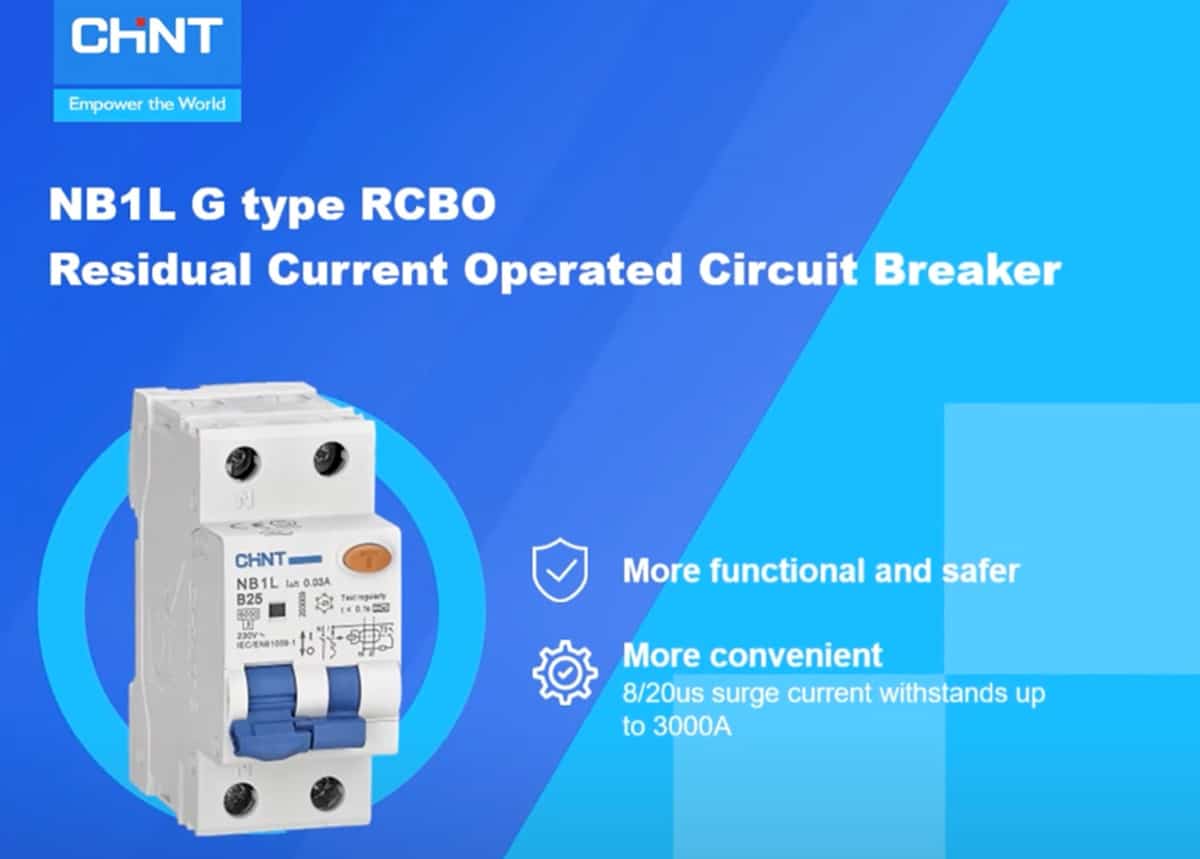
Residual current operated circuit breakers are devices that protect specific electrical circuits from overloading or short circuits that could lead to system damage or human harm. Essentially, RCBOs combine the basics of a residual current device (RCD) with miniature circuit breakers (MCBs) to create a high-functioning protection device.
The main job of this electrical device is to detect when anything is awry with your electrical system and automatically disconnect the power going to it. RCBOs will detect earth leakage, short circuits, and even overloading. Unlike their RCD counterparts, the RCBOs are able to provide higher tripping currents to better protect more sensitive electrical equipment.
The Functions and Mechanism of RCBOs
RCBOs are specifically designed to provide the ultimate protection for appliances, people, and electrical circuits alike. Each residual current circuit breaker will continuously detect both the line current and earth leakage current of any device or circuit it’s connected to.
It will determine whether the line current is overpowered or when there is too much earth leakage from the current. These measurements are the key to providing a safe electrical setup in all residential, commercial, and industrial settings.
Whenever the RCBO detects that the leakage current is above the predetermined threshold, it will automatically disconnect the power. This will protect human operators from harmful electrical shocks.
RCBOs also function to disconnect power whenever an excessive current is detected. This works to protect appliances and electrical equipment from overloading and short circuits. It also protects from prospective fire hazards caused by excessive heat created by the extreme current.
RCBO Applications
Residual current operated breakers are ideal for circuits where overload and short circuit protection are necessary. This works in residential, commercial, and industrial settings. RCBOs are an ideal and typically cheaper option for applications where both MCBs and RCBs are required. Additionally, they save on installation time compared to installing both MCBs and RCBs onto a particular circuit.
RCBOs are a great choice for sensitive appliances, industrial equipment, and electrical circuits. These residual current operated circuit breakers can be specifically programmed to lower predetermined earth leakage current and line current detection thresholds. This is perfect for applications where you need to have a minimal threshold to protect the integrity of costly equipment and appliances.
Various types of RCBOs can be installed depending on your specific application requirements. Currently, five different types of these devices can be installed, including S, AC, A, F, and B. Type S is specifically designed to incorporate a time delay into the circuit. Type AC is the most common residual current circuit breaker installed in residential homes and has no time delay.
Type A is applied when dealing with residential pulsating DC current up to 6mA. Type F is ideal for frequency-controlled appliances like dishwashers, air conditioners, and washing machines. Lastly, Type B is used for both single and three-phase equipment, including welders, escalators, lifts, inverters, and photovoltaic systems.
What Circuits Need RCBO Protection?
There are numerous applications where RCBO protection is extremely useful to implement, such as with commercial or even residential solar installations. Due to the exact nature of these protection devices, they can be used in various situations where overloading and short circuits may pose a potential risk for people, appliances, and circuits.
Overloading, known commonly as overcurrent, can occur in various instances. For example, you may use a power strip to plug in too many electrical devices. With all of these devices drawing an excessive amount of power together, it can transfer more power than the cable’s threshold.
This can lead to excessive overheating of the cable and a prospective fire. The presence of a residual operated circuit breaker will detect the excessive line current and disconnect the power before overheating and a fire happens.
Most short-circuiting will occur whenever there is earth or current leakage on a circuit. This happens when there’s an accidental breakage in the current. This breakage can occur for numerous reasons, including wiring errors or simple user mistakes like unintentionally cutting through a wire.
If no residual current operated circuit breaker is installed, the current will continue to leak and cause physical harm to the human operator via dangerous electrical shock.
Where are RCBOs Required?
RCBOs are a great choice for applications where quick disconnect time is mandatory on a circuit or appliance. Residual current operated circuit breakers are programmed to disconnect power from the circuit or appliance whenever the line current exceeds the predetermined threshold. This is typically a mandatory requirement for both industrial and commercial settings.
Also, RCBOs are ideal for both commercial and industrial use where individual circuits need to be controlled independently from other circuits. Businesses need to maintain operations whenever one circuit becomes faulty due to overloading or short-circuiting.
RCBOs are the ideal option for controlling the outage to one specific circuit while leaving the remaining circuits still running independently and smoothly.
Conclusion
RCBOs are a great option for numerous residential, commercial, and industrial projects where overload and short circuit protection are vital. CHINT currently offers high-quality residual current operated circuit breakers that can be specifically tailored to meet the needs of your next electrical project.
FAQ about Residual Current Operated Circuit Breaker
Why is RCBO essential in electrical systems?