

Table of Contents |
What Is Miniature Circuit Breaker?
A miniature circuit breaker is used in residential and commercial applications where only one phase of power is delivered (single-phase) to protect the wiring and equipment from damage caused by overcurrents. And a single-phase system is typically used for lighting or appliances in a home or business.
The term miniature circuit breaker refers to the size of this type of device. It is small enough to fit into a standard electrical panel, or in some cases, it can be installed as an individual component.
Miniature circuit breakers are also designed for short circuits, overloads, and ground faults on low voltage circuits up to 600 volts. Or automatically trip when they detect voltage or current levels that exceed safe limits.
And tripping occurs when the breaker opens an electrical circuit by breaking an internal link between two wires. This allows electricity to flow freely through the device and safely dissipate into the environment without causing damage.
How Does Miniature Circuit Breaker Work?
The two main types of miniature circuit breakers are thermal-magnetic and thermal-magnetic release (TMR). Thermal magnetic breakers use a bimetallic strip that heats up when current flows through it. The heating causes the strip to expand and trip a mechanism that opens the circuit.
On the other hand, the TMR mini breakers work similarly but use an electromagnetic coil instead of bimetal strips for tripping purposes. They’re intended to trip at higher currents than thermal breakers can tolerate. They also typically use air as their heat source, which is why they’re often called air-cooled circuit protectors (ACP).
When an ACB trips, it’s because there’s too much current flowing through it or the temperature has risen above acceptable limits. Therefore, these types of breakers are used in high-voltage systems with a high risk of fire or explosion.
What Are the Advantages of Miniature Circuit Breaker?
Some advantages of a mini circuit breaker are that it is safe, reliable, and easy to use. It also has a long life span and is resistant to overloads and short circuits. However, the following list outlines some of the main advantages of miniature circuit breaker:
MCB has lots of model options
MCBs come in different types and can be used for various purposes. The most common type is the general-purpose MCB, used in lighting applications and appliances such as fans, compressors, and pumps. Other types include motor-circuit protection, overload protection, and earth leakage protection (ELC).
MCB is quick
MCB can be mounted on a DIN rail or screwed directly to a panel. It’s also available in different sizes and shapes for easy integration into existing systems and installations.
MCB is always ready
A miniature circuit breaker can be installed immediately after setting up the other electrical components, so it doesn’t require any modification.
MCB is universal and compact
MCBs are available in several configurations, including single-pole, double-pole, and multi-pole versions with both low voltage (LV) and high voltage (HV) ratings. These products can be used in many applications such as heating, ventilation, air conditioning systems, etc.
How to Install a Miniature Circuit Breaker?
When installing a miniature circuit breaker, you should make sure that you have enough room in the electrical panel to install the new breaker. There should be at least six inches of space between each breaker, and no other breakers should be connected next to it.
You can install your new miniature circuit breaker by following these steps:
- Ensure all your equipment is turned off before doing any work on your electrical system. This includes any lights, appliances, or other electrical items in your home or business.
- Open up your electrical panel box and find an empty slot to install your new miniature circuit breaker. If no empty spaces are available, consider adding additional panels to accommodate more breakers or replacing some older breakers with newer ones that are more efficient and use less energy.
- Remove the large screw holding down the current breaker and remove it from its slot. Then take out the old circuit breaker wires one at a time by pulling them out through their small holes in the side of the panel box. Take note of which wire goes where on each terminal before removing them from their sockets so that when you install new wires onto new miniature circuit breakers, you’ll know which wire goes where on each terminal.
- Strip off about 3/8″ of insulation from each end of each wire before attaching it to its new corresponding terminal. Make sure you don’t strip off too much insulation because you’ll need enough left on each wire to secure it tightly onto its designated terminal.
- Attach each wire to its selected terminal by pushing each wire firmly into place until it clicks into place. Then tighten each screw securely with your screwdriver so there is no chance for movement under normal conditions or during an electrical surge or power outage.
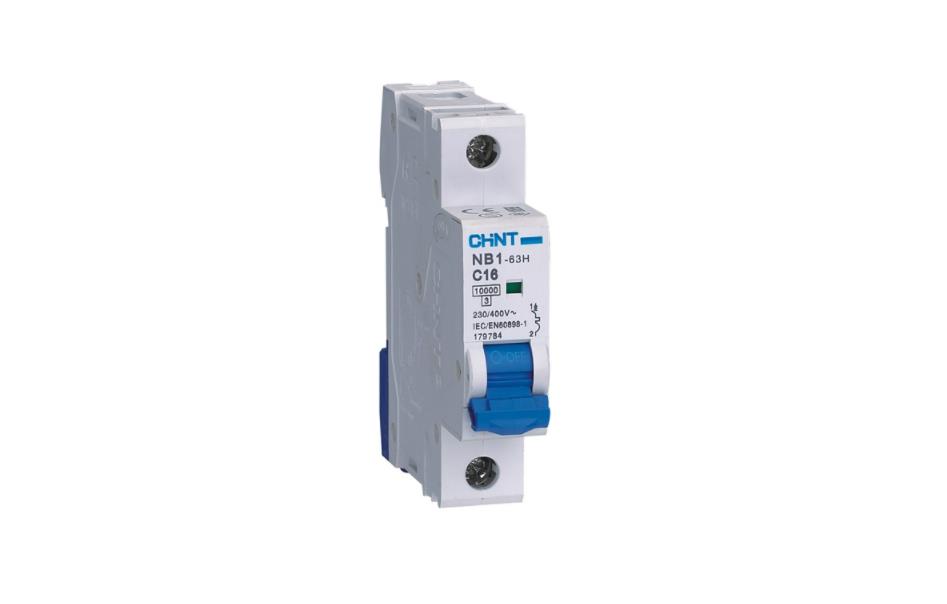
CHINT Miniature Circuit Breaker
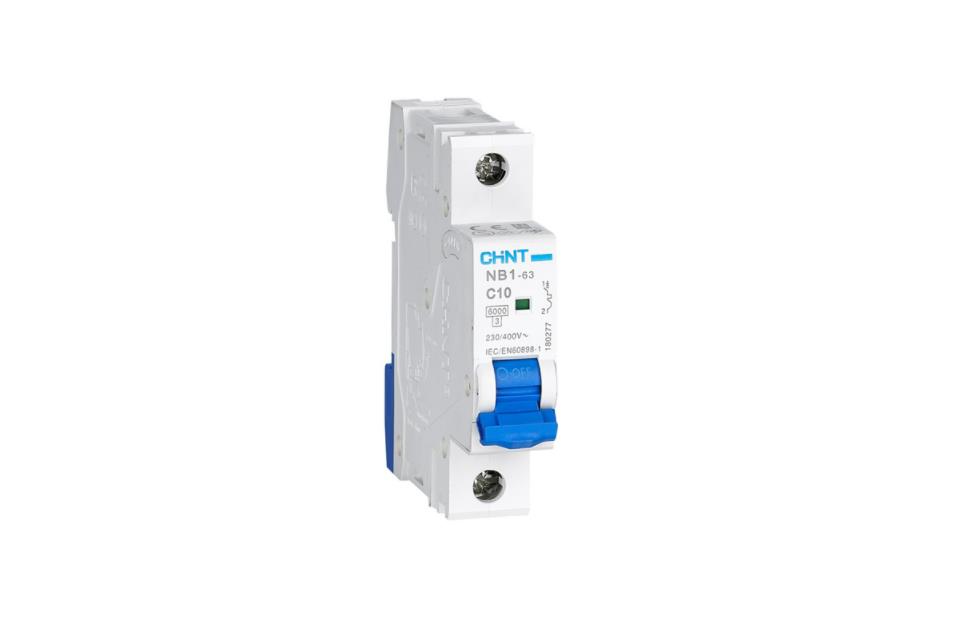
NB1-63 Miniature Circuit Breaker
The NB1-63 Miniature Circuit Breaker is a single-pole, double-throw device used to disconnect the power from a circuit. It is commonly used in low voltage applications to protect against overloads and short circuits. The NB1-63 Miniature Circuit Breaker has a fixed current rating of 63 amps and a voltage rating of 125/250 volts AC/DC. The NB1-63 Miniature Circuit Breaker also features a trip setting range of 0.5 to 63 amps.
NB1-63H Miniature Circuit Breaker
This is an adjustable version of the NB1-63 Miniature Circuit Breaker. It features a flexible trip setting range between 0.5 and 63 amps with a maximum operating voltage of 125/250 volts AC/DC.
Conclusion
Overall, a miniature circuit breaker is a device that interrupts an electric current. It works by detecting overcurrent in the electrical system and breaking the connection to prevent damage to the equipment or fire. It also has many advantages compared with traditional fuses, such as higher breaking capacity, easier installation and maintenance, longer life, etc.
So, if you are looking for a reliable and durable miniature circuit breaker, CHINT offers a full range of MCBs for various applications. For questions and inquiries, please get in touch with us today. We would be happy to help you find the perfect product that can meet your needs.