

Table of Contents |
Electricity is one of the greatest innovations ever made. And though there was a time that humans lived without this commodity, it is hardly possible to imagine how the world would operate today without this precious commodity.
The production of electricity is generated in power stations that are far away from the load. That is why there are extensive conductors that are set between power stations and the needed consumers. Due to this fact, power loss in transmission lines is a common issue. The article will address power loss and how to reduce it.
What Causes Power Loss in Transmission Lines?
Since there is an extensive network used when electricity is being transmitted, this created power losses. One of the main causes of power loss is the Joule effect found in transformers and power lines. The energy is lost in the form of heat in the conductors.
The transmission has conductors whose main purpose is to resist the flow of current. The resistance per kilometer is small, but that along the transmission lines can have a huge impact. Thus, this leads to the heat being produced in the conductor and an increase in temperature in the conductor. In turn, there is a rise in the conductor temperature, which increases the conductor’s resistance, which causes the transmission line losses.

How Much Power Loss in Transmission Lines?
One of the common questions most people have is how much energy is lost when electricity gets into your home?’ However, to answer this question, you will need to break it into a step-by-step guide so that you can understand how electricity made gets into your residence.
The making of electricity
It is important to note that different elements can run different power plants. For example, power plants run on natural gas, coal, petroleum, and other nuclear. However, it does not matter what raw material produces energy; all these plants run under the same principle.
Energy-dense stuff can be burned to release heat. The heat then boils water into steam, causing the turbine to spin, and that is used to help in generating electricity. Though this is one of the most effective ways of producing electricity, the only ⅔ of the energy produced turns into electricity. The other energy is lost due to the thermodynamic limits in the process.
Transmission and distribution
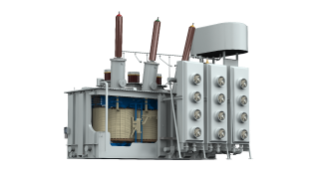
Since most of the power plants are far from residential dwellings, there needs to be a strategic way to distribute power. The first step of transmission involved the use of high-voltage lines that transmit the electricity long distance. The reason that high voltage is used is that it helps in keeping the power losses low. The distribution of power then gets to the transformers.
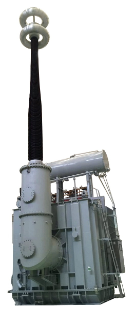
The transformers get power that can be 120 volts or more, making it safe for it to get into your home without causing electrocution. However, during the distribution stage, there are power losses in transmission lines that take place.
Different power is lost at different stages
- 1-2% of energy is lost during the step-up transformer from when the electricity is generated to when it is transmitted.
- 2-4% of energy is lost in the transmission lines
- 1-2% of energy is lost during the step-down of the transform from the transmission line to distribution.
- 4-6% of energy is lost during the distribution
So, the average loss of power between the power plant and consumers ranges between 8-15%.
How to Reduce Power Loss in Transmission Lines
Given the high loss of energy, it is best to find out what you can use to help in reducing the energy loss. First, however, you need to understand that the amount of energy loss obtained depends on the energy being transmitted in the electric lines. So, if there is high energy in the system, the energy loss also becomes high.
When high currents are used to induce more heat on the electrical conductors,this leads to there being a significant loss of energy as heat. That is mainly when the power is transmitted through a distant place from the energy plant. Thus, to reduce and prevent the loss of energy, the current needs to be high, and the current small depending on the wattage required.
The other way that you can use to prevent the loss of energy is by using the chain insulators to reduce the possibility of discharge between the conductor and the support structure. The reason is that when the two meet, there is going to be energy loss. What you need to note is that the insulator chains can be 2 m in length.
But the best way for you to manage the electric loss is by learning how to calculate power loss. The formula used to calculate the power is where current (I) flows through an element in your circuit, losing voltage (V) in the process. Then the power (P) is dissipated by the current element.
What Is the Formula Used to Find the Line Loss?
P= I x V
Transmission line loss calculation steps
- Start by recording the amount of power needed in the destination. You can get the amount by using the formula P= I x V. This question will give you at least ⅔ of the energy needed.
- Determine the overall resistance of your circuit. Resistance (R) = Length of the wave (L) divided by the area of the cross-section (A). R= L/A.
- Calculate the square of your electrical current, and then multiply it by your resistance.
- Plug the values as calculated and use it to present your loss in decimal value. Then you multiply it by 100 to get the percentage of the power lost.
Using this power loss formula, you can easily determine the amount of power lost.
Conclusion
Are you concerned about energy loss, or are you looking for a way to reduce the energy loss? If that is the case, then you should work with a reliable energy company like CHINT. Our company understands that energy loss causes a strain on the environment and works to minimize energy loss.
If you have any questions or need further assistance, don't hesitate to reach out to us.