

Introduction

An imbalance in the circuit’s electric current can cause electric hazards such as electrocution or fires. RCCB tripping is a measure that mitigates such unfortunate instances by promptly interrupting and disconnecting the current flow in the circuit.
But sometimes, RCCB may trip without any genuine safety concern. This is known as “nuisance tripping,” which can halt industrial production processes and induce damages to the facility’s machineries and equipment.
This article helps you understand genuine and spurious causes of RCCB tripping that will help you maintain a safe and efficient electrical system in your residential or industrial property.
Why Do RCCBs Trip?
A Residual Current Circuit Breaker (RCCB) trips when it detects an “imbalance” in the circuit’s current flow. In this context, “imbalance” pertains to a situation in which the electrical current flowing through the live wire is not equal to the current returning through the circuit’s neutral wire.
What causes this “imbalance” in the first place?
Earth leakage is one of the common causes of current flow discrepancy. Here, the wiring’s insulation degrades because of age, heat, or mechanical wear. As the insulation breaks down, it eventually becomes incapable of supporting the electric current within the circuit’s conductor. This phenomenon creates unintentional pathways for current to escape. The current may flow to other metal surfaces or directly to the ground (hence the name “Earth leakage”).
Another typical culprit is moisture ingress in the sockets or appliances. This creates unintended current paths that result in current flow imbalance. Similarly, faulty or old electrical devices may also leak currents beyond the intended path, which also prompts the RCCB to trip.
There are also “transient surges” that may force an RCCB tripping. For instance, if lightning strikes an electrical infrastructure or nearby ground, it can induce a massive surge of electrical energy. When no “surge protector” is in place, the sudden increase in voltage can create an imbalance between the live and neutral wires, which leads the RCCB to trip.
Note that when RCCB trips, it is a protective action that prevents any potential electrical hazard. A trip does not mean a fault in the RCCB device in itself.
Common Causes of Nuisance Tripping of RCCBs
When RCCB trips without any real current leakage, we call it a “nuisance tripping”. A single nuisance tripping of the RCCB will not cause any significant damage to the equipment or machine. But frequent nuisance tripping can gradually stress the equipment and hasten its wear and tear. In some cases, a nuisance tripping may interrupt normal operations and cause production delays and inefficiencies.
Common culprits of nuisance tripping are as follows:
Harmonic distortion from electronic loads
This happens when the non-linear loads draw current in a non-sinusoidal manner that creates harmonics in the electrical system. Harmonics often increase flow in both the live and neutral wires.
This typically occurs in commercial buildings with many electronic devices (e.g., computers, TVs, LED lights). The cumulative effect of harmonics can cause the RCCB to trip even when all equipment is functioning normally.
High-frequency Currents and Transient Disturbances
High-frequency currents emerge when you are switching operations or when there is electromagnetic interference. Some transient disturbances can also result in high-frequency currents.
Say you activate a large motor. As it generates a surge of high-frequency current, the RCCB “trips” as it detects an increased (and imbalanced) current flow in the circuit, even if there is no actual fault or leakage.
Cumulative Leakage from Multiple Small Loads
Sometimes, small appliances (like phone chargers, lamps, or kitchen gadgets) have minor current leakages due to aging insulation or internal faults. A small leakage from a single device is not often a cause of concern. But when these small leakages accumulate in the same circuit, the current flow may exceed the RCCB’s threshold and force it to trip.
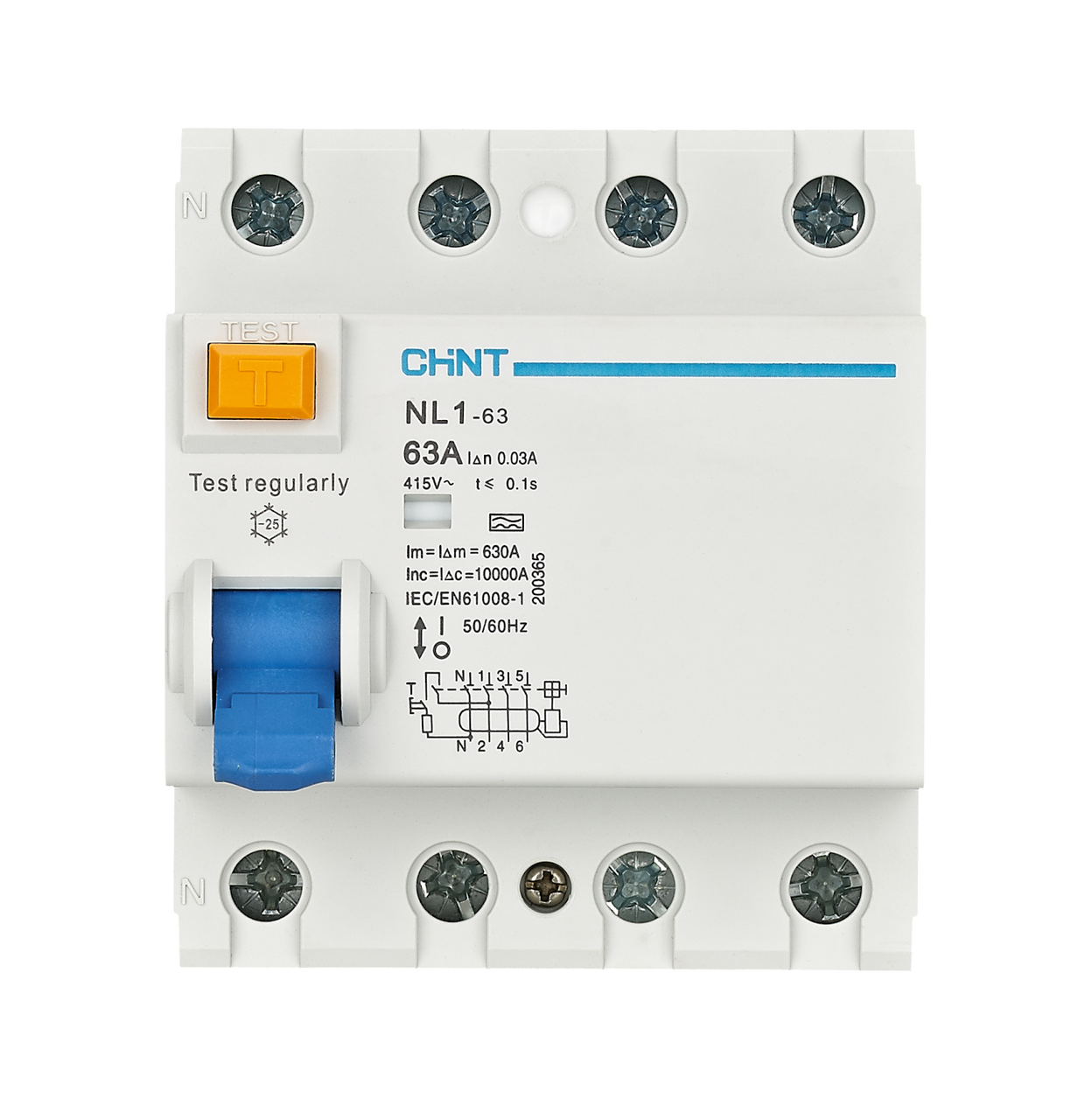
To safeguard your equipment and machinery from nuisance tripping, you must invest in a top-quality RCCB that can filter spurious trippings. CHINT NL1 RCCB can protect installations against fire hazards due to installation faults and protect people from direct and indirect electrical contact. This product features G/SI types designed to resist surges and harmonics to minimize nuisance trippings. And for ultimate convenience, CHINT NL1 RCCB can be connected with cable, Pin type, U-type busbars, for easy installation and access.
Electrical Fault Diagnosis with RCCBs
It requires a systematic approach to determine if an RCCB trip is real or a nuisance. Here is our recommended approach to determine if the trip is due to a genuine electrical fault.
Step 1: Visual check
Inspect for any signs of physical wear or fraying in the wires or cables. An exposed conductor is a strong indicator of potential earth leakage. You may also check for moisture, especially if the wiring is located in a “wet” area (e.g., kitchen or bathroom). Any sign of dampness may hint at potential water ingress that can create unintended current paths.
Note that the absence of a visible sign does not automatically mean that it is a nuisance tripping. Proceed to the succeeding steps to determine the actual culprit.
Step 2: One-by-one isolation of circuits and appliances
Turn on each circuit or appliance one by one. Then, monitor the RCCB for any trips after each activation. This helps identify the specific circuit or appliance that is causing the tripping issue. Once you spot the circuit that trips the RCCB, record it and specify in what condition the breaker trips.
Step 3: Use Testing Instruments
You may use a megger, an insulation resistance tester, to check the insulation resistance of wiring and appliances. A low resistance reading may indicate insulation failure, which suggests earth leakage or potential short circuit.
Upon performing the steps above, but tripping persists, then the RCCB suffers from nuisance trippings. Consult a professional electrician for a thorough diagnostic and inspection that will determine the trippings’ root cause.
Best Practices to Prevent Nuisance Tripping
There are various measures that will minimize the occurrence of RCCB nuisance tripping. For instance, choosing the correct RCCB type based on the circuit you have is extremely helpful. For sinusoidal alternating circuit current, you must work with type AC. And for circuits designed with both AC and pulsating DC (e.g., computer systems), a type A is recommended.
It is also recommended to distribute loads in a system to multiple RCCBs, instead of connecting them to a single one. You may segregate high-load or sensitive devices onto dedicated RCCBs to minimize the risk of nuisance tripping affecting the entire system.
A surge protective device (SPD) can also prevent nuisance tripping. You can install SPDs in areas prone to lightning or electrical surges to protect against transient overvoltage. However, SPDs must be checked and maintained regularly to ensure they function effectively during surge events.
Achieve Reliable and Effective RCCB Tripping For Your Property
Delineating genuine RCCB trippings from the nuisance ones enables you to pinpoint actual electrical faults, such as earth leakage or equipment failure, which pose risks of electric shock or fire. Prompt intervention for these faults is made possible upon recognition of genuine tripping.
Throughout its 40-year history, CHINT offers smart, innovative, and reliable technologies focused on promoting high-performing and safe industrial operations. We offer RCCB solutions that can reliably interrupt current flow during electrical faults. Engineered to resist spurious trippings due to harmonics or surges, CHINT RCCBs ensure low-frequency nuisance tripping to maintain the integrity of your circuits and machinery.