

Introduction
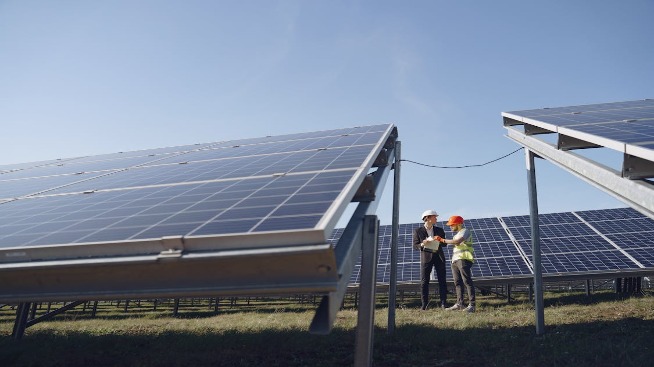
According to Solar and Storage Industry Research Data, solar accounted for 54% of new U.S. generation capacity in 2025, while PV and storage together made up 79%. If your goal is to maximise solar output, electrical architecture deserves the same scrutiny as generation capacity. Smart switchgear for solar PV systems helps determine whether a solar asset reaches its expected yield after commissioning. Modules and inverters matter, but combiner boxes, disconnects, SPDs, MCCBs, cabling, and monitoring decide how faults are isolated, how much loss builds up, and how quickly your team can restore output.
How Switchgear And Protection Devices Affect Solar Yield
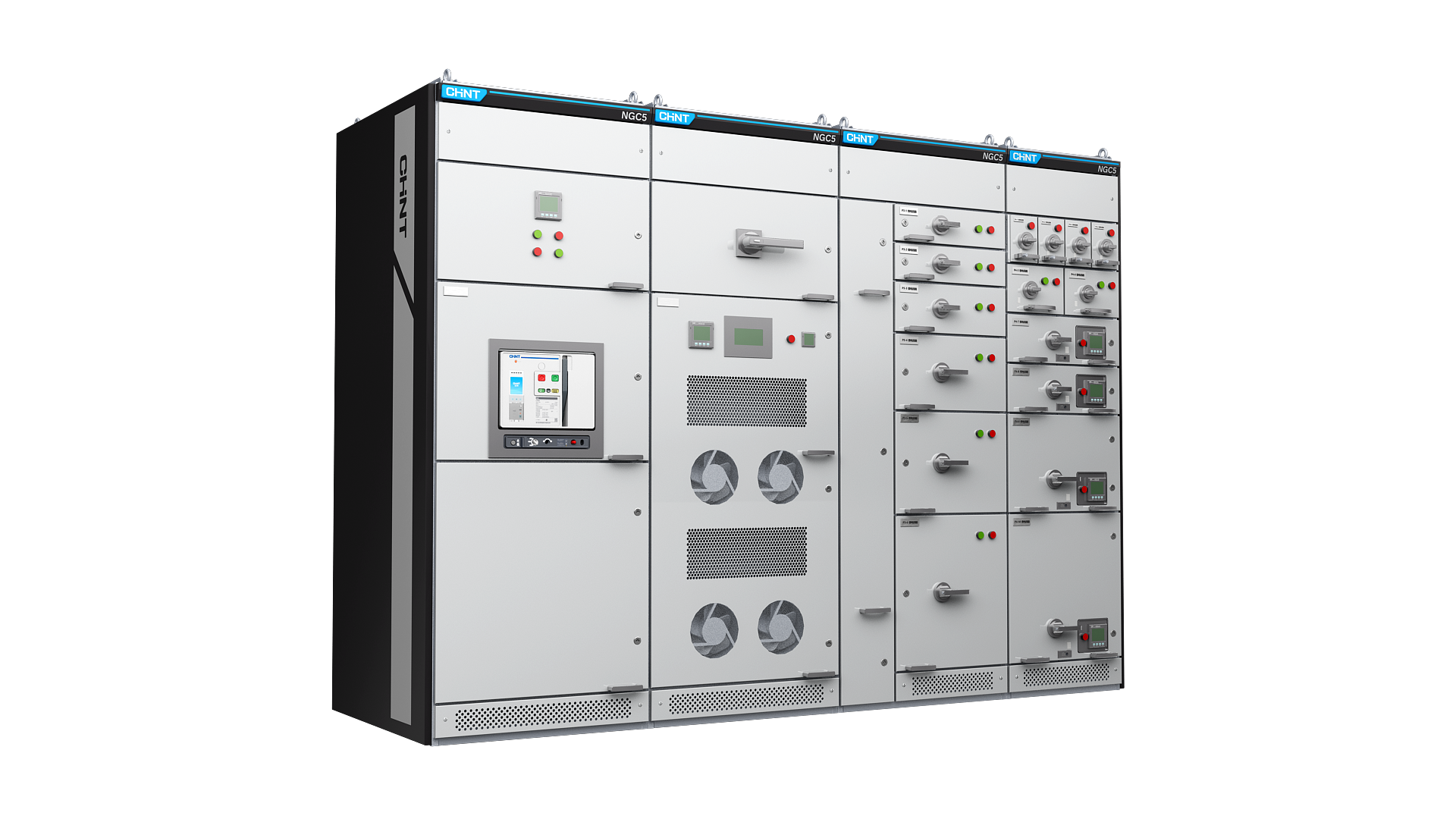
Most solar performance discussions focus on module degradation, inverter efficiency, irradiance, soiling, and shading. Those factors matter, but switchgear and protection choices influence yield in quieter ways.
Every connector, fuse holder, disconnect switch, terminal, and breaker introduces resistance. At solar operating current, small resistance increases become I²R losses that repeat across every generation hour. Poorly specified or poorly maintained DC disconnects can also develop higher contact temperature, which may show up first in thermographic inspection before it becomes an outage.
Fault response also affects production. A string fault should not pull down a whole inverter block for longer than needed. Good protection design isolates the affected string, feeder, or inverter input so the rest of the array keeps generating. That is where solar system switchgear optimisation becomes a performance task, not only a safety task.
Monitoring-capable protection devices support faster troubleshooting. When string-level current, breaker status, SPD condition, and fault alarms feed the inverter platform or SCADA system, operators can find the problem area without walking every row.
For large projects, smart switchgear for solar PV systems also supports O&M planning. Hot terminals, repeated fuse operations, SPD end-of-life alarms, and unexpected current imbalance all point to yield risks. So, it’s important for a utility PV solution to cover utility-scale PV and ESS systems from whole systems to single products, including low-voltage switchgear, transformers, prefabricated substations, SKID, and LV components.
Why Combiner Box Specification Matters
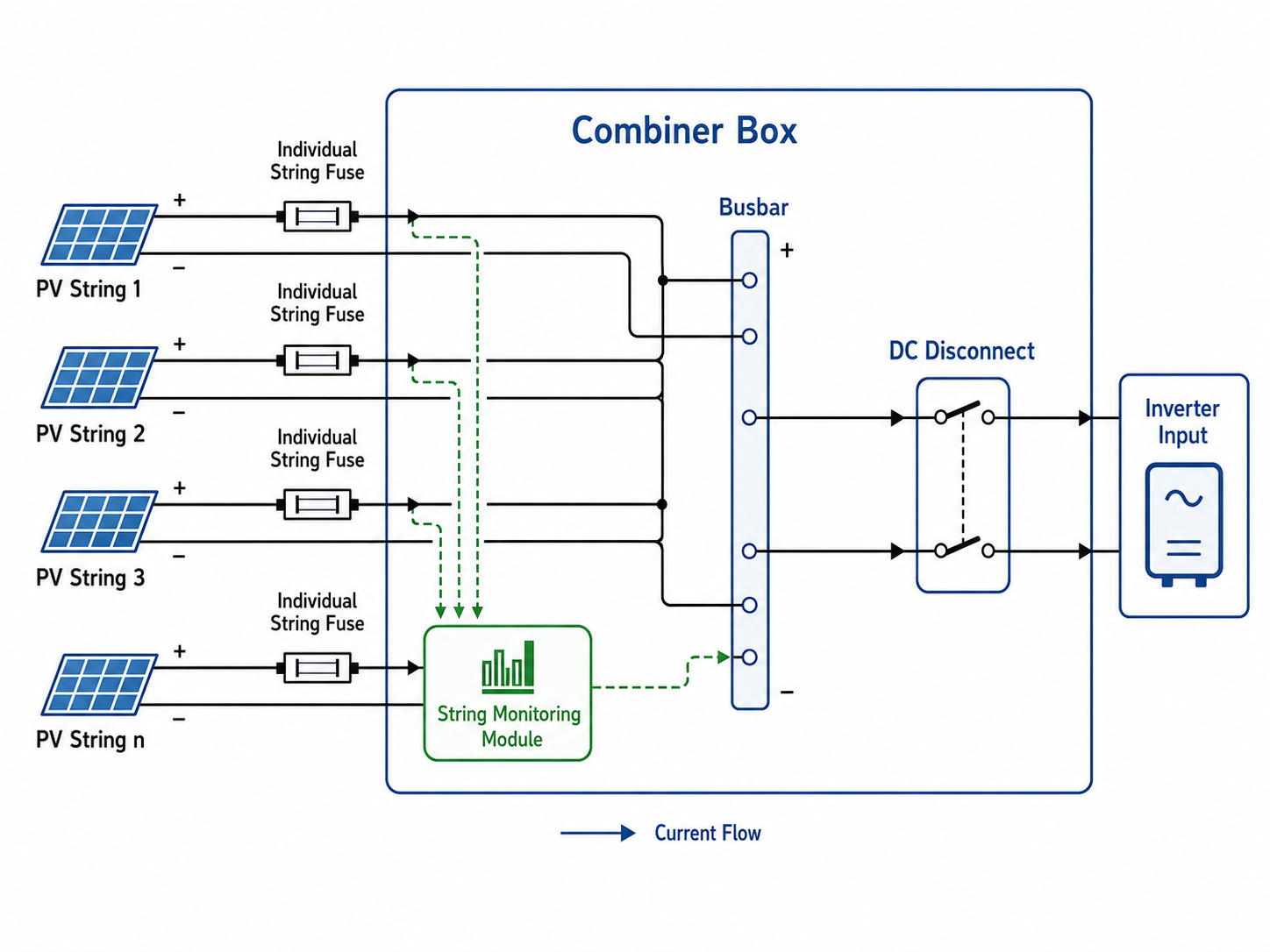
Solar combiner box selection is one of the clearest signs of whether a PV proposal has been engineered for long-term operation. The combiner box gathers DC output from multiple strings, provides string-level overcurrent protection, and feeds the inverter DC input.
Individual string fusing matters because PV strings can backfeed each other under fault conditions. If one string has damaged modules, insulation failure, or abnormal reverse-current behavior, adjacent healthy strings may drive current through the affected path. IEC 60364-7-712 applies to electrical installations of PV systems and covers PV equipment selection and application from modules to the connection point, which makes it a key reference for PV installation planning.
String monitoring adds another layer of value. A weak string may not stop the inverter, but it can quietly reduce output for months. Current monitoring helps your team identify underperforming strings, compare them against neighboring strings, and plan targeted maintenance.
Outdoor combiner boxes also need suitable enclosure protection, UV-resistant materials, cable entry quality, and thermal management. Heat inside the enclosure can affect fuses, monitoring electronics, terminals, and busbars. Common proposal gaps include undersized busbars, incorrect DC fuse voltage rating, no string monitoring, weak gland sealing, and enclosure ratings that do not match site exposure.
For commercial rooftops and mid-size assets, a C&I PV solution should cover commercial PV systems from 30 kW to 350 kW and support energy cost reduction and energy independence goals.
Disconnect Switches, SPDs, And MCCBs: Building In Longevity
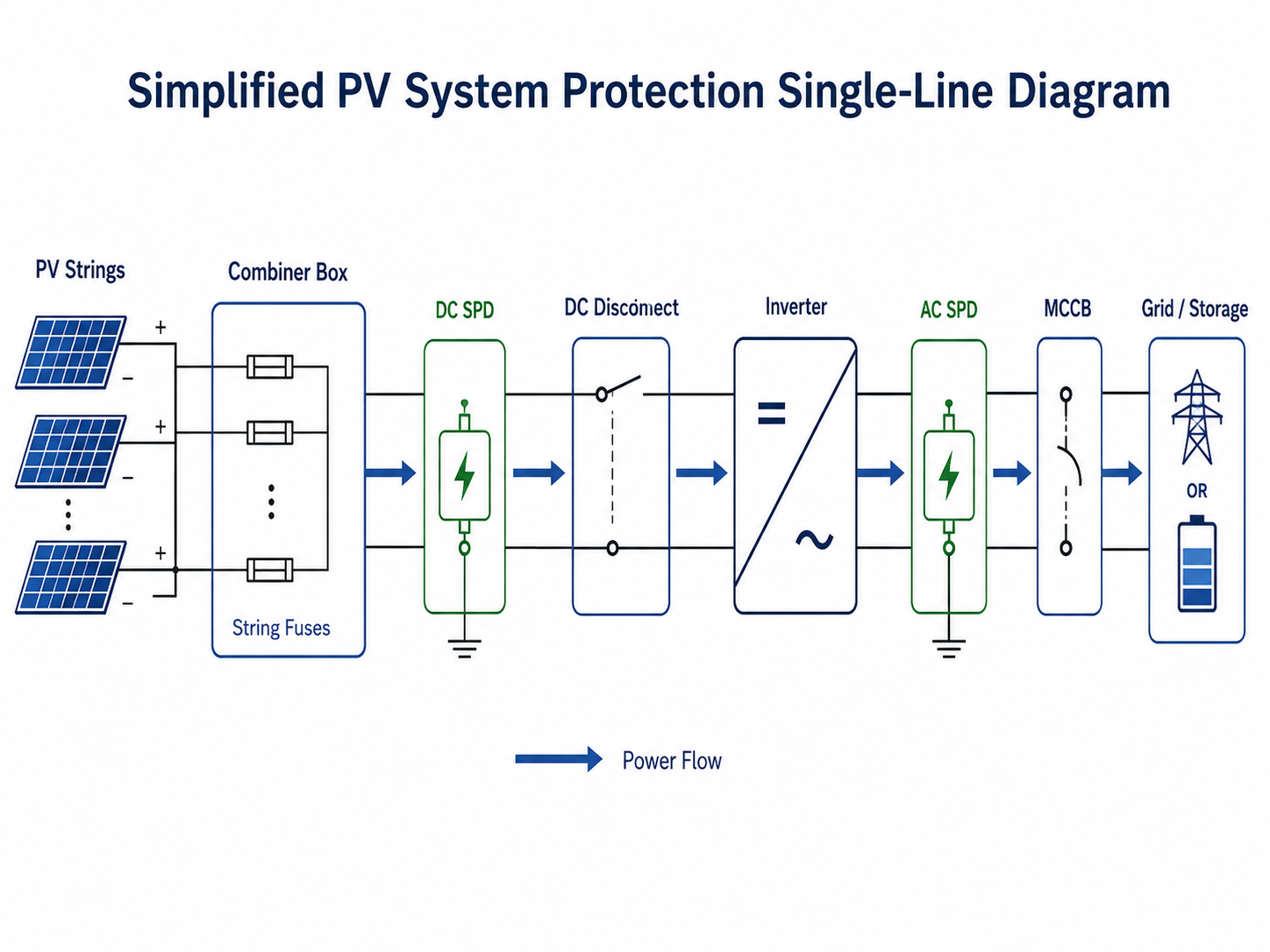
Three PV protection components deserve close review in every proposal: DC disconnect switches, surge protection devices, and AC-side MCCBs.
DC Disconnect Switches
A DC disconnect allows safe isolation between the PV source circuit and inverter during maintenance, inspection, or fault response. The device must match the system’s DC voltage and load-break duty. DC switching differs from AC switching because a DC arc does not pass through a natural current zero-crossing. That means arc control, pole arrangement, voltage rating, and application marking matter.
Asset owners should ask whether the disconnect can break load current, or whether it only provides isolation when the circuit has already been deenergized. For utility solar electrical design, this distinction affects maintenance sequencing and site procedures.
Surge Protection Devices
PV arrays are often elevated, exposed, and connected through long cable runs. Lightning-induced transients and switching events can reach inverter inputs, combiner boxes, monitoring electronics, and AC switchgear. DC-side SPDs protect inverter DC inputs and array wiring. AC-side SPDs protect inverter output and downstream distribution.
DC SPDs must be rated for PV DC circuits, not substituted with AC devices. IEC 61643-31 applies to SPDs connected to the DC side of photovoltaic installations rated up to 1,500 V DC and covers protection against lightning effects and other transient overvoltages.
Coordination matters. Type, rating, voltage protection level, backup protection, and grounding path should be reviewed across the combiner box, inverter, and AC panel. Poor bonding or long SPD leads can reduce protection quality.
MCCBs On The AC Side
MCCBs protect the AC connection between inverter output and distribution board, transformer, or collection system. Selection should match the inverter output characteristics, site fault level, cable rating, and selectivity target.
Monitoring-capable MCCBs can provide current, energy, trip, and status data at the connection point. That helps operators compare inverter output against expected production and spot abnormal loading. In large plants, this supports smart switchgear for solar PV systems by connecting protection status to operating data.
Adding Storage: How The Electrical Architecture Changes
Storage changes the PV architecture because current can flow in more than one direction. A solar-only plant generally moves energy from PV array to inverter to grid or load. A solar-plus-storage plant may charge batteries from PV, discharge through a PCS, export to the grid, serve local loads, or follow grid support commands.
DC-coupled systems connect the battery on the DC side, often before or alongside the inverter architecture. AC-coupled systems connect storage on the AC side through a PCS. Each option changes disconnect ratings, protection coordination, metering, fault current assessment, and control logic.
Storage adoption has become more attractive as battery costs fall. IRENA reports that fully installed battery storage project costs dropped 93% between 2010 and 2024, from USD 2,571/kWh to USD 192/kWh.
With storage, solar system switchgear optimisation must include bidirectional protection, battery terminal protection, PCS isolation, anti-islanding review, export control, and metering. You can refer to CHINT’s BESS overview for renewable energy integration, grid stability, and energy cost management across utility-scale and C&I applications.
5 Questions To Ask Your Installer About The Electrical Design
The global C&I solar PV market was valued at USD 63.2 billion in 2024 and is projected to reach USD 164.1 billion by 2034, growing at a 10.1% CAGR. That level of deployment makes better electrical review more than a design preference.
Consider the following when reviewing an EPC proposal, retrofit plan, or O&M upgrade:
Is every string individually fused in the combiner box? This reveals whether solar combiner box selection supports fault isolation and string-level protection.
Are all DC disconnect switches rated for the actual DC voltage and load-break duty? Do not accept vague wording such as “solar-rated” without voltage, current, and duty details.
Are SPDs installed on both DC and AC sides of each inverter? Ask for type, rating, protection level, backup protection, and grounding arrangement.
Does the combiner box include string-level current monitoring? Monitoring helps detect weak strings before they create long-term yield loss.
If storage is being added, has anti-islanding protection been reviewed with the network operator? Storage changes fault behavior, export control, metering, and operating modes.
Conclusion
Solar yield depends on more than module efficiency. Protection devices, combiner boxes, disconnect switches, SPDs, MCCBs, storage tie-ins, and monitoring all shape uptime and asset condition. Smart switchgear for solar PV systems helps your team isolate faults faster, reduce avoidable losses, protect inverters, and maximise solar output across the asset life. Contact CHINT for a BESS overview and discuss electrical design requirements for your PV or solar-plus-storage project with Utility PV Solution and C&I PV Solution.
Frequently Asked Questions
What is smart switchgear for solar PV?
Smart switchgear for solar PV systems refers to protection and switching devices that are specifically designed for PV applications and include communication, monitoring, and measurement capabilities. This includes string fuses and combiner boxes with per-string current monitoring, DC disconnect switches that can report their status to a SCADA system, and MCCBs with integrated energy metering on the AC output. Smart switchgear reduces maintenance time (remote fault identification replaces manual inspection) and improves yield (faster fault response means shorter periods of degraded output).
What are the three types of switchgear?
In the context of electrical distribution, switchgear is broadly categorised as low-voltage (LV), medium-voltage (MV), and high-voltage (HV) switchgear, based on the operating voltage. For PV systems specifically, the relevant types are DC switchgear (protecting and isolating the direct current circuit between panels and inverter), AC switchgear (protecting the alternating current output from the inverter), and combined AC/DC systems in solar-plus-storage configurations. Within these categories, devices include fuses, MCBs, MCCBs, ACBs, disconnect switches, and SPDs.
What is the 33% rule in solar panels?
The 33% rule is an informal industry guideline suggesting that solar panels produce about one-third of their rated wattage on an annual average basis, accounting for factors such as cloud cover, temperature, angle, shading, and system losses. In practice, the capacity factor (actual output vs rated capacity) varies significantly by location, panel technology, and system design, but the rule provides a rough basis for energy yield estimation. It is not an official standard.
Do smart meters work with solar PV panels?
Yes. Smart meters are compatible with solar PV systems and are required in many jurisdictions for grid-connected PV installations to measure both import and export accurately. For bi-directional energy flow (importing from the grid at night, exporting excess generation during the day), a smart meter or revenue-grade energy meter must be installed at the grid connection point. This metering data is used for tariff billing, net metering or feed-in tariff credits, and performance reporting.
What is the 120% rule in solar panels?
The 120% rule (also known as the 120% rule for panel-to-inverter sizing) allows a PV system's total panel wattage to be up to 120% of the inverter's rated output power. This is permitted by the NEC (National Electrical Code) in the U.S. because panels rarely produce 100% of their rated power simultaneously; the modest oversizing improves energy harvest during partial load conditions without overloading the inverter. When the panels produce more power than the inverter can handle, the inverter simply clips the excess, a minor yield loss that is generally outweighed by the improved harvest at lower irradiance.