

Table of Contents |
itchgear-gis-7-1356As the population in cities increases and space and electrical requirements become a critical factor, devices such as the gas insulated switchgear (GIS) becomes the best option due to their size and functionality features.
This device is opposed to the air insulated switchgear (AIS), since it is much more compact, safe and easy to maintain, so it is especially effective when an electrical substation is required in a small space.
In this new post, you will learn exactly what a GIS is and how it works, as well as its advantages and variety of applications.
What is Gas Insulated Switchgear?
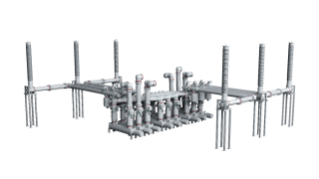
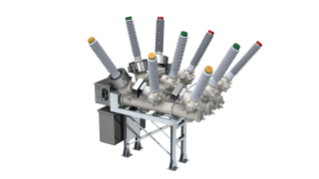
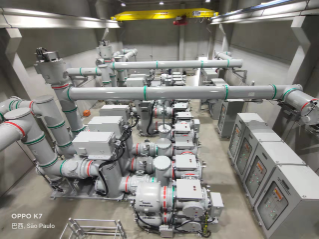
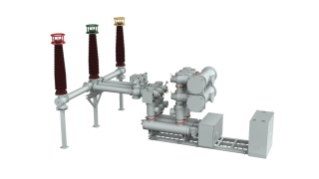
A gas-insulated switchgear is a composite device encapsulated in a solid metal frame that houses different electrical devices such as circuit breakers, bus bars, transformers, earth switches, surge arrestors, etc. All these devices are immersed in sulfur hexafluoride gas (SF6) inside shielded compartments that are bordered by barrier devices.
The main function of a GIS substation is to switch, separate, transform, measure and distribute electrical energy in power systems.
The main feature of a GIS device is the use of SF6, an inert gas with exceptional insulation properties, and chemical and thermal stability.
By comparison, a GIS unit only requires centimeters for effective insulation, while an air-insulated switchgear unit would need meters to perform the same function. All these features make GIS a much more reliable device with less space and maintenance requirements than AIS.
These devices have been used with great success since the late 1960s and early 1970s.
Working Principle of GIS
Switchgear using SF6 protects electrical power supply and distribution by interrupting the flow of current in an electrical circuit when necessary.
Under normal conditions, the breaker contacts are closed, but when a failure occurs in the electrical system, these contacts separate and an arc occurs between them.
The displacement of the mobile contacts is synchronized with that of a valve that allows the entry of high-pressure SF6 into the chamber where the arc is occurring.
The properties of SF6 allow the absorption of free electrons in the path of the arc, forming ions that do not carry electrical charge — because they become too heavy. The dielectric strength of the gas increases notably, so the arc is extinguished.
Due to its ability to rapidly recombine, as the arc is extinguished, the pressure of the SF6 also decreases, so it is stored in a low-pressure tank and then in a high-pressure tank ready for reuse.
Thanks to these properties, SF6 insulating is much more effective than air insulating — about three times — which makes these substations ideal for medium and high-voltage power systems.
Gas Insulated Switchgear Applications
Due to their small, compact, and armored structure, GIS substations are the first choice for this type of installation in areas with limited space and/or exposed to high levels of pollution — dust, chemicals, salt layers, etc. — that might produce flashovers in other types of substations.
Among its applications we have:
- Industrial townships
- Hydro stations
- Underground substations
- High polluted areas
- City building extensions
- Offshore platforms
- Roofs
- Railways
- Power transmission
- As renewable power generation units toward the electric system
- Large towns with little space
- Valleys
- Mountain regions
- Industrial complexes
- High-voltage transmission systems
Gas Insulated Switchgear Vs Air Insulated Switchgear
Below is a comparative table with the features of these two types of switchgear.
Air Insulated Switchgear (AIS)
- Design standards: IEC (IEC 62271-1, IEC 62271-100, IEC 62271-200, etc.)
- Bus bar insulation: Air media
- Switching: Oil, Air, Vacuum or SF6
- Execution type (switching): Fixed or design-based
- Size: Fairly larger (tens of square meters)
- Sensitivity to external elements: Moderate
- Maintenance requirements: Moderate
- Cable necessities: Variable
- Monitoring of gas pressure: Only for switching devices that include SF6 gas
Gas Insulated Switchgear (GIS)
- Design standards: IEC (IEC 62271-1, IEC 62271-100, IEC 62271-200, etc.)
- Bus bar insulation: SF6 media
- Switching: Vacuum or SF6
- Execution type (switching): Fixed
- Size: 10-30% less than AIS
- Sensitivity to external elements: Excellent
- Maintenance requirements: Minimal
- Cable necessities: Specific
- Monitoring of gas pressure: Switching devices and bus bars
Advantages of Gas Insulated Switchgear
- These units are ideal for urban or industrial areas with little space and high levels of pollution
- Thanks to their compact structure, these devices can be more easily integrated into their environment without affecting the aesthetics of the place
- High reliability, as these devices are protected from environmental damage — they are also less sensitive to earthquakes
- No risk of electrical failure due to flying fauna
- This kind of switchgear has different configurations that can be applied to different types of bus bars (transfer, double, ring, etc.)
- No risk of oil leakage or explosion due to ignition
- They are easy-to-maintain equipment, since most of this maintenance is checking that they work correctly
- Installation is simpler
- Units run quietly
- Lower operating costs
- Some models use their metal cover to counteract external electromagnetic interference
CHINT Gas Insulated Switchgear
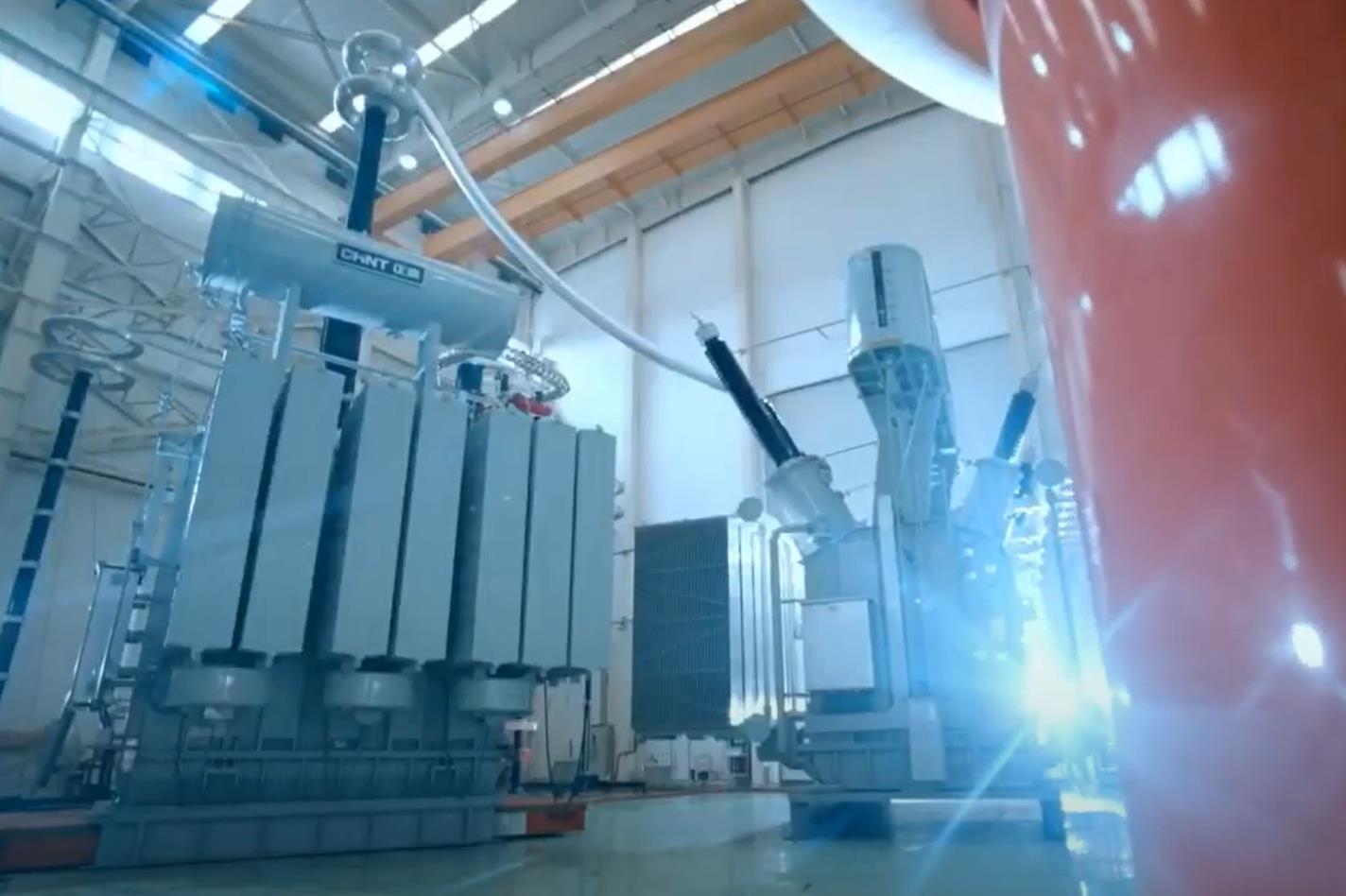
CHINT gas-insulated switchgear devices have been designed to provide effective insulation and high levels of protection for electrical supply and distribution systems. These units are ideal for applications where the maximum use of space, as well as security and reliability are determining factors.
Due to their high resistance and durability, these units are especially useful in areas pretty exposed to adverse environmental factors, such as humidity, high/low temperatures, wind, UV rays, etc.
The models currently available are:
ZFW34A-252 Gas Insulated Switchgear
A small unit for indoor and outdoor use. The device can withstand ambient temperatures of +55 and -40 at an altitude of ≦3000m, and wind speeds/pressure around 34m/s. This unit is suitable for outdoor areas that are exposed to a variety of climatic conditions, as well as indoor spaces that need a sneaky electrical substation. See more.
ZFW21A-72.5/126/145kV Gas Insulated Switchgear
A larger unit also suitable for indoors and outdoors. This unit has weather resistance features similar to the previous model, but the unit is a little more robust and has a seismic resistance capacity of 9 degrees with horizontal and vertical acceleration around 0.3g m/s2 and 0.15 m/s2, respectively. See more.
Wrapping Up
The technological progress achieved by GIS devices has made them increasingly cheap and simple, with a flexible design that allows easy access, installation, verification, and maintenance.
Their reduced dimensions and their compact and armored structure make these units the best solution for areas with limited space that require high levels of reliability, security, and operability.
If you are looking for high-quality gas-insulated switchgear units, CHINT products meet all these criteria and more.
If you have any questions or need further assistance, don't hesitate to reach out to us.