


If you have above-average knowledge of electronics, you must be familiar with relays . To be clear, there are different relays, including universal relay , power relay , and starter relay . In this article, you’ll learn about what is a relay, the purpose of a relay, the type of relays, and some additional helpful information for both techies and non-techies.
What Is a Relay?
A relay is a switch that enables the electromechanical closing or opening of circuits that carry heavy current by utilizing a separate mild current. When the relay is turned on, it connects two ends of a circuit, and when it’s turned off, it disconnects them. All the different kinds of electromechanical relays basically work the same way. Their main components include an electromagnet, spring, mechanically movable contact, and switching points.
A basic relay has three contacts. The first contact is the common (COM) contact which is connected to the mechanically movable contact. The other two contacts are referred to as switching points for connecting to high ampere load. They are open (NO) contact and normally closed (NC) contact.
The relay can work with both AC and DC power. Despite this, as AC is an alternating current, the relay coil demagnetizes during every current zero position. Thus, the relay would be continuously breaking the circuit affecting the operation of the electronic. To counter this problem, AC relays are built with unique mechanisms that allow them to retain magnetism even in the current zero position. Some of the mechanisms employed to solve this problem in AC relays are shaded coil mechanism and electronic circuit arrangement.
Is there an issue with your AC electronic related to a relay? It might be caused by a poorly implemented shaded coil mechanism or electronic circuit mechanism. If any of these mechanisms fail on your AC relay, the electromagnet starts having problems retaining magnetism during current zero positions. This makes it impossible for the electronic to work correctly. This is why you should only purchase your relay from trusted and reliable manufacturers like CHINT.
What Does a Relay Do?
You might be wondering what’s the purpose of a relay given all its sophistication? You should know that electromagnetic relays have various applications, largely depending on their type and several other factors. These factors include package, coil voltage & current, operating lifetime, the voltage rating of contacts, number of contacts, and type of contacts.
Classification of Relays
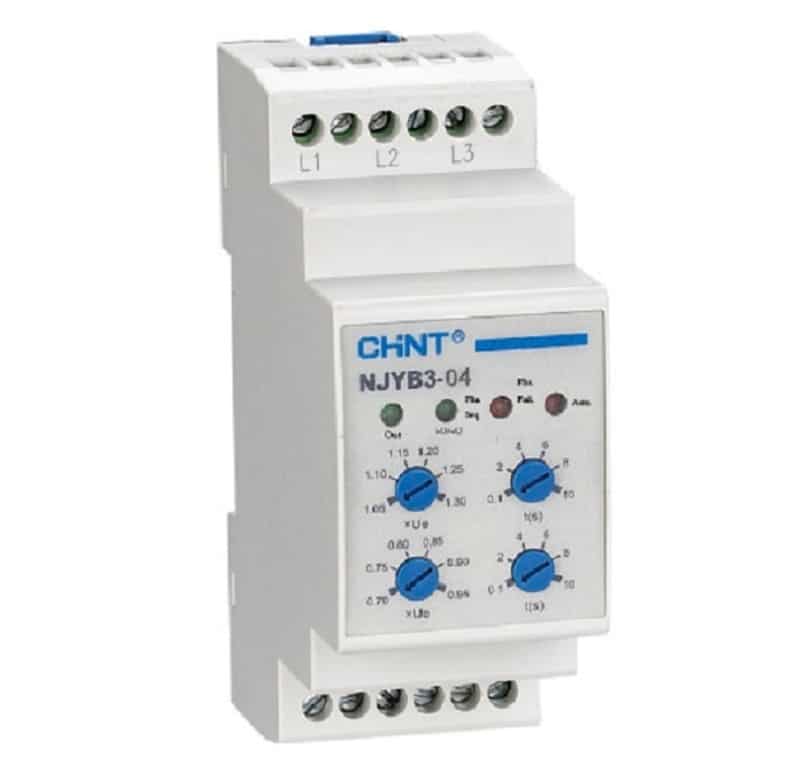
The two primary factors in the classification of the type of relays are the number of circuits and contacts. The two factors that influence this are the ‘poles and throws’ of a relay. Relays can be put into four categories based on their poles and throws. These categories are single-pole sing throw relays, single pole double throw relays, double pole single throw relays, and double pole double throw relays.
Single pole single throw relays are usually connected to one output and control one input circuit for basic ON/OFF applications. Single pole double throw relays typically have one input circuit and two outputs to enable change over relay. Double pole single throw relays have two input circuits for two terminals and one output circuit. Double pole double throw relays have two input circuits and two output circuits and are utilized for polarity or phase reversal.
Primary Functions of Relay
- To protect the electrical system by minimizing the damage caused to equipment in a connected system in case of over-current/voltage. This particular application is common in power system networks. It does this by detecting and isolating faults that happen in power transmission and distribution.
- Relays are also used for controlling high current circuits that would be dangerous to control manually. These high current circuits are usually present in power stations. A relay system can be set to turn on or off a high current circuit at a power station automatically. This application also extends to using a starter solenoid to start an automobile engine.
- Other everyday applications of relays are in lighting control systems, traffic control, telecommunications, industrial process controllers, home appliances, motor drives control, and computer interfaces.
How to Test a Relay
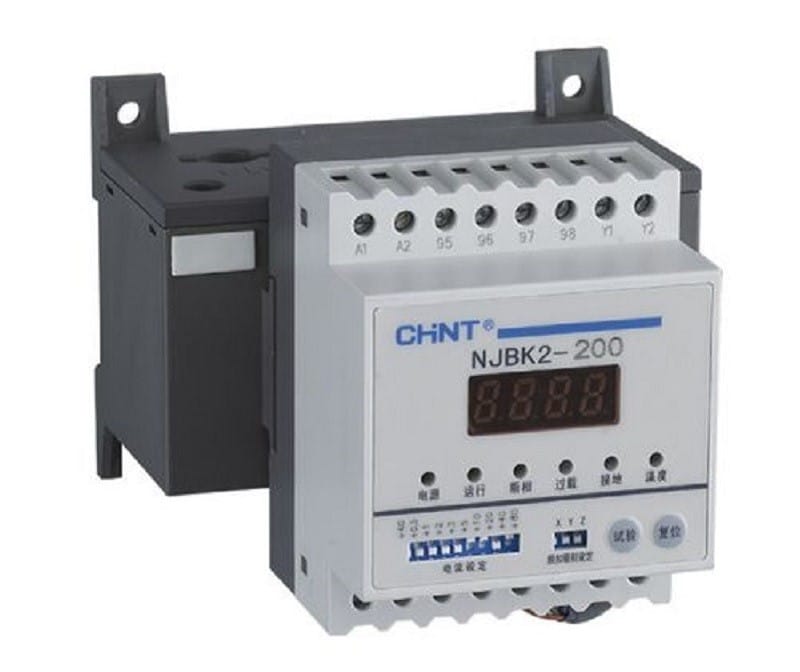
If the electronic you get isn’t working, there is a possibility that electricity isn’t getting to its components. In such a case, the relay might be to blame. Before you can establish this, you need to test the relay to confirm whether it’s working as expected or faulty. The best tool to use to test a relay is a multimeter.
Firstly, please turn off the electronic, unplug it from the power source, then open it up and remove the relay. If the relay is in a fuse box, the operation to remove it is more straightforward. Set the multimeter to continuity mode and check the relay’s 86 slot for good ground connection. Move on and check the 87-connection point for the presence of battery voltage. Additionally, use the multimeter to check if the 30 terminal is working well.
How to Wire a Relay
Wiring a relay is much easier than you can imagine. Before you embark on this, you need to know which type of relay you are wiring. Ensure you get the wiring diagram for the particular relay you are wiring and follow it to detail throughout the wiring process. Once done, take a moment to confirm the wiring is done correctly.
Conclusion
Relays work on the principle of electromagnetics. Thus, if you have difficulty with your electronic that you think is related to the relay, make sure that there are no strong magnets around that because that might affect the working of the relay.
CHINT offers other related products with unbeatable quality. Now that you understand everything about relays, make sure you pick a suitable relay for your application.